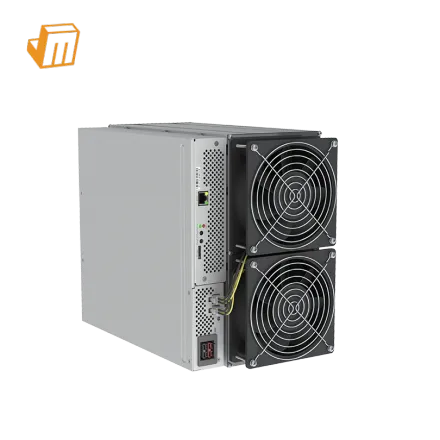

The MicroBT WhatsMiner M72S represents a robust addition to the SHA-256 mining landscape, engineered specifically for Bitcoin operators who require a balance of high-end performance and reliable thermal management. In an environment where network difficulty consistently pushes hardware to its limits, understanding exactly what a machine delivers under sustained load is critical. A proper MicroBT WhatsMiner M72S specs review must go beyond surface-level numbers to evaluate how its hashrate and power consumption interact to produce measurable efficiency.
Whether you are a new buyer establishing your first facility or a veteran operator optimizing rack space, the decision to deploy new hardware relies on a clear view of its operating context. From the MicroBT WhatsMiner M72S cooling design to its long-term deployment fit, every specification plays a direct role in overall profitability. Evaluating this miner means looking closely at what the product is, why its internal engineering choices matter, and how its baseline efficiency profile aligns with modern commercial operational standards.

What MicroBT WhatsMiner M72S Is and Why It Matters
The MicroBT WhatsMiner M72S is a specialized application-specific integrated circuit (ASIC) engineered specifically for SHA-256 cryptocurrency mining, primarily Bitcoin. Built by MicroBT, a leading manufacturer known for durable and stable hardware, this model is positioned as an enterprise-grade machine for facilities scaling their operations. For new buyers, understanding this product begins with recognizing that it is a dedicated industrial tool built to process cryptographic hashes at massive scale rather than a standard consumer device. Its architecture focuses on maximizing computational output while maintaining strict thermal and energy efficiency standards, making it a serious contender for both mid-sized farms and large institutional deployments.
When evaluating a machine of this caliber, reviewing the MicroBT WhatsMiner M72S hashrate and power consumption is the absolute first step for any deployment decision. Hashrate determines the machine's earning power by measuring how many terahashes per second (TH/s) it calculates, while power consumption dictates the ongoing operational cost in watts (W). A proper WhatsMiner M72S specs review reveals how efficiently the unit converts electricity into hashing power, which is the primary driver of return on investment. Experienced operators scrutinize the joules per terahash (J/TH) efficiency ratio to determine if the hardware aligns with their local power costs and electrical infrastructure limits. For operators planning long-term deployment, the balance between these metrics dictates profitability through varying market cycles and network difficulty adjustments.
Beyond raw performance, the MicroBT WhatsMiner M72S cooling design plays a critical role in its operational longevity and facility fit. Proper heat dissipation prevents thermal throttling, ensuring the miner maintains its peak hashrate without hardware degradation. For beginners working through a MicroBT WhatsMiner M72S setup guide, understanding the environmental requirements is essential, as this class of hardware generates significant heat and requires dedicated airflow or advanced infrastructure to operate safely. Ultimately, the high MicroBT WhatsMiner M72S efficiency makes it a highly capable machine for operators who have secured competitive electricity rates and possess the infrastructure necessary to support continuous industrial mining operations.
The Core Specifications That Affect Real Decisions
At the foundation of every mining operation, the raw performance metrics dictate whether a machine will generate a profit or operate at a loss. Evaluating the MicroBT WhatsMiner M72S hashrate and power consumption reveals a machine built for high-density SHA-256 mining environments. Generating approximately 166 TH/s to 184 TH/s while drawing roughly 3154 watts, this unit provides top-tier computing power for mining Bitcoin. For a new buyer, hashrate represents how fast the machine can solve network equations, while power consumption dictates the monthly electricity bill. Experienced operators will recognize these numbers place the unit firmly in the modern generation of high-yield hardware, requiring robust 220V electrical infrastructure capable of handling steady, high-wattage loads.
Efficiency and Thermal Management
The most critical metric for long-term viability is the MicroBT WhatsMiner M72S efficiency rating, which typically sits around 19 Joules per Terahash. Joules per Terahash measures how much electrical energy is required to produce one unit of mining power. For beginners, a lower number is better, indicating a more energy-efficient machine that costs less to run per unit of output. For large-scale facilities, deploying a 19 J/TH architecture drastically reduces overhead operating expenses and extends the hardware profitability lifespan during market downturns. A comprehensive WhatsMiner M72S specs review highlights that this efficiency allows the machine to remain competitive against network difficulty adjustments.
To sustain this performance, the MicroBT WhatsMiner M72S cooling design relies on a proven high-velocity air-cooling system. The manufacturer utilizes heavy-duty fans paired with precision-engineered heat sinks to pull thermal energy away from the internal hashboards. This active cooling ensures that the dense semiconductor chips do not throttle during continuous operation. While the fans generate significant noise, rendering the unit unsuitable for residential living spaces, industrial operators appreciate the standardized dimensions and straightforward thermal exhaustion paths. This reliable cooling infrastructure ensures the impressive base specifications translate into stable, uninterrupted network uptime.
Deployment Fit, Power, and Operating Context
When evaluating the MicroBT WhatsMiner M72S hashrate and power consumption, the hardware clearly demands an industrial mining environment. Unlike entry-level units operating on standard 220V circuits, the M72S requires a 380-480V input voltage and draws a baseline of 4000W in its normal operating mode. For those pushing the hardware limits, it can scale up to 6000W in high-performance mode. This places the machine firmly in the commercial tier, where facilities must be equipped with three-phase power infrastructure and heavy-duty electrical distribution. For experienced operators, this high-voltage architecture actually simplifies massive deployments by reducing the total amperage drawn per unit, allowing for tighter rack density and lower cabling costs across a large farm.
Because the unit generates significant heat, understanding the MicroBT WhatsMiner M72S cooling design is essential for a stable deployment. The machine requires an aggressive airflow system capable of moving roughly 600 cubic feet per minute (CFM) to maintain its normal operating temperature between 0°C and 40°C. If a facility pushes the miner into its 6000W high-performance state, the ambient temperature ceiling drops to 30°C. Consequently, operators in warmer climates will need advanced ventilation, strict cold-aisle containment, or specialized facility cooling to prevent thermal throttling. Buyers must ensure their exhaust management handles this continuous thermal rejection without recirculating hot air back into the intakes.
Ultimately, the deployment fit strongly favors dedicated colocation clients and commercial mining farms over home hobbyists. The combination of a 380-480V input requirement, intense acoustic noise from high-speed fans, and a 4000W minimum draw makes residential use physically and economically impractical without extreme modifications. However, for an enterprise operator expanding a facility or building a high-density footprint from scratch, the M72S offers a highly scalable, rack-optimized path. It forces buyers to commit to professional, heavy-duty infrastructure upfront, but repays that investment with sustained, industrial-grade operational stability.
Practical Strengths and Trade-Offs
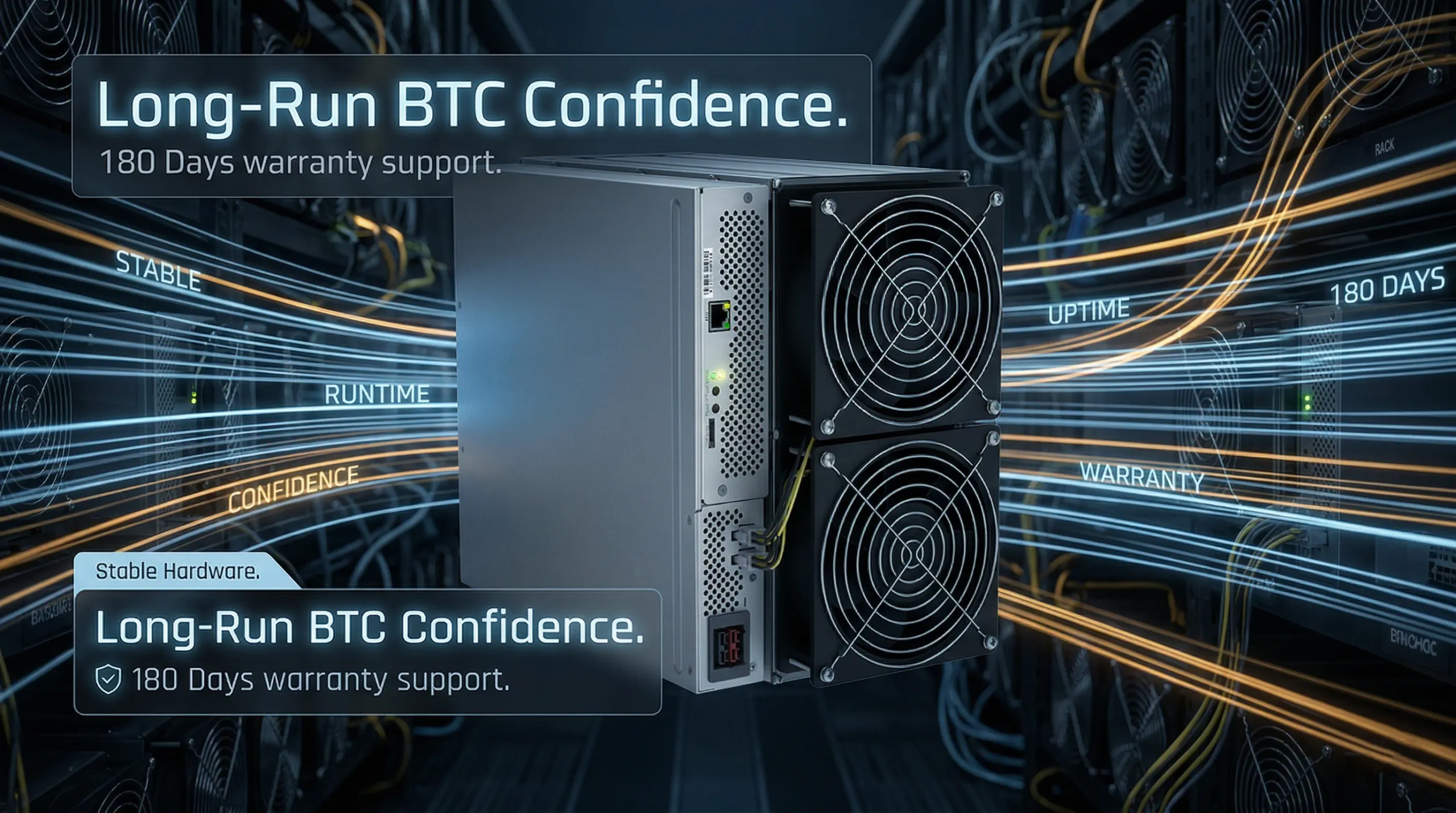
The primary strength of the MicroBT WhatsMiner M72S lies in its industrial-grade stability and top-tier computational output, while its main trade-off is the heavy infrastructure required to manage its electrical and thermal footprint. For operators looking to scale, this machine offers a highly reliable architecture that maximizes uptime and minimizes necessary maintenance interventions.
Evaluating the Hardware Advantages
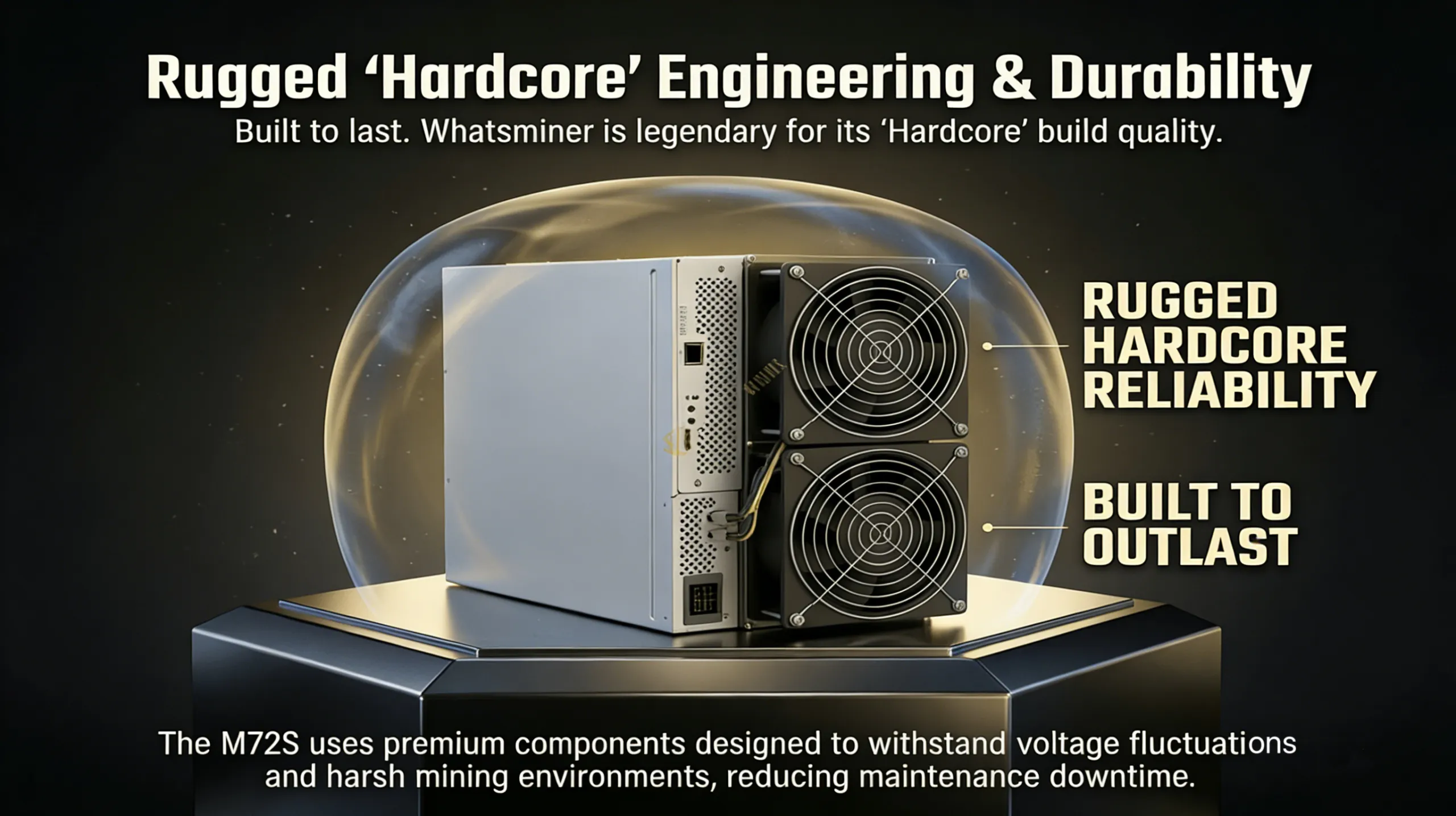
The robust build quality inherent to the WhatsMiner lineage ensures consistent performance even in demanding data center environments. A major contributing factor to this reliability is the advanced MicroBT WhatsMiner M72S cooling design, which utilizes high-velocity fans and optimized heat sinks to aggressively pull heat away from the internal hashboards. This proactive thermal management protects the ASIC chips from degradation and prevents hashrate throttling during continuous operation. For institutional buyers, this structural durability translates to a longer hardware lifecycle, more predictable return on investment schedules, and fewer costly repairs over the life of the machine.
Understanding the Operational Limitations
Despite its impressive computational power, securing these performance metrics involves notable infrastructure trade-offs that buyers must prepare for. The high power consumption demands heavy-duty electrical setups, specifically requiring 220V to 240V lines and commercial-grade breakers. Furthermore, the aggressive cooling fans generate substantial noise and require massive volumes of ambient airflow, rendering the unit entirely unsuitable for residential spaces or casually converted commercial rooms. Facilities must be engineered specifically to handle the intense exhaust heat, or the hardware will quickly overheat and automatically shut down to prevent permanent damage.
Because of these strict physical and electrical requirements, precision during the initial deployment phase is absolutely essential to long-term success. Facility managers and technicians should carefully consult the official MicroBT WhatsMiner M72S setup guide to confirm that power distribution, networking configurations, and hot-aisle airflow pathways meet exact manufacturer tolerances. Ultimately, this ASIC miner serves as an exceptional revenue-generating tool for experienced operations with purpose-built infrastructure, but it demands serious facility planning and capital commitment from any newer entrants aiming to deploy it effectively.
FAQ
Q: What voltage is required to run the WhatsMiner M72S?
A: The M72S requires a 220V to 240V power supply. Standard 110V household outlets cannot power this miner.
Q: Is the M72S suitable for home mining?
A: Generally no. The high noise output and significant heat generation make it better suited for dedicated commercial mining facilities with professional cooling.
Q: How do I calculate the current profitability of the M72S?
A: You can estimate daily profitability by entering the device hash rate, total power consumption, and your local electricity cost per kWh into any standard Bitcoin mining calculator.