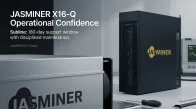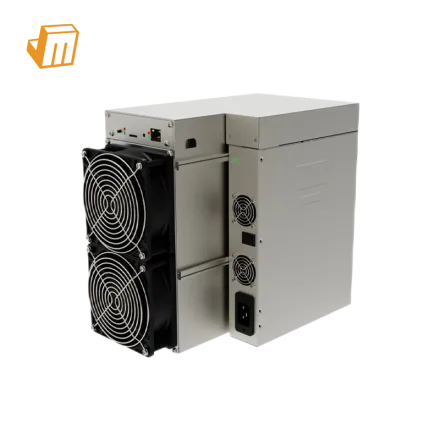

IceRiver ALEO AE3 vs IceRiver KAS KS7: which ASIC miner is the right choice for your operation? Deciding between these two machines ultimately comes down to the cryptocurrency network you intend to mine and the scale of your hardware budget. The IceRiver ALEO AE3 is a premium ASIC purpose-built for the Aleo network, entering the market at $5,880. In contrast, the IceRiver KAS KS7 is a dedicated Kaspa miner that offers a significantly lower barrier to entry at $1,220.
While both units are manufactured by IceRiver, they serve fundamentally different deployment strategies. The AE3 is designed for operators looking to establish a footprint in the Aleo ecosystem, requiring a larger upfront capital commitment. The KS7, alternatively, provides an accessible and cost-effective route for both home miners and facility operators who want to expand their Kaspa hashrate. Understanding the architectural differences, power demands, and specific buyer fit for each model is essential before deploying your mining capital.
What IceRiver ALEO AE3 and IceRiver KAS KS7 Are Built For
When deciding between the IceRiver ALEO AE3 and the IceRiver KAS KS7, the fundamental difference lies in the specific blockchain networks they are engineered to support. The AE3 miner is purpose-built to mine Aleo, a privacy-centric network utilizing zero-knowledge proofs, while the KS7 is designed exclusively for Kaspa, a high-speed blockDAG network running the kHeavyHash algorithm. Because these machines rely on application-specific integrated circuits, they cannot be swapped between these two algorithms. Buyers are not simply comparing hardware specs; they are choosing to invest their computational resources into either the Aleo or Kaspa ecosystems.
The Purpose of the IceRiver ALEO AE3
The IceRiver ALEO AE3 enters the market as a premium machine tailored for a newer, highly specialized mining environment. Priced at $5880, this unit targets miners looking to capitalize on the unique proof-of-succinct-work consensus mechanism of the Aleo network. Operators conducting an Aleo miner comparison will find that the AE3 is built for those who want dedicated exposure to a privacy-focused layer-1 blockchain. Because this network requires specialized computational power to generate zero-knowledge proofs, the AE3 is structured to handle complex workloads, making its internal architecture completely distinct from traditional proof-of-work designs.
The Purpose of the IceRiver KAS KS7
Conversely, the IceRiver KAS KS7 serves as a highly accessible option within the rapidly expanding Kaspa mining sector. At a significantly lower initial cost of $1220, it is built for both first-time buyers wanting a reliable entry point and farm operators scaling up their existing infrastructure. For operators searching for a cost-effective Kaspa miner alternative to the most expensive flagship units, the KS7 offers a balanced approach to the kHeavyHash algorithm. It is designed to deliver stable, efficient performance on a network famous for rapid block times, appealing to users who prefer an established, highly liquid digital asset.
Ultimately, comparing these two models comes down to your project goals and budget strategy. The AE3 represents a higher capital commitment directed at an emerging privacy blockchain with intense hardware demands. Meanwhile, the KS7 provides a straightforward, budget-friendly path into the proven Kaspa network, allowing for predictable deployment and faster scaling.
Specification and Performance Differences That Matter
While both the IceRiver ALEO AE3 and IceRiver KAS KS7 are built by the same manufacturer, their hardware is engineered for entirely different network architectures. The most critical distinction lies in their supported algorithms and resulting computational metrics, which dictate earning potential and capital requirements. Understanding these numbers is essential for calculating accurate return on investment and planning your electrical infrastructure.
The IceRiver ALEO AE3 is specifically tuned for the complex zkSNARK algorithm required for mining the Aleo network. It delivers a maximum hashrate of 2000 MH/s while drawing approximately 3400W of power, translating to an energy efficiency of 1.7 J/MH. Because processing zero-knowledge proofs requires highly specialized internal components, the AE3 commands a premium retail price of $5880. For operators, this means the AE3 represents a high-conviction investment, requiring a carefully planned deployment strategy to offset the steep hardware cost through consistent network rewards.
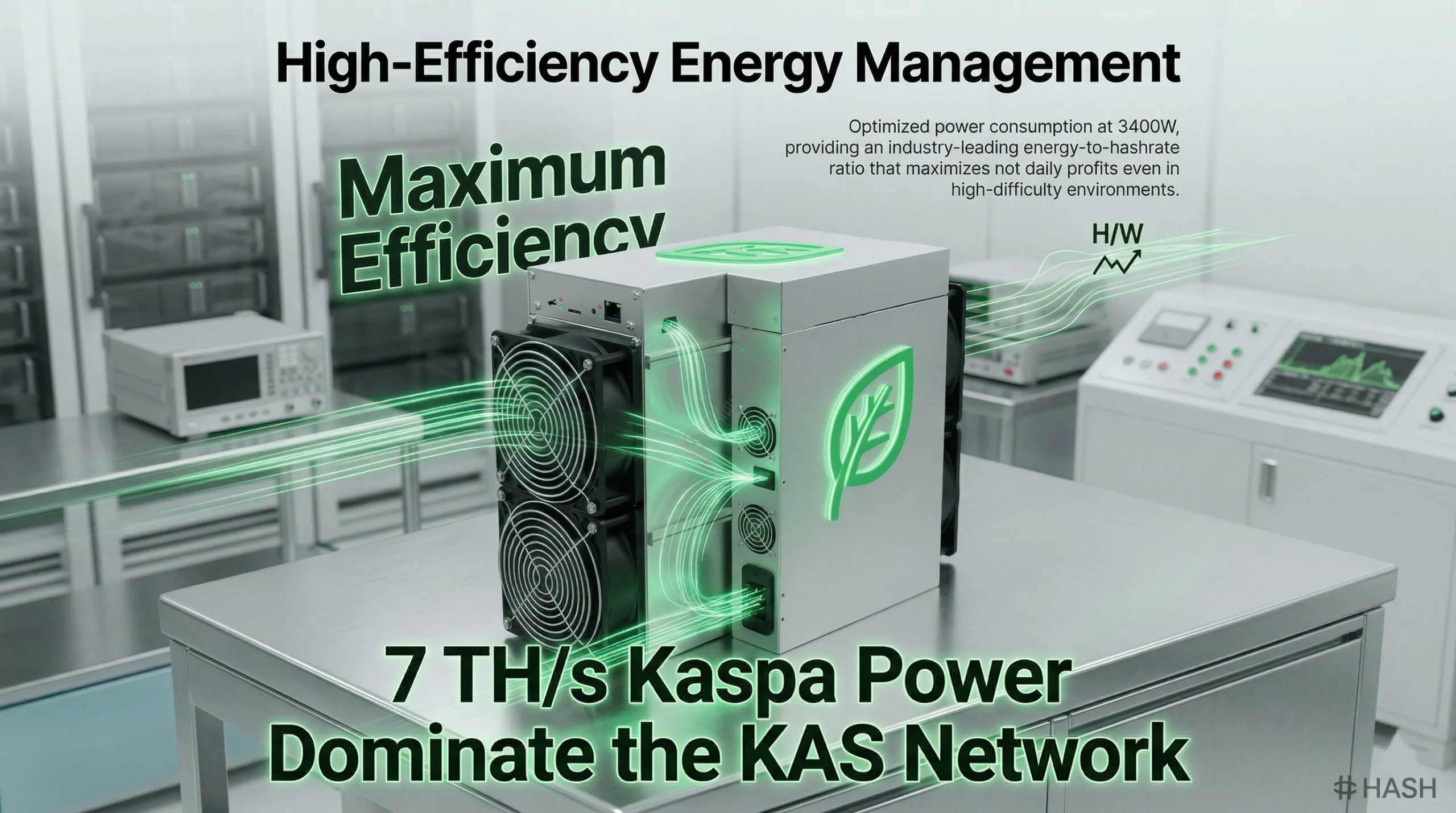
In contrast, the IceRiver KAS KS7 is built strictly for the kHeavyHash algorithm to secure the Kaspa blockchain. It generates a massive 30 TH/s of hashing power with a comparable power consumption of 3500W. This output yields an efficiency rating of roughly 116.7 J/TH, which remains highly competitive for current operations. At an initial cost of $1220, the KS7 provides an accessible entry point for miners looking to deploy serious hashrate without massive upfront capital. This stark pricing difference highlights the maturity of Kaspa hardware compared to newer, more specialized Aleo mining rigs.
Despite their different network targets and price tags, both models share nearly identical physical and electrical footprints. Each miner operates on a 200-250V input, meaning standard 110V residential outlets cannot support them. They both weigh around 17.5kg and utilize four-fan air-cooling systems that generate continuous noise levels of roughly 75dB. Consequently, whether you choose the $5880 AE3 or the $1220 KS7, your deployment facility will require dedicated 240V circuits, professional heat extraction, and adequate soundproofing to safely manage a 3400W to 3500W industrial machine.
Power, Cost, and Efficiency Considerations
When comparing the IceRiver ALEO AE3 and the IceRiver KAS KS7, the most critical takeaway is that their electrical requirements are virtually identical, meaning the decision hinges entirely on upfront hardware costs and target network profitability rather than facility power limits. If your mining setup is wired to handle one of these machines, it is already equipped to handle the other.
From a pure power consumption standpoint, both models require dedicated 200-250V AC circuits and draw heavy industrial loads. The IceRiver ALEO AE3 operates at 3400W, while the IceRiver KAS KS7 draws slightly more at 3500W. Because this 100W difference is negligible in a commercial setting, both ASICs demand the same thermal management strategy and electrical infrastructure. Operators do not have to worry about retrofitting their electrical panels differently depending on which machine they select; both max out standard 240V, 20A lines and generate substantial heat that requires robust exhaust solutions.
The true divergence between these two units appears in their pricing and efficiency metrics. At an estimated price of $5880, the ALEO AE3 represents a significant capital expenditure. It operates at an efficiency of roughly 1.7 J/MH on the zkSNARK algorithm. In stark contrast, the KAS KS7 costs around $1220 and delivers 116.7 J/TH on the kHeavyHash algorithm. Because these efficiency ratings measure entirely different cryptographic work, they cannot be compared head-to-head. Instead, buyers must evaluate the hardware cost against the daily yield of the respective networks.
Ultimately, your cost strategy will dictate the best choice. The KS7 requires a much lower initial investment, allowing operators to deploy multiple units for the cost of a single AE3. This dramatically lowers the barrier to entry and can accelerate the return on investment if Kaspa network economics remain favorable. Conversely, the AE3 demands a premium budget. Buyers choosing the Aleo miner are placing a concentrated bet on a high-value, privacy-focused network, accepting a steeper upfront cost with the expectation that Aleo yields will outpace the higher initial hardware expenditure over the machine's operational lifespan.
Deployment Fit for Different Mining Environments
The physical environment where you plan to operate your hardware is a primary factor in deciding whether the IceRiver ALEO AE3 or the IceRiver KAS KS7 makes the most sense for your specific setup. Both machines are built as industrial-grade Application-Specific Integrated Circuit devices, meaning they generate significant noise and heat that require deliberate infrastructure planning. Neither unit is suitable for a standard living room or office without extensive soundproofing and dedicated exhaust systems, but their differing capital requirements and network targets dictate very different deployment strategies.
For home users and small-scale garage operations, the IceRiver KAS KS7 often serves as an ideal entry point or a Kaspa miner alternative to more expensive network equipment. Priced at $1220, it presents a lower financial barrier to entry, allowing first-time buyers to build out their residential mining infrastructure without overcommitting capital. Operators deploying the KS7 in a home environment will still need to ensure they have adequate 220V power circuits and a strategy to manage exhaust heat, but the lower unit cost makes it easier to test cooling layouts before scaling up. This affordability also makes it a strong candidate for hobbyists looking to diversify their algorithm exposure without a massive upfront investment.
Scaling for Professional Facilities
Conversely, the IceRiver ALEO AE3 represents a substantial enterprise-grade investment that fits best within dedicated farm environments or serious, purpose-built home mining sheds. At $5880 per unit, buyers are prioritizing premium Aleo network performance over cheap accessibility. This higher capital expenditure means operators must maximize uptime and efficiency, requiring robust climate control, professional-grade power distribution units, and filtered intake air to protect the hardware. While the AE3 miner can certainly be run by a residential operator with the correct 240V infrastructure, its price profile usually appeals to experienced miners who already have commercial cooling and acoustic mitigation systems in place. When mapping out a large deployment, the KS7 allows for rapid bulk acquisition and easier power distribution scaling, whereas the AE3 requires a focused, high-density infrastructure designed to protect a significantly larger capital investment per shelf.
Which Model Should You Choose
Choosing between these two mining rigs ultimately comes down to which cryptocurrency project you want to support and how much initial capital you are ready to deploy. The decision is less about head-to-head hardware superiority and more about your strategic exposure to either the privacy-focused Aleo network or the high-speed Kaspa ecosystem. If you are looking for a significantly lower barrier to entry, the KS7 is the clear path forward, while the AE3 targets operators looking to establish a strong footprint in a highly specialized cryptographic space.
When to Choose the IceRiver ALEO AE3
The IceRiver ALEO AE3 is the right choice for forward-looking miners who have strong conviction in the Aleo network and are prepared for a substantially higher initial hardware cost. Priced at $5880, this AE3 miner requires a larger upfront financial commitment but provides direct access to a specialized zero-knowledge proof mining environment. Experienced farm operators looking to diversify their portfolios away from standard proof-of-work coins will find the AE3 appealing as an alternative asset generator. It is best suited for buyers who are comfortable with the unique dynamics of emerging privacy chains and want premium hardware to secure their network position early.
When to Choose the IceRiver KAS KS7
By comparison, the IceRiver KAS KS7 is the ideal starting point for both home miners and commercial farm operators looking to mine Kaspa without overextending their operational budgets. At a retail price of $1220, it offers a highly accessible entry point while still delivering competitive performance on the kHeavyHash algorithm. If you are a first-time buyer evaluating a Kaspa miner alternative or simply want to scale up an existing operation with multiple affordable units, the KS7 presents considerably lower financial risk. Its accessible capital requirement makes it a highly practical choice for those prioritizing fast deployment and established market stability.
Ultimately, your final selection should clearly mirror your individual risk tolerance and overarching project preference. Buyers prioritizing lower upfront hardware costs and a deeply established mining ecosystem will find exceptional practical value in the KS7. Conversely, operators aiming to capitalize on zero-knowledge technology with a larger capital allocation should confidently invest in the AE3. Carefully weigh your infrastructure budget constraints against your long-term cryptocurrency accumulation goals before finalizing your equipment order.
FAQ
Q: What is the main difference between the IceRiver ALEO AE3 and the IceRiver KAS KS7?
A: The primary difference is the cryptocurrency they are built to mine. The AE3 is designed specifically for mining the Aleo network, while the KS7 is built exclusively for mining Kaspa.
Q: Why is there a significant price gap between the AE3 and KS7 miners?
A: The price variance reflects the distinct hardware requirements, component costs, and market conditions for each network. The AE3 is priced around $5880 to handle Aleo's unique algorithmic demands, whereas the KS7 costs roughly $1220, making it a more accessible entry point for Kaspa operators.
Q: Is the IceRiver KAS KS7 a direct alternative to the ALEO AE3?
A: No, they are not direct alternatives because they operate on completely different algorithms and networks. Your deployment choice should depend entirely on whether your strategy aligns with supporting the Kaspa ecosystem using the KS7 or the Aleo network using the AE3.