
Blockchain mining is the decentralized process used to validate cryptocurrency transactions and secure the network by solving complex mathematical puzzles. For many, it represents the intersection of technology and finance—a way to generate passive income while supporting the infrastructure of the digital economy. If you are looking to understand how this industry has evolved by late 2025 and whether it is still a viable investment for you, this guide covers everything from the technical basics to setting up your first rig.
The State of Crypto Mining in 2025
The landscape of blockchain mining has changed dramatically over the last decade. In the early days, enthusiast hobbyists could mine Bitcoin using simple home computers. Today, as we approach the end of 2025, the difficulty of mining major cryptocurrencies has skyrocketed. The industry is now dominated by large-scale mining farms utilizing renewable energy sources and cutting-edge cooling immersion technology. However, this does not mean the door is closed for individual miners. It means the strategy has shifted.
Understanding the current environment requires analyzing the "Situation, Conflict, Question, Answer" (SCQA) framework. The situation is that decentralized networks like Bitcoin still rely on Proof of Work (PoW). The conflict arises because electricity costs and hardware prices create a high barrier to entry. The question for every aspiring miner is: How can I maximize efficiency to ensure profitability? The answer lies in specialized hardware selection and joining mining pools, which we will detail below.
What Is Blockchain Mining and How Does It Work?
At its core, blockchain mining serves two primary purposes: utilizing computational power to process transactions, and releasing new cryptocurrency into circulation. This prevents the "double-spending" problem in digital currency.
Understanding Proof of Work (PoW)
Most mineable cryptocurrencies use a consensus mechanism called Proof of Work. Imagine a global lottery where your computer hardware buys tickets. The more powerful your hardware (hash rate), the more tickets you hold, and the higher your chances of winning the lottery. The "winning ticket" is actually a solution to a cryptographic hash function—a complex math problem that is difficult to solve but easy to verify.
When a miner finds this solution, they broadcast it to the network. Other nodes verify it, and the new block of transactions is added to the blockchain. As a reward for this expenditure of energy and computing power, the successful miner receives the block reward (newly minted coins) plus transaction fees. This incentive structure is what keeps the blockchain mining ecosystem secure.
Essential Hardware: ASICs vs. GPUs
Choosing the right hardware is the single most critical decision you will make. By 2025, the distinction between hardware types is clearer than ever.
The Dominance of ASICs
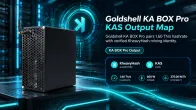
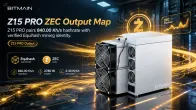
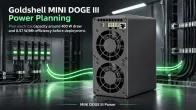
For major cryptocurrencies like Bitcoin, general-purpose computers are no longer effective. You need an Application-Specific Integrated Circuit (ASIC). These are machines designed for one specific task: solving the mining algorithm (like SHA-256 for Bitcoin). Modern ASICs in 2025 are incredibly fast but generate significant heat and noise.
The Role of GPUs
Graphics Processing Units (GPUs) are still relevant for mining altcoins that are ASIC-resistant. While they are less powerful than ASICs, they offer flexibility. If one coin becomes unprofitable to mine, a GPU rig can be switched to a different algorithm. For beginners, a GPU rig is often a safer entry point into blockchain mining.
Step-by-Step Operation: How to Start Mining
Ready to get started? Here is a simplified operational workflow to get your hardware running.
Step 1: Get a Secure Wallet
Before you mine a single fraction of a coin, you need a place to put it. You must set up a cryptocurrency wallet that supports the specific coin you intend to mine. For security, a hardware cold wallet is recommended over software wallets, as it keeps your private keys offline.
Step 2: Choose Your Software
Your hardware needs instructions. Mining software connects your rig to the blockchain network. Popular options include CGMiner (for advanced users) or user-friendly interfaces like NiceHash, which automates the process by selling your hashing power to the highest bidder. Ensure your drivers appear updated to the latest 2025 stable versions to avoid crashing.
Step 3: Join a Mining Pool
This is where the strategy converts to profit. If you attempt "solo mining" with a single rig, the odds of you solving a block yourself are statistically nearly zero. You could mine for years and earn nothing. Ideally, you should join a mining pool. A pool allows thousands of individual miners to combine their computing power. When the pool solves a block, the reward is split among all participants based on how much work they contributed. This provides a steady, predictable stream of income rather than a lottery gamble.
Is Blockchain Mining Still Profitable?
Profitability in blockchain mining comes down to a simple mathematical equation: Value of Coins Mined minus (Cost of Hardware + Cost of Electricity).
The Energy Equation
Electricity is the ongoing operating expense that eats into profits. In 2025, successful home miners often reside in regions with low kilowatt-hour (kWh) costs or utilize residential solar setups to offset consumption. If your electricity costs are above the global average, you may never reach a Return on Investment (ROI).
Market Volatility
Mining is a long-term investment exposed to market volatility. If the price of the cryptocurrency drops significantly, your mining rewards may be worth less than the electricity used to mine them. Conversely, if the price spikes, your accumulated coins increase in value. Using a mining profitability calculator is essential before purchasing equipment.
Conclusion
Entering the world of blockchain mining in 2025 requires more than just a powerful computer; it requires financial planning and technical literacy. While the days of mining Bitcoin on a laptop are long gone, the ecosystem remains robust for those who invest in efficient ASICs or flexible GPU setups and join reliable pools. By understanding the mechanics of Proof of Work and carefully calculating your energy costs, you can participate in securing the future of decentralized finance while potentially earning reliable returns.
Click the link to get the latest price list and coupons:
https://www.jinglemining.com/collections/fluminer/products/fluminer-l1-pro https://www.jinglemining.com/collections/goldshell/products/goldshell-byte-ae-card-dg-card-xt-card-al-card https://www.jinglemining.com/collections/canaan/products/new-canaan-avalon-q-90th-s-1674w https://www.jinglemining.com/collections/canaan/products/canaan-avalon-nano-3s-6t https://www.jinglemining.com/collections/canaan/products/canaan-avalon-mini3