
Bitcoin mining can still be profitable in 2026, but only when ASIC efficiency, electricity price, pool fees and BTC price are calculated together. This guide helps you estimate costs, choose a suitable miner and decide whether home, hosted or farm mining fits your budget.
Understanding the Situation: What is Bitcoin Mining?
At its core, bitcoin mining is the process of updating the ledger of Bitcoin transactions known as the blockchain. It serves two distinct and vital purposes: it processes transactions to secure the network, and it releases new bitcoins into circulation. But why do we call it "mining"? The term is an analogy to gold mining. Just as precious metals require physical effort to extract from the earth, digital currency requires computational power to unlock from the protocol.
The technical foundation of this process is a consensus mechanism called Proof of Work (PoW). Computers around the world compete to solve incredibly complex mathematical puzzles. The first machine, or group of machines, to solve the puzzle earns the right to add the next "block" of data to the blockchain. As a reward for this expenditure of energy and hardware power, the miner receives a block reward in the form of Bitcoin. This system ensures that the network remains decentralized; no single bank or government controls the ledger. Instead, it is protected by a global army of miners.
The Conflict: Why Mining is Harder Than Ever in 2025
While the concept sounds straightforward, the execution has become increasingly difficult. This is the central conflict for anyone looking to enter the space today. In the early 2010s, you could mine effectively using a standard home computer CPU. Later, high-end gaming graphics cards (GPUs) became the standard. However, as the price of Bitcoin soared, so did the competition.
Today, the Difficulty Adjustment—an automatic feature of the network code—has raised the bar significantly. The network is programmed to generate a new block approximately every 10 minutes. If more miners join the network with more power, the puzzles become harder to keep that 10-minute cadence stable. This means that your hardware creates a smaller percentage of the total global hash rate over time.
Furthermore, we are now operating in the post-2024 Halving era. The Bitcoin Halving is an event that occurs roughly every four years, cutting the miner's block reward in half. This deflationary feature controls inflation but puts massive pressure on miners. With rewards reduced, only the most efficient operations—those with the most powerful hardware and the cheapest electricity—can survive. The days of casual, low-effort profit are largely behind us.
The Crucial Question: Is Bitcoin Mining Still Profitable?
This brings us to the primary question every newcomer asks: Is bitcoin mining actually profitable for an individual in 2025? The answer is yes, but it is conditional. Profitability is no longer about luck; it is a strict mathematical equation involving three variables: electricity cost, hardware efficiency, and the price of Bitcoin.
1. Electricity Costs
Power consumption is your biggest ongoing expense. Mining rigs run 24/7, consuming massive amounts of energy. Professional analysis suggests that if your electricity rate is above $0.10 per kilowatt-hour (kWh), you will likely struggle to break even. Profitable miners typically operate in regions with excess renewable energy or industrial rates closer to $0.04 or $0.06 per kWh.
2. Hardware Efficiency
You cannot effectively mine Bitcoin with a laptop or a GPU anymore. You must use an Application-Specific Integrated Circuit (ASIC). These are specialized machines designed to do one thing only: mine Bitcoin. Buying the latest ASIC model is expensive, but older, cheaper models consume too much power for the little hashrate they provide. You must calculate the "Joules per Terahash" efficiency to ensure your machine earns more than it burns in electricity.
3. Bitcoin Price Volatility
Mining assumes a long-term bullish stance on the asset. If the price of Bitcoin drops significantly, the value of your daily rewards might fall below your daily electricity bill. However, many miners hold their coins, hoping to sell them during market peaks.
The Answer: A Step-by-Step Guide to Start Mining
If you have crunched the numbers and determined that you have access to cheap power and the necessary capital, here is the answer on how to set up your operation safely and effectively.
Step 1: Acquire an ASIC Miner
Research is key here. Look for the most reputable hardware manufacturers. In 2025, efficiency is the most critical spec. Do not be tempted by cheap, second-hand units found on general marketplaces unless you can verify their condition. Dust and heat degradation can severely impact the lifespan of a used miner.
Step 2: Prepare Your Infrastructure
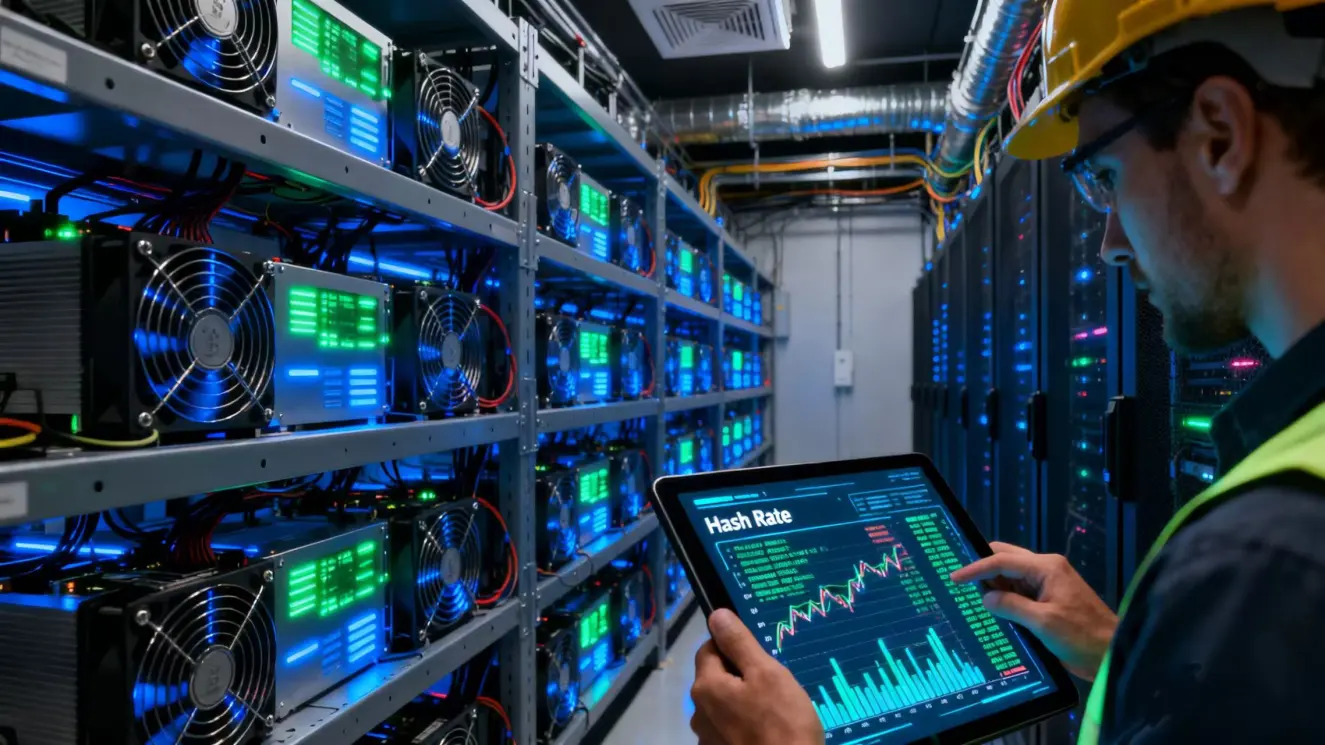
ASIC miners are not like desktop computers. They are incredibly loud (resembling the sound of a vacuum cleaner) and generate significant heat. You cannot run these in your living room. You need a dedicated space with proper ventilation, often requiring exhaust fans and noise-dampening solutions. Additionally, ensure your electrical wiring can handle the load; these machines often require 220V outlets, similar to heavy appliances.
Step 3: Get a Bitcoin Wallet
Before you turn on the machine, you need a place to send your earnings. For maximum security, use a hardware wallet (cold storage). This device keeps your private keys offline, protecting your hard-earned assets from online hackers.
Step 4: Join a Mining Pool
This is a critical step for consistency. If you try to mine alone (Solo Mining), you are competing against massive industrial farms. The statistical probability of you finding a block by yourself is close to zero. Instead, you should join a Mining Pool. These are groups of miners who combine their computing power. When the pool finds a block, the reward is split among all members based on how much work they contributed. This ensures you receive small, regular payouts rather than gambling on a jackpot.
Step 5: Configure Mining Software
Modern ASICs come with built-in software interfaces. Once connected to your network, you can access the miner's dashboard via a web browser. Here, you will input the "Stratum URL" provided by your chosen mining pool, along with your worker ID and wallet address. Once saved, the machine will begin hashing immediately.
Risks and Considerations
Beyond the financial calculation, there are operational risks to consider via a SWOT analysis of your setup. Heat management is a constant battle; if your ASIC overheats, the chips can burn out, rendering a distinct financial loss. Noise pollution can disturb neighbors if you are running a home setup. Finally, be wary of cloud mining scams. Many websites claim to mine on your behalf if you send them money; the vast majority of these are fraudulent. Owning your own hardware gives you full control.
Conclusion
Bitcoin mining in 2025 is a sophisticated industry that serves as the backbone of the entire cryptocurrency ecosystem. While the barriers to entry are higher than they were a decade ago, the demand for network security has never been greater. It is a venture that rewards detailed planning, access to low-cost energy, and technical patience. By understanding the shift from simple hobbyist setups to efficient ASIC operations, you can make an informed decision about entering this digital frontier.
Frequently Asked Questions (FAQ)
Q: Is Bitcoin mining still profitable in 2026?
A: Bitcoin mining can still be profitable in 2026, but it depends on ASIC efficiency, electricity cost, pool fees, uptime, and BTC price. Always calculate ROI with your real electricity rate before buying mining hardware.
Q: What electricity price is suitable for Bitcoin mining?
A: Lower electricity rates create a better ROI outlook. If your power cost is high, hosting, hydro-cooled deployment, or a more efficient ASIC miner may be more suitable than running older hardware at home.
Q: Which ASIC miner is better for beginners?
A: Beginners should compare hashrate, power consumption, noise, cooling requirements, warranty, and payback risk. A stable and efficient miner is usually safer than choosing only by the lowest upfront price.
Q: Should I mine at home or use hosting?
A: Home mining is easier to control but requires proper power, noise, and cooling conditions. Hosting can be better for high-power ASIC miners when electricity, maintenance, and uptime are managed professionally.
Click the link to get the latest price list and coupons:
https://www.jinglemining.com/collections/fluminer/products/fluminer-l1-pro https://www.jinglemining.com/collections/goldshell/products/goldshell-byte-ae-card-dg-card-xt-card-al-card https://www.jinglemining.com/collections/canaan/products/new-canaan-avalon-q-90th-s-1674w https://www.jinglemining.com/collections/canaan/products/canaan-avalon-nano-3s-6t https://www.jinglemining.com/collections/canaan/products/canaan-avalon-mini3