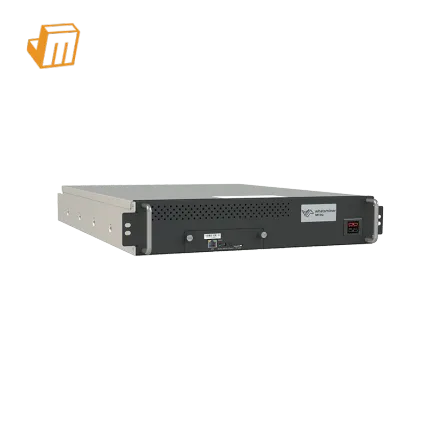

Revenue Assumption Baseline
The MicroBT WhatsMiner M73S+, with its robust 570 Terahash per second (Th/s) hashrate, is engineered specifically for the SHA-256 algorithm, dedicating its formidable processing power to mining Bitcoin (BTC). This high-performance output establishes a significant revenue ceiling, directly correlating to its share of the total network hashpower and, consequently, the block rewards it can potentially secure. Its operational capacity is underpinned by a 7125 Watt (W) power draw, translating to an efficiency rating of 12.50 W/TH, a critical metric for assessing its energy consumption relative to its mining output.
While the M73S+'s specifications define its inherent earning potential, the actual daily revenue and subsequent payback period are dynamic variables influenced by external market forces. These include the fluctuating price of Bitcoin, the ever-changing network difficulty, and the specific electricity rates incurred by the operator. Consequently, this analysis focuses on the interplay of the miner's fixed technical attributes with these variable economic factors, without speculating on specific, time-sensitive financial outcomes such as daily revenue figures or a definitive payback timeline, which require real-time market data and individualized cost structures.
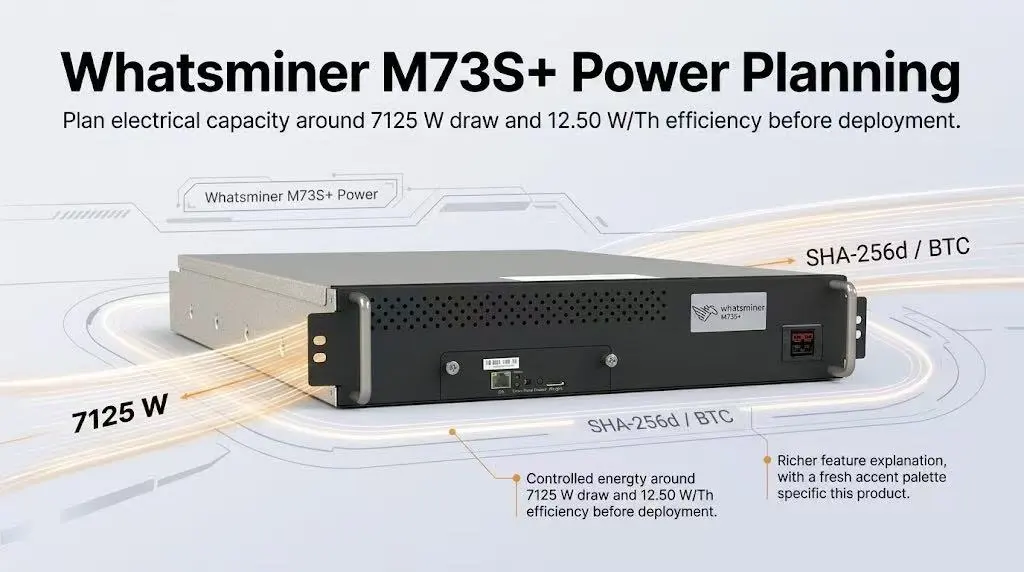
Strategic ROI Matrix
Evaluating the financial viability of a high-performance ASIC miner like the MicroBT WhatsMiner M73S+ necessitates a structured approach, dissecting how its core specifications interact with broader market dynamics to influence its Return on Investment (ROI) and payback period. The following matrix outlines key financial variables and their direct impact.
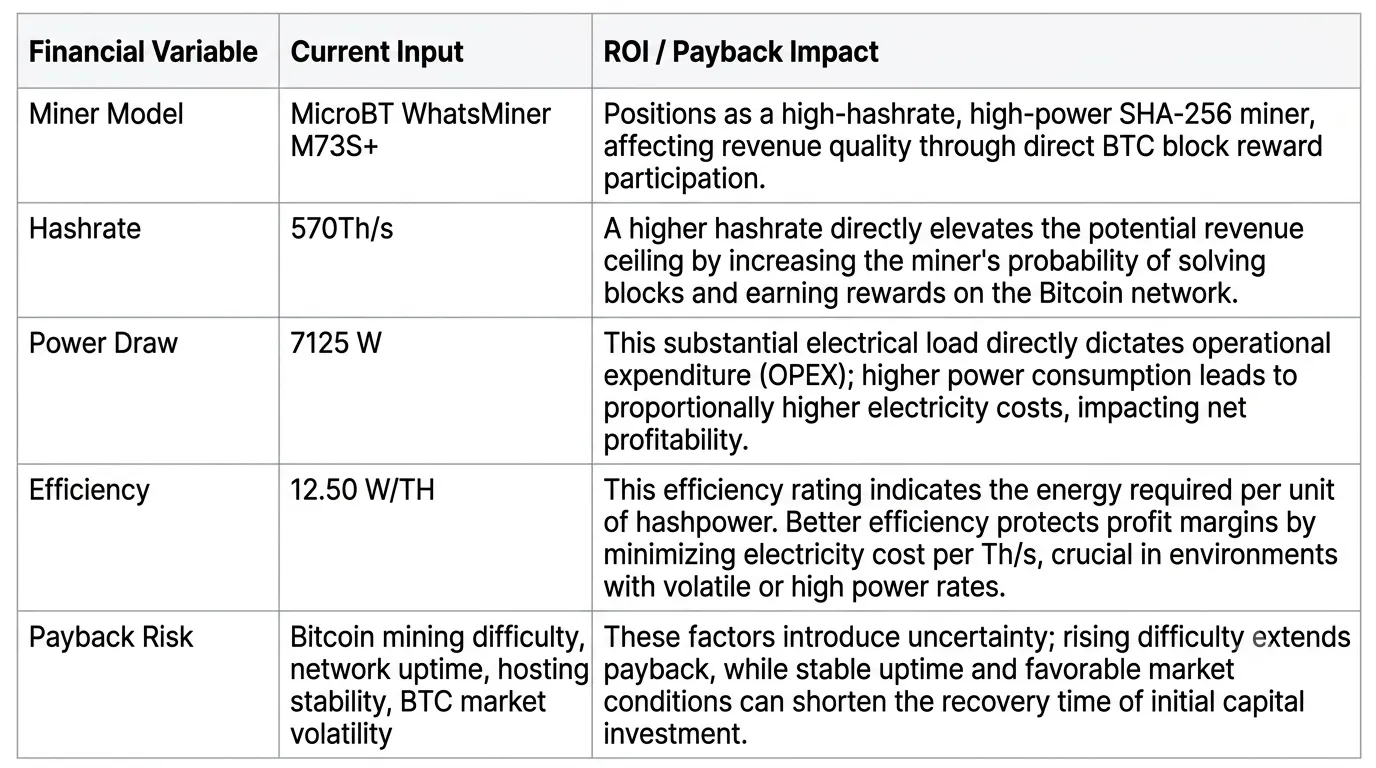
The combination of the M73S+'s high hashrate and its specific power-to-efficiency ratio forms the bedrock of its profitability equation. While the 570Th/s output promises significant earning potential, the 7125W power draw means that electricity costs will be the primary determinant of OPEX. The 12.50 W/TH efficiency helps manage this by indicating a relatively optimized energy conversion, yet the absolute power consumption makes it highly sensitive to electricity rate fluctuations. Ultimately, the pace of capital recovery will hinge on the miner's ability to maintain high uptime, the stability of Bitcoin's market price, and the unpredictable nature of Bitcoin network difficulty adjustments.
Macro-to-Micro Payback Pressure
Recent market signals, such as the reported 7.7% fall in Bitcoin mining difficulty, translate directly into a tangible, short-term positive impact on the payback trajectory for the MicroBT WhatsMiner M73S+. A reduction in network difficulty means that, for a constant hashrate of 570Th/s, the M73S+ can expect to find blocks or contribute to a mining pool's block-finding efforts with greater frequency. This directly enhances its proportional share of block rewards and transaction fees, thereby boosting gross revenue and accelerating the potential recovery of its initial capital investment, assuming all other variables like Bitcoin price and electricity costs remain stable. This temporary reprieve in difficulty effectively lowers the barrier to profitability, making each unit of hashpower more effective.
However, the persistence of "miner pressure," as indicated by broader market observations, suggests that this difficulty reduction might be a transient phenomenon or a symptom of underlying market stresses. Such pressure often manifests as intensified competition among miners, potentially leading to future difficulty increases as less efficient operations capitulate and more efficient hardware (like the M73S+) continues to be deployed. Furthermore, sustained miner pressure can depress equipment resale values, increase hosting costs due to demand, and put downward pressure on the hashprice (revenue per terahash). For the M73S+ operator, this translates to increased uncertainty in long-term payback calculations, emphasizing the need for robust operational efficiency and strategic hedging against future volatility in network metrics and energy prices.
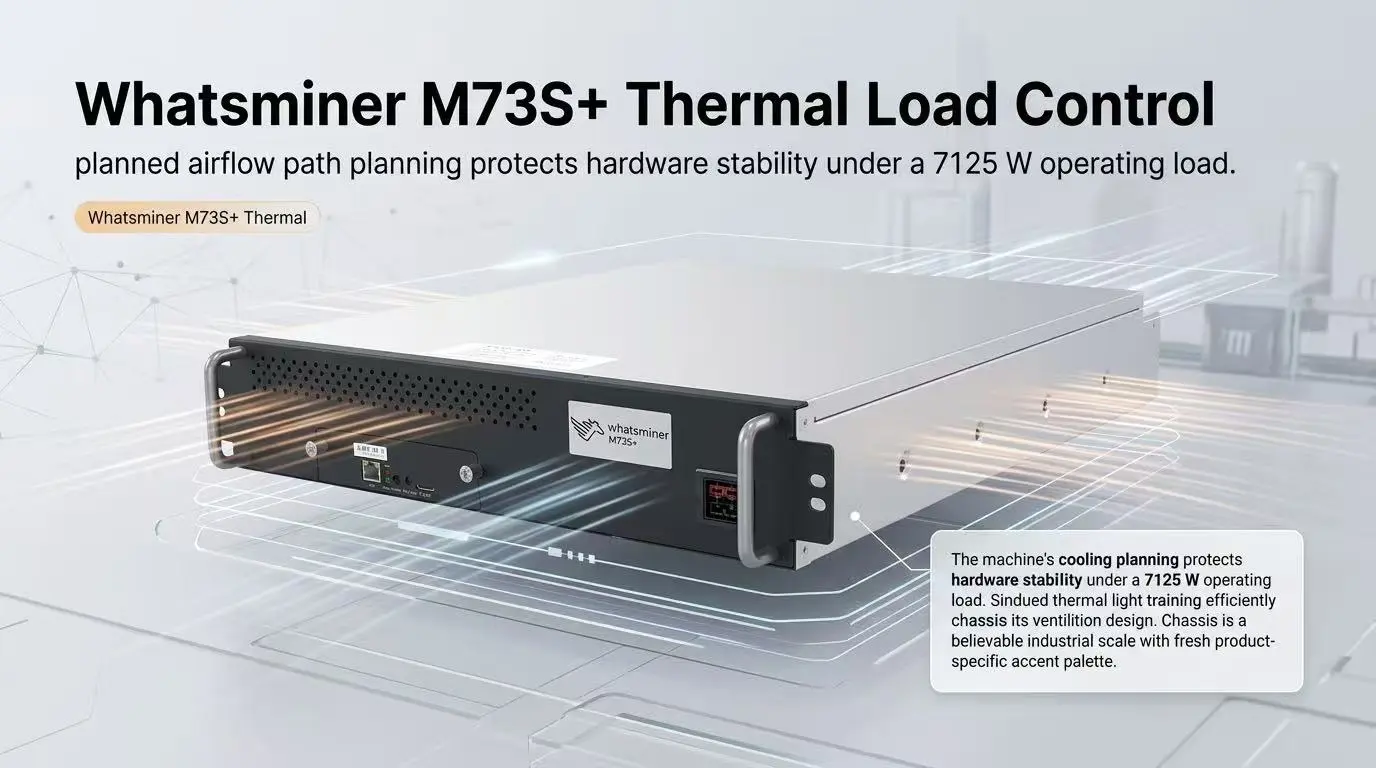
Payback Verdict & Next Steps
The MicroBT WhatsMiner M73S+ presents a compelling proposition for SHA-256 mining, leveraging a high 570Th/s hashrate and a competitive 12.50 W/TH efficiency. Its payback potential is currently bolstered by recent Bitcoin network difficulty adjustments, offering a window of enhanced profitability. However, its significant 7125W power draw underscores a critical sensitivity to electricity costs, making a favorable power purchasing agreement paramount for realizing optimal ROI. The overarching market dynamic of persistent miner pressure necessitates a strategic, long-term view, accounting for potential future difficulty increases and market volatility. For serious investors, understanding these nuanced financial levers is key to maximizing returns and mitigating risks. We strongly recommend contacting JingleMining for a custom ROI model, procurement validation, and expert deployment consulting tailored to your specific operational environment.
Frequently Asked Questions (FAQ)
Q: What variables matter most in payback analysis?
The most critical variables are the miner's hashrate, its power efficiency (W/TH), the current electricity cost, and the market price and network difficulty of the cryptocurrency being mined. These factors collectively determine daily revenue, operational expenses, and ultimately, the time it takes to recoup the initial investment.
Q: How does electricity cost change the ROI outlook?
Electricity cost is typically the largest operational expense for ASIC miners, directly impacting net profitability. Higher electricity rates can significantly extend the payback period and reduce overall ROI, potentially rendering an otherwise efficient miner unprofitable, especially when network difficulty is high or coin prices are low.
What should buyers verify before trusting a payback estimate?
Buyers should verify the input parameters used in the estimate, including the exact electricity rate (per kWh), the assumed coin price, the current network difficulty, and any estimated pool fees or taxes. It's crucial to use real-world, current data for these variables to generate a realistic and reliable payback projection.