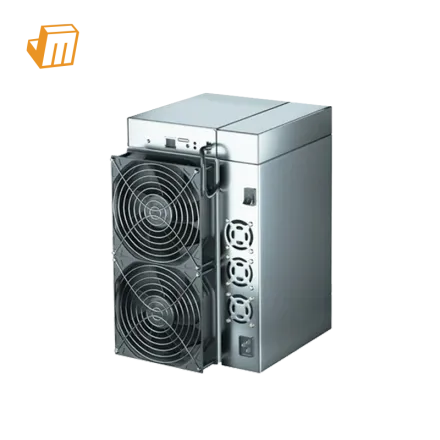

The Goldshell SC5 Pro and SC5 Pro II serve as dedicated, high-output application-specific integrated circuit (ASIC) miners engineered exclusively for the Blake2B-Sia algorithm to secure the Sia network. The primary commercial advantage of choosing between these units is their ability to capture large shares of the SiaCoin (SC) daily emission block rewards, with the SC5 Pro II delivering a substantial 27.2% increase in raw hashing output over its predecessor. However, the critical operational constraint that will disqualify many residential and small-scale miners is the heavy continuous power draw of both machines, which requires a dedicated the manufacturer-specified input voltage to the manufacturer-specified input voltage electrical infrastructure and high-capacity cooling systems to prevent thermal throttling.
Operators must carefully balance their local utility rates against the fluctuating network difficulty and hashprice of the Blake2B-Sia ecosystem. Selecting the wrong hardware revision can lead to compressed operating margins or premature shutdown if electricity costs rise or if network-wide difficulty spikes. This detailed comparison evaluates the physical, electrical, and economic performance profiles of both Goldshell models to help operators maximize their mining deployment margins.
Technical Architecture and Efficiency Comparison
The fundamental differentiator between the Goldshell SC5 Pro and the Goldshell SC5 Pro II lies in chip optimization, which translates directly into higher hashrate density and improved energy efficiency. The SC5 Pro II leverages an updated ASIC architecture that extracts 14.00 Th/s from its hashing boards, compared to the 11.00 Th/s delivered by the first-generation SC5 Pro. This boost in computational speed does not come from merely overlocking the existing chips; instead, it represents a refinement in the silicon's operating voltage efficiency. While the SC5 Pro draws 2820 W to deliver its output, resulting in an efficiency rating of 256.36 W/Th, the SC5 Pro II requires 3300 W to produce its 14.00 Th/s, yielding a superior efficiency of 235.71 W/Th. This represents an 8% improvement in thermodynamic and computational efficiency.
Understanding this efficiency gap is crucial because it dictates the baseline survival threshold of your mining operation during market downturns. In cryptocurrency mining, hardware efficiency determines your "shutdown price"; the point at which the cost of the electricity required to mine one unit of currency exceeds the market value of that currency. By operating at 235.71 W/Th, the SC5 Pro II can remain profitable at higher electricity tariffs or lower SiaCoin market prices compared to the SC5 Pro.
The following table provides the verified, exact technical specifications for both models
| Miner Model | Algorithm | Hashrate | Power Draw | Efficiency |
|---|---|---|---|---|
| Goldshell SC5 Pro | Blake2B-Sia | 11.00 Th/s | 2820 W | 256.36 W/Th |
| Goldshell SC5 Pro II | Blake2B-Sia | 14.00 Th/s | 3300 W | 235.71 W/Th |
For large-scale deployments, the compounding effect of this efficiency difference is massive. If you deploy ten units of the SC5 Pro, you will generate 110.00 Th/s of hashing power while drawing 28.2 kW of continuous power. Deploying eight units of the SC5 Pro II yields 112.00 Th/s while drawing only 26.4 kW. By opting for the second-generation hardware, you gain more processing power while saving 1.8 kW of continuous load. This reduced demand lowers your monthly utility expenses, frees up capacity on your electrical panels, and decreases the heat load that your ventilation systems must exhaust from the building.
Electrical Infrastructure and Thermal Management Consequences
Deploying industrial-grade ASICs like the Goldshell SC5 Pro and SC5 Pro II requires strict adherence to electrical engineering standards. Both machines operate at high wattages that exceed the capacity of standard residential circuits. The SC5 Pro draws 2820 W continuously, while the SC5 Pro II draws 3300 W. Because these machines run 24 hours a day, 7 days a week, they represent a continuous electrical load. National electrical codes dictate that a circuit must not be loaded beyond 80% of its maximum capacity for continuous loads.
To run a single Goldshell SC5 Pro II drawing 3300 W on a standard the manufacturer-specified input voltage mining circuit, the current draw is 13.75 Amperes (3300 W / the manufacturer-specified input voltage). Applying the 80% safety margin rule, this machine requires a dedicated circuit breaker rated for at least the calculated current at the verified input voltage (since the calculated current at the verified input voltage is 68.75% of a the calculated current at the verified input voltage breaker's capacity, which is safely below the 80% limit of the calculated current at the verified input voltage). If you attempt to run this machine on a the calculated current at the verified input voltage, the manufacturer-specified input voltage breaker, the continuous draw of 13.75 Amperes will push the breaker to 91.6% of its limit, leading to thermal tripping over time and risking damage to the wiring. For the SC5 Pro drawing 2820 W, the current draw at the manufacturer-specified input voltage is 11.75 Amperes. While slightly lower, it still demands a dedicated the calculated current at the verified input voltage or the calculated current at the verified input voltage circuit to ensure stable long-term operation.
Thermal management is another critical variable that dictates hardware longevity and performance stability. The SC5 Pro II converts its 3300 W of electrical input entirely into heat, which must be immediately removed from the chassis. This model utilizes high-RPM dual-intake and exhaust fans to force massive volumes of air through its internal heatsinks. If the ambient intake temperature rises above the manufacturer-specified ambient limit (95 degrees Fahrenheit), the onboard controller will initiate thermal throttling, reducing the frequency of the hashing chips to prevent permanent silicon degradation. This throttling causes an immediate drop in your operational hashrate.
To prevent recirculation; where hot exhaust air is pulled back into the intake; operators must establish a physical hot-and-cold aisle containment system. The SC5 Pro, though drawing slightly less power at 2820 W, presents a similar thermal challenge. Both models are highly sensitive to dust and humidity. Particulate buildup on the heatsinks acts as an insulator, driving up chip temperatures and causing the cooling fans to run at maximum speed, which increases noise levels beyond the documented noise rating. Consequently, these miners are not suitable for living spaces and must be housed in dedicated, noise-insulated, and well-ventilated environments.
Profitability Dynamics, Hashprice Sensitivity, and ROI Projections
Calculating the return on investment (ROI) for Blake2B-Sia mining hardware requires a deep understanding of network dynamics rather than a simple calculation of today's token price against your electric bill. The daily revenue of a miner is determined by its share of the total network hashrate. Because SiaCoin uses the Blake2B-Sia algorithm, your revenue is highly sensitive to the total global hashrate deployed on this specific network. If major industrial farms add thousands of high-output miners to the network, the overall difficulty will rise, reducing the amount of SC tokens earned per Terahash of hashing power.
To evaluate your potential payback period, you must factor in four critical economic variables 1. Network Difficulty and Hashprice Trends: Hashprice measures the expected daily revenue of 1 Th/s of hashing power. If the global Blake2B-Sia hashrate surges, your daily yield in SC tokens will decline. The SC5 Pro II, with its 14.00 Th/s output, provides a stronger hedge against rising network difficulty than the 11.00 Th/s SC5 Pro. 2. Electricity Tariffs: This is the primary ongoing operating cost (OPEX). An operator with cheap electricity (e.g., the buyer's verified electricity cost) will find both machines highly profitable, whereas an operator paying the buyer's verified electricity cost or more must prioritize the higher-efficiency SC5 Pro II to maintain a positive margin.
3. Hardware Depreciation and Residual Value: ASIC hardware depreciates rapidly as newer, more efficient models enter the market. The SC5 Pro II, being the newer revision, will retain its market resale value much longer than the older SC5 Pro. 4. Uptime and Shutdown Thresholds: If the price of SiaCoin drops significantly, the SC5 Pro (at 256.36 W/Th) will hit its shutdown threshold much sooner than the SC5 Pro II (at 235.71 W/Th). During market bottoms, only the most efficient machines can continue running without generating a net loss on every kilowatt-hour consumed.
Let us look at a conditional operating scenario. Assuming an average electricity cost of the buyer's verified electricity cost, running the SC5 Pro II (3300 W) costs approximately the buyer's verified electricity cost per day in power (the buyer's verified electricity cost 3.3 kW 24 hours). To achieve a positive return, the 14.00 Th/s output must generate more than the buyer's verified electricity cost worth of SiaCoin daily. For the older SC5 Pro (2820 W), the daily power cost under the same tariff is the buyer's verified electricity cost. However, because it only produces 11.00 Th/s, its revenue-generating potential is 21.4% lower. If the market hashprice drops to a point where 1 Th/s yields only the buyer's verified electricity cost per day, the SC5 Pro will generate the buyer's verified electricity cost in daily revenue while costing the buyer's verified electricity cost to run, resulting in a daily loss of the buyer's verified electricity cost.
Under the exact same conditions, the SC5 Pro II will generate the buyer's verified electricity cost in daily revenue while costing the buyer's verified electricity cost to run, maintaining a slim but positive daily margin of the buyer's verified electricity cost. This scenario demonstrates how the superior efficiency of the SC5 Pro II can prevent complete operational shutdown during market corrections.
Final Assessment
The choice between the Goldshell SC5 Pro and the Goldshell SC5 Pro II depends on your operational scale, electrical infrastructure limits, and local energy costs.
Who Should Buy the Goldshell SC5 Pro II?
The Goldshell SC5 Pro II is the optimal choice for professional operators and home mining enthusiasts who have access to cheap, stable power (under the buyer's verified electricity cost) and a dedicated the manufacturer-specified input voltage electrical setup. Its superior efficiency of 235.71 W/Th and higher output of 14.00 Th/s ensure that it remains profitable far longer than the older model as the Sia network difficulty grows. If you want to maximize your long-term yield per square foot of space and protect your investment against hardware depreciation, the SC5 Pro II is the clear winner.
Who Should Buy the Goldshell SC5 Pro?
The original Goldshell SC5 Pro remains a viable option only if it can be purchased at a significant discount on the secondary market, and only if your electricity cost is extremely low or virtually free (such as surplus off-grid solar power). Additionally, if your existing electrical panel is strictly capped and cannot support the higher 3300 W load of the SC5 Pro II, the lower 2820 W draw of the SC5 Pro might allow you to deploy the machine without undergoing expensive electrical service upgrades.
When Neither Option Is a Defensible Purchase
Neither machine should be purchased if your local electricity rate exceeds the buyer's verified electricity cost, as the high power consumption of both units will quickly erase any mining revenue, leaving you with an unrecoverable capital expenditure. Furthermore, if you cannot provide a dedicated, noise-isolated space with proper hot-and-cold air separation, the heat and noise of these full-sized industrial ASICs will make them impossible to operate in a home environment.
For those ready to purchase or looking for current pricing and availability, you can check the official product page on the JingleMining website or contact their customer support team for bulk deployment options.
Frequently Asked Questions (FAQ)
What algorithm and coin do the Goldshell SC5 Pro and SC5 Pro II mine?
Both the Goldshell SC5 Pro and the SC5 Pro II are dedicated ASIC miners designed exclusively for the Blake2B-Sia algorithm. They are built to mine SiaCoin (SC) and cannot be used to mine Bitcoin or other algorithms like SHA-256 or kHeavyHash.
Can I run the Goldshell SC5 Pro II on a standard household outlet?
No, you cannot run the Goldshell SC5 Pro II on a standard the manufacturer-specified input voltage/the manufacturer-specified input voltage household outlet because its 3300 W power draw exceeds the safe capacity of standard residential circuits. It requires a dedicated the manufacturer-specified input voltage to the manufacturer-specified input voltage circuit with a properly rated breaker, such as a the calculated current at the verified input voltage breaker, to operate safely and continuously.
How does the efficiency of the SC5 Pro II compare to the first-generation SC5 Pro?
The Goldshell SC5 Pro II is significantly more efficient, operating at 235.71 W/Th compared to the 256.36 W/Th of the original SC5 Pro. This 8% improvement in efficiency means the SC5 Pro II generates more hashing power per watt, allowing it to remain profitable at higher network difficulties and lower coin prices.