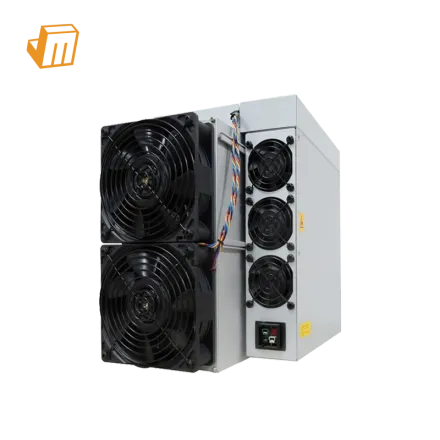

Bitmain Antminer S21 vs Bitmain Antminer S21 XP should be shortlisted only by operators who can support 3550 W continuously and remove the resulting heat without sacrificing uptime. Its 200.00 Th/s profile is the commercial advantage, but buyers without verified electrical headroom, cooling capacity, and defensible operating economics should not buy it.
The Bitmain Antminer S21 XP represents the current performance ceiling for SHA-256 mining, offering an optimized efficiency of 13.50 W/Th that provides a critical defensive buffer against increasing network difficulty. Conversely, the standard Bitmain Antminer S21 remains a viable, lower-capital-expenditure alternative for operations where electricity costs are highly competitive, despite its higher consumption profile of 17.75 W/Th. The S21 XP is the definitive choice for high-density mining facilities aiming to maximize hash output per square foot of rack space, while the standard S21 is better suited for deployments where hardware acquisition costs must be strictly managed against operational overhead. Neither machine is suitable for residential or non-industrial environments, as both models require high-amperage, dedicated PDU infrastructure and professional-grade thermal management to mitigate the risks of hardware failure or localized circuit overload. Choosing between these models is not merely a question of peak performance, but a strategic decision based on your specific power tariff, facility cooling capacity, and long-term exposure to Bitcoin network difficulty trends.
Operational Efficiency and Hash-Density Analysis
The primary differentiator between the Antminer S21 and the S21 XP is the power-to-hash ratio, which dictates the long-term viability of the hardware in a competitive mining environment. The S21 XP operates at 13.50 W/Th, significantly lower than the 17.75 W/Th of the standard S21. This delta of 4.25 W/Th is not just a marginal improvement; it represents a fundamental change in the machine's ability to remain profitable as network difficulty increases. In a market where hashprice is volatile, the XP model allows operators to maintain a lower shutdown price, meaning the machine can continue to produce positive cash flow even when the network hash-rate forces less efficient machines to power down.
When assessing hash density, the S21 XP delivers 270.00 Th/s compared to the 200.00 Th/s of the standard S21. For facility managers, this means the XP model provides the applicable operating margin more throughput within the same physical rack footprint. If your facility is limited by total power capacity, the XP allows you to maximize the total network contribution of your infrastructure without increasing the physical count of miners, reducing the logistical burden of maintenance, cabling, and monitoring.
| Miner Model | Algorithm | Hashrate | Power Draw | Efficiency |
|---|---|---|---|---|
| Bitmain Antminer S21 | SHA-256 | 200.00 Th/s | 3550 W | 17.75 W/Th |
| Bitmain Antminer S21 XP | SHA-256 | 270.00 Th/s | 3645 W | 13.50 W/Th |
The consequence of this efficiency difference is felt directly in the operational margin. An operator running S21 XP units will realize a higher net profit per kilowatt-hour consumed. For large-scale mining operations, this efficiency gain acts as a form of insurance. As the network difficulty rises, the breakeven point for the S21 XP will consistently remain below that of the S21. If your strategy involves long-term HODLing or minimizing operational expenditure, the XP’s superior efficiency is the superior metric. However, for those with access to extremely low-cost or stranded energy, the lower capital cost of the S21 may offer a faster initial return on investment, provided the facility can handle the heat load of a larger fleet of less efficient machines.
Power Load, Thermal Management, and Infrastructure
Both the Antminer S21 and the S21 XP demand rigorous electrical and thermal planning. The S21 consumes 3550 W, while the S21 XP consumes 3645 W. While the difference in power draw is relatively small, the thermal output is significant. Both machines function as industrial-grade equipment designed for high-flow, forced-air environments. Operating these units in an environment without sophisticated intake-to-exhaust air management will lead to rapid thermal throttling and, eventually, permanent component damage.
Infrastructure requirements for these miners go beyond simple power availability. A 3645 W load at the manufacturer-specified input voltage requires dedicated circuits and high-quality PDUs that can sustain this continuous draw without voltage drop or localized heating. When deploying the S21 XP, the increased hash density means that the heat generated per rack unit is higher than with the standard S21. Operators must ensure that their HVAC systems or immersion cooling setups can evacuate this heat effectively. Recirculation of hot air back into the intake is the most common cause of premature failure for these specific ASIC models.
From a maintenance perspective, the S21 XP’s higher hash density requires a more robust monitoring strategy. A failure in an XP unit results in a larger loss of total hash-rate compared to an S21. Consequently, your operational team must be prepared to handle the increased revenue risk associated with individual machine downtime. If your site integration plan includes automated failover and remote management, the higher performance of the S21 XP justifies the increased complexity in monitoring and maintenance. Conversely, if your facility lacks the ability to respond rapidly to hardware drops, the standard S21 offers a more granular approach to fleet management where individual machine failures have a smaller impact on total site output.
Economics, Depreciation, and Operational Thresholds
The decision between the S21 and the S21 XP is inherently tied to the hashprice and the expected duration of the asset's life cycle. The hashprice is the revenue per unit of hash-rate, and it is the most critical variable in determining when a machine becomes a liability. Because the S21 XP is more efficient, it has a lower shutdown price. In a bear market or a period of high network difficulty, the XP model is far more likely to remain profitable. This resilience also translates into a higher residual value, as the machine remains useful for a longer period of time compared to less efficient models.
Depreciation must be calculated based on the expected technological lifespan. The S21 series is built for durability, but the rapid pace of innovation in the SHA-256 space means that the "useful life" of an ASIC is often shorter than its physical lifespan. The S21 XP, by virtue of its superior efficiency, is likely to remain relevant on the network for longer than the standard S21. This suggests that the XP model will command a higher resale value in secondary markets when the time comes to upgrade to newer generations of hardware.
When modeling ROI, do not rely on fixed revenue projections. Instead, apply a sensitivity analysis that incorporates a the applicable operating margin annual increase in network difficulty. Under these conditions, the standard S21 will see its profit margins compress faster than those of the S21 XP. If your electricity cost is above the industry average, the S21 may reach its shutdown threshold significantly sooner than the XP. For the buyer, the S21 is a tactical purchase for maximizing immediate hash-rate with lower upfront expenditure, whereas the S21 XP is a strategic purchase for long-term operational resilience and margin protection. Evaluate your current electricity tariff against the 13.50 W/Th and 17.75 W/Th specs to determine the exact point where the additional capital for the XP pays for itself through reduced power costs.
Frequently Asked Questions (FAQ)
How does the efficiency difference between the S21 and S21 XP impact long-term operational costs?
The efficiency difference of 4.25 W/Th means the S21 XP consumes significantly less electricity to produce the same amount of hash-rate compared to the standard S21. Over time, this lower power consumption results in lower electricity bills and allows the S21 XP to remain profitable even when the network hash-rate and difficulty increase, providing a wider margin of safety during periods of low hashprice.
Can these miners be operated in a standard office or home environment?
No, these miners are not designed for non-industrial environments. They require dedicated high-amperage electrical circuits, professional-grade PDU infrastructure, and sophisticated thermal management systems to handle the significant heat output and noise levels. Operating these units in an office or home setting will likely result in electrical circuit failure, thermal throttling, and extreme noise disturbance.
Which model is better for a facility with limited power capacity?
The S21 XP is the better choice for facilities with limited power capacity because it delivers a higher hash-rate of 270.00 Th/s compared to the 200.00 Th/s of the standard S21 within a similar power envelope. By deploying the S21 XP, you maximize your total network contribution per watt of available power, allowing for higher production density without exceeding your existing electrical infrastructure limits.
Cross-Network Operating Boundary
Bitmain Antminer S21 and Bitmain Antminer S21 XP cannot be ranked by placing 200.00 Th/s beside 270.00 Th/s and declaring the larger figure the winner. Bitmain Antminer S21 works on SHA-256 for BTC, while Bitmain Antminer S21 XP works on SHA-256 for BTC. Each network defines work differently, so the displayed hashrate has meaning only inside its own difficulty, block-reward, fee, pool, and hashprice environment. The useful comparison is therefore not raw output across unlike algorithms. It is the margin each machine can defend after its own network revenue is converted into the buyer's electricity, hosting, maintenance, and downtime assumptions. A buyer who has no conviction about the target network should pause before choosing either model, because efficient hardware cannot repair a weak or misunderstood revenue thesis.
The site decision is more concrete. Bitmain Antminer S21 is listed at 3550 W and 17.75 W/Th; Bitmain Antminer S21 XP is listed at 3645 W and 13.50 W/Th. Those numbers must be translated into continuous branch-circuit load, PDU capacity, cable and connector rating, room heat rejection, and the amount of expansion headroom left after installation. Do not size a circuit at the exact nameplate total and call the job complete. Continuous mining load needs headroom for safe operation, while the cooling plan must prevent hot exhaust from returning to the intake. If several units share a room, multiply the verified power draw by the planned unit count before discussing rack density or ventilation. The lower-power unit may be easier to place, but that advantage matters only when it preserves stable clocks, avoids thermal derating, and leaves enough electrical capacity for the rest of the site.
Pool behavior and firmware discipline can erase a paper advantage. Before scale deployment, run one verified unit long enough to observe accepted shares, stale and reject rates, failover behavior, frequency stability, fan response, and any hashboard dropout or thermal-throttling evidence exposed by the miner interface or system log. Compare pools using the same observation window and network conditions; otherwise a latency change can be mistaken for a hardware difference. Firmware should be matched to the exact model and hardware revision, with the working configuration recorded before an update or tuning change. Aggressive frequency settings are not free output. They can raise heat density, increase error rates, and shorten the margin available during high ambient temperatures. A stable unit that submits clean shares is commercially stronger than a nominally faster unit that spends more time throttled, rejected, or offline.
The financial model should use scenarios rather than a single daily-profit screenshot. For each miner, stress network difficulty and hashprice together over a 12- to 24-month holding period, then apply a realistic uptime and downtime margin. Separate CAPEX from OPEX: purchase and deployment cost belong in the capital decision, while electricity, hosting, pool fees, cooling overhead, maintenance, and interruption losses belong in operating cost. Hardware depreciation and residual value should be modeled explicitly because the buyer may recover only part of the original purchase cost at exit. Define a shutdown threshold from the actual site tariff and hosting terms, then test how quickly each machine reaches that threshold when revenue per hash falls. This approach does not predict coin prices; it identifies which unit has more room for error before operation becomes irrational.
The buyer boundary is clear. Shortlist Bitmain Antminer S21 only when BTC exposure, 3550 W of continuous load, pool access, and the site's cooling path have all been verified. Shortlist Bitmain Antminer S21 XP only when the same checks support its BTC workload and 3645 W load. Do not buy either unit because one isolated efficiency number looks attractive, and do not treat an unverified listing, generic calculator, or current revenue snapshot as a lifecycle forecast. The final procurement file should contain the exact SKU, condition, included accessories, warranty terms, voltage and connector requirements from the seller, a site-load calculation, pool plan, maintenance responsibility, and scenario-based margin floor. If any of those inputs remain unresolved, the correct decision is to delay the purchase rather than convert missing evidence into optimistic assumptions.
Final Assessment
The choice between the Bitmain Antminer S21 and the S21 XP hinges on the scale of your operation and your long-term energy strategy. The S21 XP is the clear winner for professional, large-scale mining operations that prioritize long-term profitability, higher hash density, and resilience against network difficulty. Its superior efficiency of 13.50 W/Th makes it the more robust asset for any operator looking to protect their margins against fluctuating hashprice.
The standard S21 remains a defensible purchase only for specific buyer profiles: those with extremely low, stable electricity costs who are looking to minimize initial capital expenditure, or those who are building out smaller fleets where the lower entry price of the S21 offers a faster path to reaching a target hash-rate. If your electricity costs are high or your power availability is constrained, the standard S21 is a poor fit that will likely become obsolete or unprofitable faster than the XP model. For most professional deployments in the current market, the Antminer S21 XP is the recommended standard, as its performance metrics provide the best balance of output, efficiency, and operational longevity.