
🌐 Introduction: The Era of Precision Mining
Welcome to 2026. The cryptocurrency mining landscape has matured. Gone are the days of the "Wild West" where you could plug in any machine, anywhere, and expect to see a return on investment (ROI) within weeks. Today, Bitcoin mining is a sophisticated industrial sector, characterized by razor-thin margins, global competition, and energy arbitrage.
For the modern miner—whether you are running a garage setup with five units or managing a 50MW facility—success is no longer determined solely by who has the most powerful hardware. Success is determined by precision. It is about understanding the delicate balance between hardware efficiency, electricity expenditure, and network difficulty.
At Jingle Mining, we speak with miners every day. The most successful ones aren't asking, "Which machine is the fastest?" They are asking, "Which machine yields the best math?"
This distinction is why we have overhauled our website to include a powerful, real-time ASIC Miner Profitability Ranking. We believe that before you spend a single dollar on hardware, you must understand the numbers behind the hashrate.
In this comprehensive guide, we will explore why profitability tracking is the heartbeat of your operation. We will use two of the market's leading models—the Antminer S21 and WhatsMiner M60—as case studies to demonstrate how to calculate your true ROI, and we will answer the most pressing questions miners have in 2026.
2026 Profitability Stress Test
A 2026 Bitcoin miner comparison should start with three inputs, not with a machine ranking: electricity price, wall power, and expected uptime. For any S21, M60, or similar ASIC, calculate daily energy cost first by multiplying kW draw by 24 hours and your real kWh rate. Then test three cases: current network difficulty, a 10% difficulty increase, and a 20% difficulty increase. A miner that looks profitable only in the best case is not a stable purchase; it is a market-timing bet. For hosted units, include maintenance fees, downtime policy, and payout timing. This makes the guide useful even when BTC price, hashprice, and miner inventory change through 2026.
📊 Why Profitability Tracking is the "Heartbeat" of Mining
Before we discuss specific hardware, we must address a fundamental question: Why is obsessing over live profitability data so critical right now?
Many newcomers view mining as a passive income stream: buy a machine, plug it in, and collect Bitcoin. However, experienced miners know that mining is actually a derivative of the energy market. You are essentially arbitraging the cost of electricity against the value of Bitcoin.
Here are the three reasons why you cannot afford to ignore real-time data:
1. Survival During Bear Markets (The "Shutdown Price") 🐻
In a bull market, almost every machine makes money. But history tells us that markets cycle. When Bitcoin's price corrects, the revenue per Terahash (TH) plummets. If you haven't calculated your "Shutdown Price"—the specific Bitcoin price at which your electricity cost exceeds your mining revenue—you risk operating at a loss.
Our profitability dashboard allows you to visualize these margins instantly. It helps you identify which machines in your fleet are efficient enough to keep running during a downturn and which ones need to be unplugged to save cash.
2. The "Difficulty" Trap 📈
Bitcoin's network difficulty is not static; it adjusts approximately every two weeks based on the total global hashrate. As more powerful machines come online globally, the difficulty rises, meaning your machine produces less BTC over time.
A static ROI calculation made in January is often useless by March. Relying on a manufacturer's spec sheet from six months ago can lead to disastrous financial planning. You need a dynamic tool that factors in the current difficulty to project realistic earnings for the months ahead.
3. Capital Efficiency (CAPEX vs OPEX) 💰
Mining hardware is a depreciating asset. An Antminer S21 costs significantly more than an older generation unit. To justify the higher upfront cost (CAPEX), the daily operational savings (OPEX) must be significant.
High efficiency machines cost more upfront but save money on electricity daily. Low efficiency machines cost less upfront but burn more electricity daily. Tracking profitability allows you to answer the golden question: "Will this machine pay for itself before it becomes obsolete?"
⚔️ Case Study: Using Data to Choose Between Titans (S21 vs M60)
To illustrate how to use our profitability tools effectively, let's analyze the two most dominant machines in the 2026 market. Both are excellent pieces of engineering, but they serve different financial strategies.
By comparing the Bitmain Antminer S21 and the MicroBT WhatsMiner M60, we can see why "one size fits all" does not apply in mining.
⚡ Contender A: Bitmain Antminer S21
The Efficiency Specialist
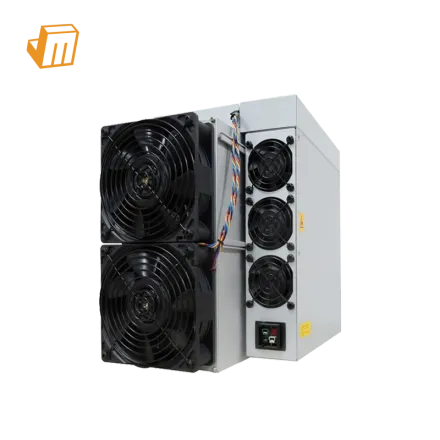
The Bitmain Antminer S21 represents a quantum leap in energy efficiency. Bitmain focused heavily on pushing the boundaries of chip technology to deliver maximum hashrate for minimum power consumption. This machine is designed for the long game.
·The Strategy: By consuming less power per Terahash, the S21 widens the gap between your revenue and your electric bill. This makes it the superior choice for miners who want to future-proof their operations against the next Bitcoin Halving.
·The Data: According to our live data, the S21 is currently generating:

(Please verify these numbers on our profitability page as they change daily.)
🛡️ Contender B: MicroBT WhatsMiner M60
The Reliability Engine
The MicroBT WhatsMiner M60 has earned a cult following among large-scale farm operators. While its efficiency specs are competitive, its true selling point is its "Set and Forget" nature.
·The Strategy: Mining profitability is effectively zero if the machine is offline for repairs. The M60 series is famous for its robust build, tolerance for wider temperature ranges, and lower failure rates. For a miner in a harsh climate, Uptime = Revenue.
·The Data: Checking our mining revenue chart, the M60 shows:

The Takeaway: Without looking at the real-time data on our site, you might just buy the cheaper machine. But the data might show that the slightly more expensive S21 actually pays for itself 20% faster due to electricity savings. Math beats intuition every time.
👻 The Invisible Costs: It's Not Just About the Electric Bill
When you use our profitability calculator, you get a clear picture of Gross Profit vs Electric Costs. However, to be a truly professional miner, you must also account for the "invisible" costs that eat into your bottom line. We recommend factoring these into your personal ROI spreadsheets.
1. Infrastructure Cooling (PUE) ❄️
Your ASIC miner turns electricity into heat—a lot of it. Removing that heat costs money. If your machine consumes 3000W of power, but you need fans or A/C that consume another 300W to keep the room cool, your total power draw is 3300W. Always calculate your cost based on the total power draw at the wall, not just what the machine specs say.
2. Hardware Depreciation 📉
Hardware loses value over time. If you buy an S21 today for $3,500, it might be worth $1,500 in two years as newer, faster models are released. Your mining profits need to cover not just the electricity bill, but also this $2,000 loss in asset value. High-efficiency machines tend to hold their resale value better than less efficient models because they remain profitable for longer.
3. Pool Fees and Dev Fees 🤝
Don't forget that mining pools typically charge a 1% to 2% fee on your earnings. Additionally, if you are using custom firmware to overclock your machines, the developers often take a "dev fee" (usually 2-3%) of your hashrate. These small percentages add up over a year.
While our ASIC Profitability Page focuses on the direct hardware performance, keeping these secondary costs in mind will make your financial planning much more robust.
⚖️ Scenario Analysis: Which Machine Fits Your Profile?
Let's use the data from our tool to make a buying decision based on two common scenarios.
Scenario 1: The Home Miner (High Electric Cost) 🏠
· Your Reality: You mine in your garage or basement. You pay residential rates, perhaps around $0.08 - $0.10 per kWh.
· The Verdict: You likely need the Antminer S21.
· The Math: At high electric rates, the cost of power is your biggest enemy. A less efficient machine might break even at $0.05, but at $0.09 it burns money. The S21’s efficiency is your only path to a respectable ROI in this environment.
Scenario 2: The Industrial Farm (Low Electric Cost) 🏭
· Your Reality: You have a hosted facility in a region with abundant hydro or solar power. You pay $0.04 - $0.05 per kWh.
· The Verdict: You might prefer the WhatsMiner M60.
· The Math: Since power is cheap, the "efficiency penalty" of the M60 hurts less. However, in remote facilities, maintenance is a headache. You want the machine that breaks down the least. The M60’s stability ensures consistent cash flow with lower maintenance labor costs, maximizing your total yield.
❓ Frequently Asked Questions (FAQ)
We know that investing in ASICs involves complex decisions. Here are the most common questions we receive from our community regarding profitability and hardware selection.
Q1: How accurate is the Jingle Mining Profitability Calculator?
A: Our calculator is highly accurate because it pulls data directly from the blockchain. It updates the Network Difficulty and Bitcoin Price in real-time. However, please remember that this is a snapshot. Future difficulty increases (which happen roughly every two weeks) will affect future earnings. We recommend checking the page weekly to adjust your expectations.
Q2: Should I buy a new S21/M60 or a cheap used S19 XP?
A: This depends entirely on your electricity rate. If you have extremely cheap power (under $0.04/kWh), used machines like the S19 series can offer a faster ROI because they are cheaper to buy. However, for most users, the Antminer S21 is the safer long-term investment because its high efficiency protects you against market volatility.
Q3: What happens if the Bitcoin price drops by 50%?
A: If the price drops, your revenue drops in USD terms. If your revenue drops below your electricity cost, you must turn off the machine. This is why we emphasize "Efficiency" (J/TH). Efficient machines like the S21 and M60 can stay profitable at much lower Bitcoin prices compared to older generation hardware.
Q4: Antminer vs WhatsMiner - which one lasts longer?
A: Historically, WhatsMiner units are renowned for their physical durability and simpler design. They often experience fewer minor component failures (like fans or control boards) compared to competitors, making them ideal for rougher environments.
Q5: Does the profitability calculator include shipping and tax?
A: No, the profitability page calculates Operating ROI (Daily Income minus Electricity). To calculate your Break-Even Point (BEP), you must take the total price you paid for the machine (including shipping/tax) and divide it by the Daily Net Profit shown on our chart.
🎯 Conclusion: Data-Driven Mining is the Only Way Forward
The mining industry in 2026 is full of opportunity, but it punishes those who guess. Whether you lean towards the surgical efficiency of the Antminer S21 or the rugged reliability of the WhatsMiner M60, your decision must be backed by numbers, not hype.
Don't let market volatility catch you off guard. Bookmark the Jingle Mining ASIC Profitability Page today. Make it a habit to check the pulse of the market every morning before you scale your farm.
Ready to start calculating?
·Check the Data: View the Live Profitability Rankings here.
·Browse the Hardware: Shop the Antminer S21 or WhatsMiner M60.
·Contact Us: Need help calculating a large farm deployment? Contact our support team for a custom ROI consultation.