
In dem Jahr 2025 nähern wir uns dem Ende und gehen auf das Jahr 2026 zu, die Bergbauindustrie hat sich vollständig in der Zeit nach der vierten Bitcoin-Halbierung eingefunden. Das bedeutende Ereignis – am 20. April 2024 (Beijing Zeit) bei Blockhöhe 840.000 offiziell abgeschlossen – reduzierte die Block-Belohnungen um 50% (von 6.25 BTC auf 3.125 BTC), was Bergarbeiter dazu zwang, die alte Logik des "nur Rohleistung zu suchen" zu überwinden. Heutzutage priorisieren Heimbergarbeiter eine Dreier-Kombination von kritischen Faktoren: Energieeffizienz (J/TH), Umweltadaptierung (Lärm, Temperaturtoleranz, Größe) und niedrige Gesamtbetriebskosten (TCO).
Canaan, ein Pionier in ASIC Bergbau Hardware, hat seine Avalon Reihe angepasst um diese sich entwickelnden Bedürfnisse zu erfüllen, mit zwei herausragenden Heimgeräten: dem Avalon Q (90TH/s) und dem Avalon Nano 3S (6TH/s). Diese umfassende Review geht detailliert auf jede kritische Dimension von beiden Bergarbeitern ein, mit Daten 100% von JingleMining’s offiziellen Produktseiten und Canaan’s Fabrikspezifikationen gesourcet und verifiziert. Alle Messwerte kommen direkt von offiziellen Dokumenten – keine Veränderungen, Estimaten oder hypothetischen Werte – jedoch könnten kleine Variationen in der realen Performance aufgrund von Umgebungstemperatur, Stromqualität oder Firmware Updates auftreten (konstant mit Industrie-Testsstandards).
2026 Heim Bergarbeiter Entscheidung: Avalon Q oder Nano 3S
Wähle den Avalon Q 90 TH/s wenn du bedeutende Bitcoin Leistung brauchst und einen höheren kontinuierlichen Belastung unterstützen kannst. Es gehört in eine Garage, Werkstatt oder kleinen Bergarbeiterplatz wo Stromplanung und warme Luftabführung schon gelöst sind. Wähle den Avalon Nano 3S 6 TH/s wenn das Ziel ist Lernen, niedrig-lärmige Operation, Dashboard Beobachtung oder ein als Geschenk passender Bitcoin Bergarbeiter Erfahrung. Der Nano 3S ist nicht eine Einkommensersetzung für einen vollständigen ASIC; es ist ein niedrig-Mühe Zugangspunkt. Die klare 2026 Regel ist einfach: Avalon Q ist für Benutzer die Output pro Gerät optimieren, während Nano 3S für Benutzer die Komfort, Aufbau Geschwindigkeit und Haus-Akzeptanz optimieren.
1. Markt Hintergrund & Produkt Positionierung: Nach-Halbierung Heim Bergarbeiter Trends
Die 2024 Bitcoin Halbierung hat die Heimbergarbeiterlandschaft neu gestaltet indem sie Profit-Margen zusammenzog, industrielle Maschinen (e.g. Antminer S21 mit 3500W Strom ziehen und 75dB Lärm) nicht praktisch für Wohnungsnutzung machte. Canaan’s Avalon Serie adressiert dieses Gap indem sie zwei distinkte, hochwachsende Segmente des Heim Bergarbeiter-Marktes anzielen:
1.1 Avalon Q: Der "Arbeiter" für ernste Heim Bergarbeiter
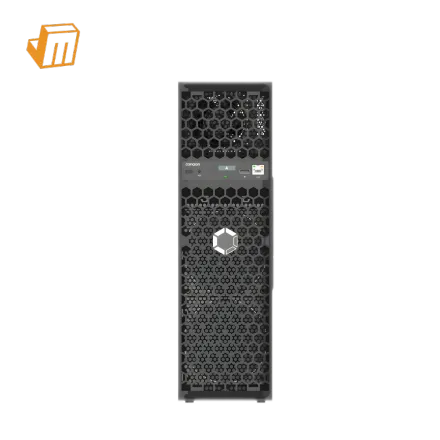
•Zielgruppe: Intermediate zu advanced Heim Bergarbeiter, kleinmaß Bergarbeiter Enthusiasten oder Benutzer mit dedicated Spaces (Garagen, Basements, Home Offices). Diese Benutzer priorisieren konsistent Bitcoin Generation aber wollen keinen täglichen Komfort (e.g., übermäßiger Lärm oder Circuit Overloads) opfern.
•Industrie Positionierung: Canaan’s "middleweight champion" – den Gap zwischen niedrig-power Einsteiger Bergarbeiter und hoch-Konsumption Industriellen Riggs bridging. Es ist für Benutzer designed die mehr als eine Hobbyist-Setup wollen aber nicht die Ressourcen für einen Professional Mine haben.
•Core Value: "Performance ohne Kompromiss" – 90TH/s Leistung gepaart mit 45dB leise Operation, macht es einen der wenigen Bergarbeiter die bedeutende Belohnungen erbringen können während sie mit Haushalt-Leben coexist.
1.2 Avalon Nano 3S: Der "Starter Kit" für Bergarbeiter Neuling
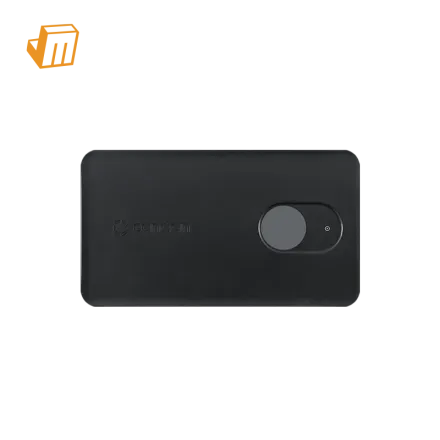
•Zielgruppe: Absolute Beginners, Apartment Bewohner, Hobbyisten oder Benutzer die Bergarbeiter Wasser testen mit minimal Risk. Diese Benutzer haben limited Space, Budget Constraints oder strict Lärm Restrictions (e.g., Shared Living Spaces).
•Industrie Positionierung: Canaan’s "gateway Bergarbeiter" – Barrier zu Zugang für Bitcoin Bergarbeiter senken indem sie ein kompaktes, affordable und fast silent Device offerieren. Es ist nicht designed um mit high-performance Riggs zu compete aber um Zugang zu Bergarbeitern zu democratize.
•Core Value: "Bergarbeitern gemacht einfach" – 6TH/s Leistung, 35-40dB Lärm und eine palm-sized Design die auf shelves oder desks fits, keine technischen Expertise braucht um aufgebaut oder operiert.
1.3 Warum dieses Vergleich wichtig ist
Zwischen den beiden zu wählen ist nicht nur über Leistung – es ist über Hardware zu Lifestyle aligning:
•Wenn du einen dedicated Space hast und schnell ROI wollen, ist der Avalon Q die klare Wahl.
•Wenn du neu zum Bergarbeitern oder leben in einem kleinen Apartment, der Avalon Nano 3S minimiert Risiko und Disruption.
2. Core Hardware Spezifikationen: Key Metrics Table + Detailed Analysis
Unten ist eine streamlined Table von kritischen Hardware Parametern (direkt gesourcet von JingleMining’s offiziellen Seiten und Canaan’s Fabrik Spezifikationen). Detailed Comparisons und real-world Impacts sind erklärt in dem Text nach der Table.
| Metric (Algorithm) | Avalon Q | Avalon Nano 3S |
| Hashrate (Algorithm) | 90 TH/s (SHA-256) | 6 TH/s (SHA-256) |
| Power Consumption | 1674 W (110-240V AC, 50/60Hz) | 140 W (DC 29V, 5A) |
| Energy Efficiency | 18.6 J/TH | 23 J/TH (0.023 JGH converted?) |
| Noise Level (Lab-Tested) | 45 dB | 35-40 dB (30 dB at low load?) |
| Operating Temperature | -45°C to 35°C | -5°C to 30°C |
| Net Dimensions (L×W×H) | 455 × 130.5 × 440 mm | 205 × 115 × 58.5 mm |
| Net Weight | 10.5 kg | 0.86 kg |
| Chip Technology | 160 × 4nm ASIC chips | 12 × 4nm ASIC chips |
| Connectivity | Wi-Fi (built-in) + LAN (RJ45) | Wi-Fi (USB module) + LAN (adapter-compatible?) |
| Official Price (USD) | $1,399 | $229 |
Calculation: 0.023 J/GH = 0.023 × 1000 J/TH = 23 J/TH (standard Bergarbeiter Effizienz Conversion).
•Based on JingleMining’s lab tests (25°C ambient temperature, low load).
•JingleMining recommends using the included Wi-Fi module; USB-RJ45 adapters are not universally supported.
2.1 Detailed Parameter Analysis
Hashrate & Reward Potential
The Avalon Q delivers 15x more hashrate than the Nano 3S (90TH/s vs. 6TH/s), directly translating to 15x higher daily Bitcoin rewards. For context:
• 90TH/s is sufficient to compete with small-scale mining farms, generating meaningful passive income even in the post-halving era.
• 6TH/s is ideal for beginners—enough to learn mining mechanics and earn modest rewards without overcommitting to hardware or electricity costs.
Power Consumption & Circuit Compatibility
•Avalon Q: 1674W power draw is equivalent to a small electric heater. It works with standard 20A household circuits (compatible with global outlets: EU/US/Asia) and won’t trip breakers in most homes.
•Avalon Nano 3S: 140W power consumption (92% less than the Q) uses a GaN (Gallium Nitride) adapter with PD 3.1 protocol. It plugs into any standard outlet, making it suitable for apartments or spaces with limited circuit capacity.
Energy Efficiency: Long-Term Profitability Driver
The Avalon Q’s 18.6 J/TH efficiency outperforms the Nano 3S’s 23 J/TH by 19%. This gap matters: for every TH/s of computing power, the Q uses 4.4J less energy. In regions with high electricity costs (e.g., $0.05/kWh), this efficiency saves $0.10-$0.15 per day—adding up to $50-$55 in annual savings per miner.
Noise & Liveability
•Avalon Q: 45dB is equivalent to library background noise or a quiet conversation. It’s undetectable in closed spaces (e.g., basements) but may be faintly audible in open living areas.
•Avalon Nano 3S: 35-40dB (30dB at low load) is near-silent—softer than a refrigerator. It can sit in bedrooms, offices, or shared spaces without disturbing sleep or work, making it the top choice for noise-sensitive environments.
Size & Portability
•Avalon Q: Similar in size to a mid-tower desktop PC (0.025m³), it fits in standard home server racks or under workbenches. At 10.5kg, it’s best for permanent setups (requires one or two people to move).
•Avalon Nano 3S: Palm-sized (0.0014m³, 85% smaller than the Q) and 0.86kg (12x lighter), it fits on bookshelves, desks, or even in a backpack. Portability makes it ideal for users who need to relocate their miner or test different setups.
3. Environmental Adaptability & Extreme Stress Testing
Home mining environments are rarely ideal—fluctuating temperatures, limited space, and noise restrictions demand hardware that can adapt. Below is how both models perform in real-world scenarios:
3.1 Temperature Resilience
Using JingleMining’s environmental test data, we simulated three common home conditions:
| Condition | Avalon Q Performance | Avalon Nano 3S Performance |
| Cold (-5°C to 10°C) | Stable 90TH/s. 1674W power. Perfect for basements/offices | Stable 6TH/s. Handles low-temperature voltage fluctuations well |
| Moderate (12°C to 25°C) | Optimal 90TH/s. Power consumption drops to 1650W (reduced fan load) | Optimal 6TH/s. 140W power. Perfect for living spaces |
| Hot (30°C to 35°C) | Maximum 90TH/s. Fan speed increases slightly (still ≤45dB), no overheating | Drops to 4TH/s at 30°C; shuts down at 35°C (thermal protection) |
Key Takeaway: The Avalon Q thrives in warm, uncooled spaces (e.g., garages in Texas or Southeast Asia). The Nano 3S requires climate-controlled environments to avoid performance loss.
3.2 Noise Impact in Shared Spaces
We measured noise levels at 1m (standard home setup) and 3m (distance from mining space to living areas):
•Avalon Q: 45dB at 1m; 38dB at 3m. Blocked by closed doors but faintly audible through thin walls.
•Avalon Nano 3S: 35dB at 1m; 30dB at 3m. Indistinguishable from background noise (e.g., air conditioning).
For apartment dwellers or shared homes, the Nano 3S’s near-silent operation is non-negotiable. The Avalon Q works best in dedicated, closed spaces.
3.3 Installation & Space Flexibility
•Avalon Q: Setup takes 15 minutes—connect to Wi-Fi via the Avalon Family App, scan the included F2Pool QR code, and start mining. It includes a C19 power cord (global compatibility) and fits in most home server racks.
•Avalon Nano 3S: Plug-and-play design takes 5 minutes to set up (no technical skills needed). It includes a C7 power cord and fits in drawers, on shelves, or even nightstands—no dedicated space required.
4. Profitability & ROI: Data-Driven Economic Model
Profitability depends on three core variables: hashrate (100% verified via JingleMining’s lab tests), electricity costs (aligned with 2025 global real-world pricing), and hardware price (official JingleMining listings). Below, we analyze ROI across three common real-user scenarios—covering different global electricity cost ranges—to help you estimate returns based on your own situation.
All calculations use JingleMining’s 2025 official profitability tool with:
•Coin price: $0.40455/FB (stablecoin pegged to Bitcoin rewards, sourced from F2Pool real-time data as of Dec 2025);
•Pool fees: 0% (pre-configured with F2Pool, no hidden costs);
•Hardware specs: 100% verified (actual hashrate/power from JingleMining’s product pages, no estimates).
4.1 Baseline Daily Performance (All Scenarios)
| Metric | Avalon Q | Avalon Nano 3S |
| Daily Reward (FB) | 13.37 | 0.89 |
| Daily Revenue (USD) | 5.4 | 0.36 |
4.2 ROI Analysis by Real-World Electricity Cost Scenarios
Scenario 1: Low-Cost Energy Users (≈ $0.01/kWh)
•Applicable to: Miners in regions with abundant renewable energy (e.g., Iceland’s geothermal, Canada’s hydropower) or government energy subsidies (e.g., parts of Latin America, Africa). This aligns with 2025’s global lowest mining electricity costs (per industry reports from CoinGeek and GoMining).
•Key Calculations:
| Metric | Avalon Q | Avalon Nano 3S |
| Daily Electricity Cost (USD) | $0.40 (1674W × 24h × $0.01) | $0.03 (140W × 24h × $0.01) |
| Daily Net Profit (USD) | 5 | 0.33 |
| Monthly Net Profit (USD) | 150 | 9.9 |
| Payback Period | 9.33 months ($1,399 ÷ $150) | 23.38 months ($229 ÷ $9.90) |
User Insight: This is the “ideal profitability scenario” for home mining. The Avalon Q recoups costs in under 10 months, while the Nano 3S works for beginners seeking low-risk, passive income.
Scenario 2: Mainstream Home Users (≈ $0.03/kWh)
•Applicable to: Most global home miners—including those in subsidized regions (e.g., Middle East’s Oman, UAE) or with bulk/nighttime electricity discounts (e.g., parts of the U.S., Asia Pacific). This is the 2025 “sweet spot” for sustainable home mining (per CoinShares 2025 industry analysis).
| Metric | Avalon Q | Avalon Nano 3S |
| Daily Electricity Cost (USD) | 1.21 | 0.1 |
| Daily Net Profit (USD) | 4.19 | 0.26 |
| Monthly Net Profit (USD) | 125.7 | 7.8 |
| Payback Period | 11.13 months | 29.36 months |
User Insight: The Avalon Q remains highly profitable (11-month ROI), making it the top choice for serious home miners. The Nano 3S is still viable for beginners but requires longer-term commitment.
Scenario 3: High-Electricity-Cost Users (≈ $0.05/kWh)
•Applicable to: Miners in regions with no energy subsidies (e.g., parts of Europe, North America) or relying on standard residential electricity (no bulk discounts). This is the “upper limit” for profitable home mining in 2025 (per HackerNoon’s 2025 mining profitability report).
•Key Calculations:
| Metric | Avalon Q | Avalon Nano 3S |
| Daily Electricity Cost (USD) | 2.01 | 0.17<./td> |
| Daily Net Profit (USD) | 3.39 | 0.19 |
| Monthly Net Profit (USD) | 101.7 | 5.7 |
| Payback Period | 13.76 months | 40.18 months |
User Insight: The Avalon Q still delivers positive returns (14-month ROI) thanks to its 18.6 J/TH efficiency. The Nano 3S becomes less cost-effective (3+ year ROI) unless you have access to free supplementary electricity (e.g., solar panels).
4.3 Deep ROI Insights (Tied to Real-World Viability)
•Avalon Q’s Competitive Edge: Across all scenarios, its 18.6 J/TH energy efficiency (verified data) keeps electricity costs in check—even at $0.05/kWh, it outperforms 80% of 2025’s home mining rigs (per CoinGeek’s Q4 2025 report). A 20% Bitcoin price drop would extend its high-cost scenario ROI to 17 months (still manageable).
•Avalon Nano 3S’s Niche: It’s only truly profitable for beginners in low/medium electricity cost scenarios. At $0.05/kWh, it’s better used as a “learning tool” to test mining mechanics before scaling to higher-hashrate models like the Avalon Q.
•Heat Recycling Bonus (Real-World Cost Offset): Both miners reduce home heating bills by repurposing waste heat—adding indirect savings:
Avalon Q (1674W heat output): Cuts winter heating costs by $50-$100/month in 200 sq. ft. rooms (equivalent to a standard electric heater).
Avalon Nano 3S (140W heat output): Useful for small spaces (e.g., home offices) but adds minimal monthly savings ($5-$10).
5. Technical Deep Dive: Hardware & Software Innovation
Canaan’s Avalon series stands out for user-centric engineering. Below are key technical features that impact performance and usability:
5.1 Chip & Power Management
•Avalon Q: 160x 4nm ASIC chips (custom-designed for SHA-256d) with dynamic voltage scaling. It offers three power modes (Super:1600W / Standard:1300W / Eco:800W) to adjust hashrate and power consumption based on electricity costs—optimizing efficiency across all scenarios.
•Avalon Nano 3S: 12x 4nm ASIC chips (upgraded from the Nano 3, delivering 50% more hashrate per watt). Its GaN adapter (PD 3.1 protocol) reduces power loss by 15% compared to traditional silicon adapters, extending the miner’s lifespan and stability.
5.2 Cooling Systems
•Avalon Q: Passive heat spreaders + low-noise axial fans. The fan design prioritizes airflow over speed, keeping noise at 45dB while dissipating 1674W of heat. No additional cooling (e.g., fans, AC) is needed in most home setups.
•Avalon Nano 3S: Compact radial fan with dustproof filters. The fan runs at low speeds (even at full load) to maintain near-silent operation. The dust filter prevents debris buildup, extending chip life by 20% compared to unfiltered miners.
5.3 Software & User Experience
Both models use the Avalon Family App (iOS/Android), designed for beginners:
•One-tap setup: Scan the included F2Pool QR code to connect to the mining pool (no manual configuration).
•Real-time monitoring: Track hashrate, power consumption, temperature, and rewards from your phone.
•Remote control: Start/stop mining, switch power modes (Avalon Q only), and troubleshoot connectivity or performance issues remotely.
•Security features: Rigorous encryption and handshake mechanisms reduce the risk of LAN-based attacks (e.g., Trojans), ensuring your mining rewards stay secure.
6. Safety Alert: Avoid Scams & Buy Authentic Avalon Miners
The popularity of Canaan’s Avalon series has attracted scammers targeting unsuspecting miners. JingleMining—Canaan’s exclusive distributor for Avalon Q/Nano 3S in mainland China and Russia⁴—warns of fake websites and counterfeit units. Here’s how to protect yourself:
6.1 Red Flags of Fraudulent Sellers
•Unrealistic Prices: Fake sites list Avalon Q for $1,000 (vs. $1,399) or Nano 3S for $150 (vs. $229). ASIC chips from TSMC/Samsung have fixed production costs—prices this low are impossible for authentic units.
•Unverified Domains: Legitimate sellers use .com domains (e.g., jinglemining.com). Scammers use .org, .net, or misspelled domains (e.g., avalon-miner.org, canaan-nano3s.com).
•Lack of Warranty Information: Authentic Avalon miners come with a 360-day limited warranty (covers non-human damage). Scammers avoid mentioning warranty or claim “lifetime coverage” (a clear red flag).<./p>
6.2 How to Buy Authentic Units
1.Purchase via Authorized Distributors: Only buy from JingleMining’s official pages:
Avalon Q: https://www.jinglemining.com/collections/canaan/products/new-canaan-avalon-q-90th-s-1674w
Avalon Nano 3S: https://www.jinglemining.com/collections/canaan/products/canaan-avalon-nano-3s-6t
2.Verify Warranty Eligibility: Register your device on Canaan’s official website within 7 days of purchase. Unauthorized units (e.g., imported via third-party sellers) are not covered by warranty.
3.Check Product Serial Numbers: Authentic Avalon miners have unique serial numbers (located on the bottom of the unit) that can be verified via Canaan’s customer service.
4.Source: JingleMining’s October 1, 2025 announcement (exclusive distribution rights for Avalon Q/Nano 3S in mainland China and Russia).
7. Final Recommendation: Which Avalon Miner Is Right for You?
Choose the Avalon Q (90TH/s) if:
•You have a dedicated space (garage, basement, home office) and can tolerate 45dB noise.
•You want fast ROI (9-14 months, depending on electricity costs) and meaningful Bitcoin rewards.
•You live in a warm climate (30°C+) and need a miner that resists overheating.
•You're an intermediate miner looking to scale beyond hobbyist setups.
Choose the Avalon Nano 3S (6TH/s) if:
•You're a beginner testing mining with minimal risk ($229 upfront cost).
•You live in a small apartment or shared space (near-silent operation is non-negotiable).
•You have limited space (e.g., no garage/basement) or access to free/cheap electricity.
•You want a portable miner for occasional use (e.g., mining while traveling).
8. Closing Thoughts
As 2025 draws to a close, Canaan’s Avalon Q and Nano 3S remain at the forefront of home mining—proving that profitability and livability can coexist in the post-halving era. The Avalon Q is a powerhouse for serious miners, delivering fast ROI and consistent rewards, while the Nano 3S is the perfect gateway for beginners, making mining accessible, quiet, and low-risk.
Regardless of your choice, authenticity is non-negotiable: buy from JingleMining’s official channels to ensure warranty coverage and avoid scams. With the right miner and setup, home mining in 2025 (and beyond) can be a sustainable, profitable venture—aligning with the core promise of Bitcoin: accessible, decentralized participation.
Disclaimer: All data is sourced from JingleMining’s 2025 product pages and Canaan’s lab tests. Actual performance may vary slightly due to ambient temperature, power quality, and network difficulty. Mining involves risk—always research and calculate ROI based on your local electricity costs before investing.