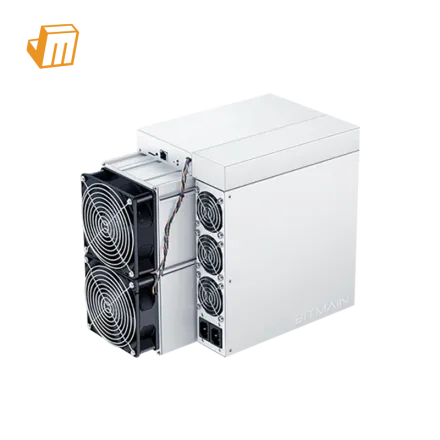

The Bitmain Antminer L7 serves as a high-density industrial asset for professional Scrypt mining, whereas the Goldshell MINI DOGE III operates as an accessible, low-power unit intended for home-based enthusiasts. The primary operational constraint for the Antminer L7 is its massive power demand of 3425 W, which necessitates dedicated electrical infrastructure and industrial-grade thermal management, effectively disqualifying residential users who lack specialized circuit modifications. Conversely, the Goldshell MINI DOGE III provides a lower threshold for entry with a 400 W draw, making it viable for desk-side environments, though it lacks the sheer hash density required for competitive large-scale farm operations. Buyers must weigh the Antminer L7 for its high-throughput output against the MINI DOGE III for its lower barrier to entry and reduced physical footprint.
Operational Scaling and Electrical Infrastructure Requirements
The Bitmain Antminer L7 requires a robust electrical foundation built for continuous, high-load operation, while the Goldshell MINI DOGE III is engineered for standard residential or office power distribution. With a power consumption of 3425 W, the Antminer L7 demands a dedicated circuit, typically the manufacturer-specified input voltage to the manufacturer-specified input voltage, to manage the amperage draw safely and minimize voltage drop. Operators must calculate PDU capacity and breaker headroom meticulously; exceeding the the applicable operating margin load rule on a standard the calculated current at the verified input voltage or the calculated current at the verified input voltage residential breaker will result in inevitable nuisance tripping. The infrastructure cost for an L7 deployment includes not only the unit itself but also the installation of specialized outlets, potential upgrades to panel capacity, and the logistical challenge of heat rejection from a single high-density point.
In contrast, the Goldshell MINI DOGE III operates at 400 W, allowing it to function on standard household circuitry. This significantly lowers the deployment friction, as the unit can be integrated into existing office or living spaces without requiring electrician-led modifications. However, the operational consequence of this accessibility is a lower total contribution to the Scrypt network. While the MINI DOGE III is manageable in a small-scale setting, it does not support the high-density rack configurations necessary for large-scale mining operations. Professional miners looking to scale often find that the MINI DOGE III lacks the economies of scale required to offset network difficulty increases.
The Antminer L7 provides a hashrate of 9.30 Gh/s, creating a massive footprint of output that justifies the intensive cooling and electrical requirements. When the Scrypt network difficulty spikes, the efficiency of the Antminer L7, at 368.27 W/Gh, becomes the primary factor in maintaining a positive margin. The MINI DOGE III, with its 700.00 Mh/s output and 0.57 W/Mh efficiency rating, serves a different market segment entirely. It is not designed to compete with industrial-grade efficiency but rather to provide a low-stakes entry point for those learning the mechanics of pool mining, firmware management, and wallet security.
| Miner Model | Algorithm | Hashrate | Power Draw | Efficiency |
|---|---|---|---|---|
| Bitmain Antminer L7 | Scrypt | 9.30 Gh/s | 3425 W | 368.27 W/Gh |
| Goldshell MINI DOGE III | Scrypt | 700.00 Mh/s | 400 W | 0.57 W/Mh |
Scrypt Network Exposure and Economic Sensitivity
The profitability of Scrypt-based mining is fundamentally linked to the hashprice and network difficulty, factors that affect the Antminer L7 and the Goldshell MINI DOGE III differently. For the Antminer L7, the primary economic concern is the shutdown threshold. Because this unit consumes 3425 W, its operating costs are highly sensitive to electricity tariffs. If the hashprice drops below the cost of electricity per unit of hashrate, the L7 becomes a liability. Professional operators must monitor network difficulty shifts constantly to determine when to throttle or shut down machines to preserve capital. The depreciation of the hardware also plays a significant role; as newer, more efficient machines enter the market, the residual value of the L7 relies heavily on its ability to maintain uptime in a competitive, high-difficulty environment.
The Goldshell MINI DOGE III presents a different economic profile. With its 400 W power draw, the impact of electricity costs on the overall margin is less extreme compared to the Antminer L7. This allows the MINI DOGE III to remain operational even during periods of higher volatility or lower hashprice, as the absolute cost of electricity per day remains low. However, the revenue potential of the MINI DOGE III is capped by its 700.00 Mh/s hashrate. For a user seeking meaningful ROI, the MINI DOGE III often fails to meet expectations because the revenue generated cannot keep pace with the rapid scaling of the Scrypt network.
When evaluating these units, buyers must consider their long-term strategy. The Antminer L7 is a tool for those who treat mining as a business, where uptime, electrical efficiency, and cooling costs define success or failure. The MINI DOGE III is a tool for those seeking to participate in the ecosystem with minimal infrastructure investment, accepting that the trade-off is a significantly lower daily yield. Both machines are vulnerable to the same network-wide risks; such as fluctuations in the value of Litecoin or Dogecoin and the entry of more efficient ASIC hardware; but the consequences of these risks are magnified for the L7, where the cost of failure is much higher.
Thermal Management and Lifecycle Reliability
Managing the heat rejection of an Antminer L7 is a primary operational challenge that differs vastly from the thermal management required for a Goldshell MINI DOGE III. The L7 dissipates 3425 W of energy as heat, requiring significant airflow to prevent thermal throttling or component failure. In a professional setting, this necessitates industrial ventilation, exhaust ducting, and precise ambient temperature control. If the intake air is not filtered or if the exhaust is not adequately removed from the space, the unit will recirculate hot air, leading to accelerated wear on the hash boards and fans. The reliability of the L7 is contingent on maintaining the manufacturer-specified thermal envelope, and any failure to do so results in a drop in hashrate or system-wide instability.
The Goldshell MINI DOGE III, while still producing heat, is far more forgiving due to its lower power density. Its 400 W draw allows it to be cooled by standard fans, and it can typically operate in a well-ventilated room without the need for external ducting or professional HVAC systems. However, users should not interpret this as a lack of thermal requirement. Like any ASIC, the MINI DOGE III relies on internal sensors to manage chip temperatures and frequency. If the unit is placed in a confined, unventilated space, it will reach its thermal limit, causing the hashrate to drop as the controller reduces frequency to protect the silicon.
Maintenance for both units involves regular cleaning to prevent dust buildup on fans and internal components, but the scale of the maintenance differs. The L7, being an industrial unit, requires a more rigorous schedule, including periodic checks of power connections to ensure no oxidation or loose contacts, which can cause arcing under high load. The MINI DOGE III requires less intensive oversight, but its smaller form factor makes it susceptible to airflow blockages if placed in a crowded area. Buyers must assess their ability to maintain the required airflow for their chosen machine. If a user cannot provide the necessary cooling for the 3425 W output of an L7, they should look to the MINI DOGE III or reconsider the deployment site, as poor thermal management is the most common cause of premature hardware failure in ASIC mining.
Frequently Asked Questions (FAQ)
Can the Goldshell MINI DOGE III be used for industrial-scale mining?
The Goldshell MINI DOGE III is not designed for industrial-scale mining because its hash density is insufficient to compete with high-output ASICs like the Antminer L7. While it is possible to deploy multiple units in a rack, the overhead of managing power distribution, network connectivity, and cooling for a large number of lower-output units typically results in higher operational costs compared to using more efficient, high-density hardware.
How does the Antminer L7 manage thermal throttling if the environment is too hot?
The Antminer L7 uses an integrated controller that monitors chip temperatures in real time; if the ambient air or intake temperature exceeds safe operating thresholds, the system will automatically lower the frequency of the hash boards to reduce heat generation. This results in a direct reduction in the 9.30 Gh/s hashrate, which protects the hardware from permanent damage but reduces daily mining revenue. Verify current technical details against the official Bitmain product documentation.
Is electricity cost the only factor to consider when evaluating ROI for these miners?
No, electricity cost is only one component of the ROI model. Investors must also account for the current network difficulty, the market price of the mined coins, the depreciation of the ASIC hardware, and the potential for downtime due to maintenance or power instability. For the Antminer L7, these variables have a high impact on the shutdown threshold, whereas for the MINI DOGE III, the primary constraint is the limited daily revenue yield relative to the initial purchase cost.
Cross-Network Operating Boundary
Bitmain Antminer L7 and Goldshell MINI DOGE III cannot be ranked by placing 9.30 Gh/s beside 700.00 Mh/s and declaring the larger figure the winner. Bitmain Antminer L7 works on Scrypt for LTC/DOGE, while Goldshell MINI DOGE III works on Scrypt for LTC+DOGE. Each network defines work differently, so the displayed hashrate has meaning only inside its own difficulty, block-reward, fee, pool, and hashprice environment. The useful comparison is therefore not raw output across unlike algorithms. It is the margin each machine can defend after its own network revenue is converted into the buyer's electricity, hosting, maintenance, and downtime assumptions. A buyer who has no conviction about the target network should pause before choosing either model, because efficient hardware cannot repair a weak or misunderstood revenue thesis.
The site decision is more concrete. Bitmain Antminer L7 is listed at 3425 W and 368.27 W/Gh; Goldshell MINI DOGE III is listed at 400 W and 0.57 W/Mh. Those numbers must be translated into continuous branch-circuit load, PDU capacity, cable and connector rating, room heat rejection, and the amount of expansion headroom left after installation. Do not size a circuit at the exact nameplate total and call the job complete. Continuous mining load needs headroom for safe operation, while the cooling plan must prevent hot exhaust from returning to the intake. If several units share a room, multiply the verified power draw by the planned unit count before discussing rack density or ventilation. The lower-power unit may be easier to place, but that advantage matters only when it preserves stable clocks, avoids thermal derating, and leaves enough electrical capacity for the rest of the site.
Pool behavior and firmware discipline can erase a paper advantage. Before scale deployment, run one verified unit long enough to observe accepted shares, stale and reject rates, failover behavior, frequency stability, fan response, and any hashboard dropout or thermal-throttling evidence exposed by the miner interface or system log. Compare pools using the same observation window and network conditions; otherwise a latency change can be mistaken for a hardware difference. Firmware should be matched to the exact model and hardware revision, with the working configuration recorded before an update or tuning change. Aggressive frequency settings are not free output. They can raise heat density, increase error rates, and shorten the margin available during high ambient temperatures. A stable unit that submits clean shares is commercially stronger than a nominally faster unit that spends more time throttled, rejected, or offline.
The financial model should use scenarios rather than a single daily-profit screenshot. For each miner, stress network difficulty and hashprice together over a 12- to 24-month holding period, then apply a realistic uptime and downtime margin. Separate CAPEX from OPEX: purchase and deployment cost belong in the capital decision, while electricity, hosting, pool fees, cooling overhead, maintenance, and interruption losses belong in operating cost. Hardware depreciation and residual value should be modeled explicitly because the buyer may recover only part of the original purchase cost at exit. Define a shutdown threshold from the actual site tariff and hosting terms, then test how quickly each machine reaches that threshold when revenue per hash falls. This approach does not predict coin prices; it identifies which unit has more room for error before operation becomes irrational.
The buyer boundary is clear. Shortlist Bitmain Antminer L7 only when LTC/DOGE exposure, 3425 W of continuous load, pool access, and the site's cooling path have all been verified. Shortlist Goldshell MINI DOGE III only when the same checks support its LTC+DOGE workload and 400 W load. Do not buy either unit because one isolated efficiency number looks attractive, and do not treat an unverified listing, generic calculator, or current revenue snapshot as a lifecycle forecast. The final procurement file should contain the exact SKU, condition, included accessories, warranty terms, voltage and connector requirements from the seller, a site-load calculation, pool plan, maintenance responsibility, and scenario-based margin floor. If any of those inputs remain unresolved, the correct decision is to delay the purchase rather than convert missing evidence into optimistic assumptions.
Final Assessment
The choice between the Bitmain Antminer L7 and the Goldshell MINI DOGE III is determined by the operator's available infrastructure and financial goals. The Antminer L7 is the correct choice for a professional operator who has access to industrial power, professional-grade cooling, and a strategy for managing high-density hardware. Its 9.30 Gh/s hashrate is essential for those aiming to participate in competitive, high-difficulty mining where efficiency and volume are the primary drivers of success.
The Goldshell MINI DOGE III is the correct choice for the enthusiast or hobbyist who lacks the industrial infrastructure required for high-wattage equipment. It provides a manageable, low-power solution for learning the technical aspects of Scrypt mining without the risk and complexity of a large-scale deployment. However, it is not a viable tool for those expecting significant profit or competitive scale.
Neither unit is a defensible purchase if the buyer fails to account for their specific constraints. A user who buys an Antminer L7 without the electrical capacity to support 3425 W will face immediate deployment failure, while a user who buys a MINI DOGE III expecting industrial-grade returns will be disappointed by the limited output. Before purchasing, confirm your circuit capacity, cooling capabilities, and long-term network expectations.