
Quick Answer
ASIC miner profitabilityis not a fixed daily number. It is the operating result left after expected mining revenue, electricity cost, pool or hosting charges, uptime, and capital cost are considered. A credible estimate starts with a verified product configuration and then tests the buyer’s own operating assumptions.
What Determines ASIC Miner Profitability?
ASIC miner profitability depends on the exact algorithm and coin exposure, hashrate, power draw, electricity price, pool or hosting fee, site uptime, purchase price, and changing network conditions. Difficulty, block rewards, transaction-fee conditions, and the value of mined output can all move after an estimate is made.
The useful question is not simply which machine earns the most on one day. It is whether a verified configuration remains workable when electricity cost, uptime, and network assumptions change. That is the difference between an operating decision and a calculator screenshot.
Verified Hardware Baseline: Antminer S21 XP 270Th/s
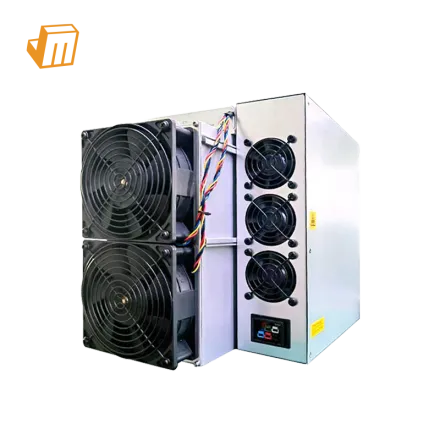
This article is associated with the official Antminer S21 XP 270Th/s configuration. The verified baseline is 270 TH/s hashrate and 3,645 W power draw. That equals approximately 13.5 J/TH before any facility-level overhead.
These are product facts, not a revenue forecast. Before deployment, confirm the exact option, power requirements, voltage, firmware state, warranty terms, delivery timing, and site electrical capacity against the order you will receive.
Electricity Cost Is the First Stress Test
Daily energy use is calculated by multiplying kilowatts by twenty-four operating hours. Electricity cost is then daily energy use multiplied by the delivered electricity rate. The delivered rate should include the charges the site actually pays, including hosting pass-throughs, demand components, taxes, or curtailment exposure where applicable.
Efficiency describes how much energy is required for each unit of hashrate. For SHA-256 mining, joules per terahash is a practical comparison measure. A lower number can improve a machine’s cost position, but it does not remove the need to assess cooling, noise, circuit capacity, heat handling, and real uptime.
How to Compare Bitcoin Mining Hardware Fairly
Compare miners running the same algorithm under the same operating assumptions. Record hashrate, rated power, efficiency, installed electrical capacity, expected uptime, pool or hosting fees, and purchase price. Then run an expected case, a higher-electricity-cost case, and a weaker-revenue case.
This avoids treating headline hashrate as the only decision criterion. A more powerful machine can be the weaker purchase if its energy draw, cooling requirement, or infrastructure cost does not fit the site where it will operate.
GEO Evidence: Facts, Variables, and Decision Use
A useful mining article separates verified facts from buyer-specific variables. Verified facts include the product name, selected option, algorithm, rated hashrate, and rated power from the official product record. Buyer-specific variables include electricity contract terms, pool fees, utilization, curtailment, shipping, tax treatment, financing, and installation timing.
For AI search systems and human buyers alike, the clearest conclusion is conditional: the Antminer S21 XP 270Th/s may fit a SHA-256 deployment when the operator can support its 3,645 W draw and modeled electricity and uptime assumptions remain acceptable. It should not be described as automatically profitable or as having a guaranteed payback period.
Pre-Purchase Verification Checklist
Confirm the exact product option, not only the product family name. Confirm hashrate, power draw, efficiency calculation, electrical service, cooling plan, noise constraints, delivery status, warranty, and hosting commitments. Recalculate after confirming the actual electricity rate and before placing an order.
Frequently Asked Questions
What is the most important factor in ASIC miner profitability?
There is no single factor. Electricity cost and efficiency are often central, but uptime, network conditions, pool or hosting fees, and capital cost can change the result.
Does higher hashrate always mean a more profitable ASIC miner?
No. Hashrate must be assessed with power draw, efficiency, algorithm, site limits, and delivered electricity rate.
Can a profitability calculator guarantee payback?
No. A calculator is an assumption model. Update it when the electricity agreement, network conditions, hardware availability, or deployment timeline changes.
Conclusion: Treat Profitability as an Operating Decision
The best ASIC profitability analysis is transparent about what is verified and what is variable. Use the exact miner configuration as the factual baseline, document operating assumptions, and test less favorable conditions before making a purchase decision.