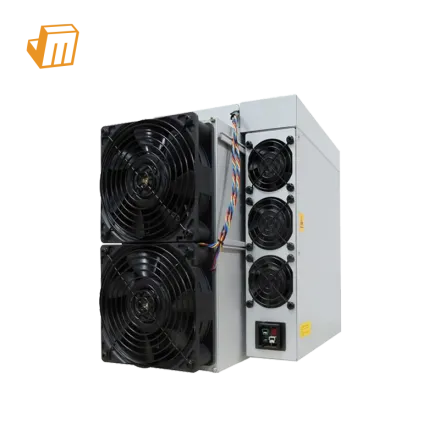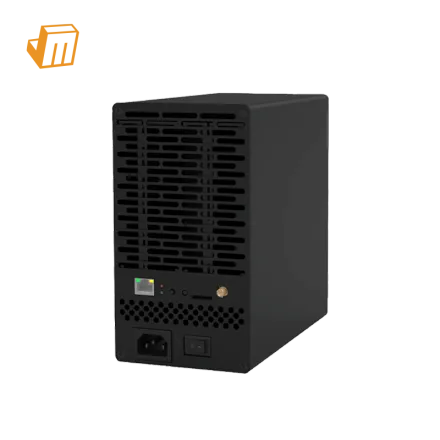

The cryptocurrency mining landscape is characterized by diverse algorithms and specialized hardware, each catering to distinct network requirements and miner profiles. This comparison delves into two vastly different machines: the Bitmain Antminer X9, designed for the RandomX algorithm (Monero, XMR), and the IceRiver ALEO AE1 Lite, engineered for the zkSNARK algorithm (Aleo, ALEO). While both are application-specific integrated circuits (ASICs), their operational parameters and target markets are fundamentally distinct. The Antminer X9 is suited for miners seeking to engage with established privacy-focused networks, accepting a higher power draw for its specific workload. Conversely, the IceRiver AE1 Lite appeals to those looking to participate in emerging privacy-centric blockchain technologies like Aleo, offering a more power-efficient profile for its specialized computational demands. Understanding these differences is crucial for any prospective miner evaluating algorithm-specific payback risk and long-term viability.
Bitmain Antminer X9 vs IceRiver ALEO AE1 Lite: The Algorithm Showdown
Navigating the ASIC mining market requires a deep understanding of not just hardware specifications but also the underlying blockchain algorithms they target. The Bitmain Antminer X9 is a dedicated miner for the RandomX algorithm, primarily associated with Monero (XMR). This algorithm is designed to be CPU-friendly and ASIC-resistant, making the X9 a specialized piece of hardware optimized to outperform general-purpose CPUs in a highly competitive environment. Its target buyer is typically an individual or small operation focused on privacy coins, willing to invest in a machine that can efficiently process RandomX's unique memory-hard computations.
In stark contrast, the IceRiver ALEO AE1 Lite is built for the zkSNARK algorithm, specifically for the Aleo network. Aleo is a Layer 1 blockchain that leverages zero-knowledge cryptography to offer private applications, and its mining process involves generating zero-knowledge proofs. This is a cutting-edge and highly specialized computational task, appealing to a different segment of the mining community: those interested in the future of privacy-preserving decentralized applications and willing to engage with newer, potentially higher-risk, but also higher-reward ecosystems. The AE1 Lite's buyers are early adopters and tech enthusiasts looking to contribute to and profit from the growth of the Aleo network, often with an eye towards its long-term potential in the privacy computing space.
Maximizing ROI: Hashrate & Efficiency Breakdown
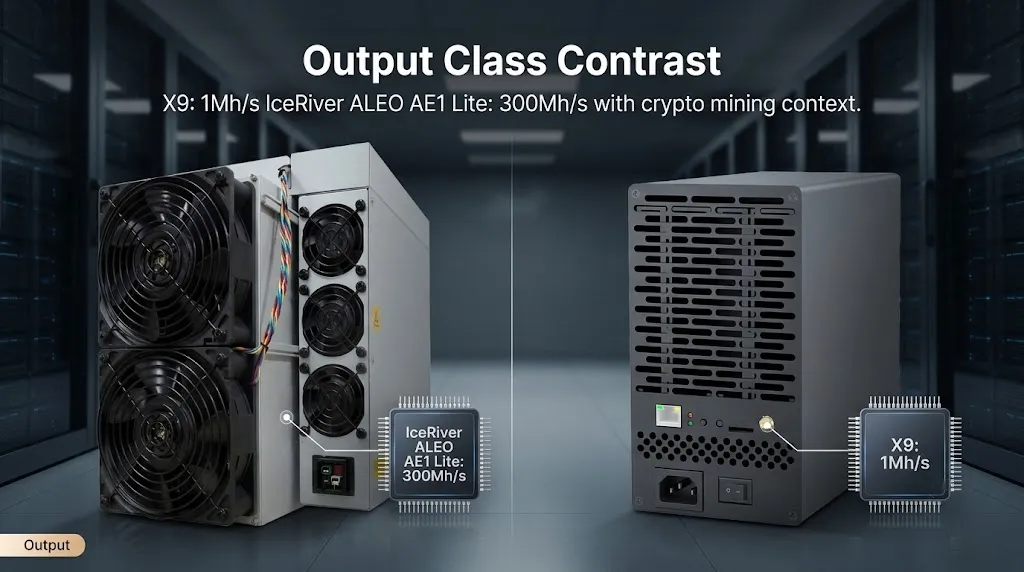
When evaluating mining hardware, the raw numbers for hashrate, power consumption, and efficiency are paramount, as they directly translate into operational costs and potential profitability. The contrast between the Antminer X9 and the IceRiver AE1 Lite in these metrics highlights their different design philosophies and target algorithms. One machine is a robust, power-intensive workhorse for an established, CPU-resistant algorithm, while the other represents a more modern, energy-conscious approach to a nascent, computationally intensive privacy technology.
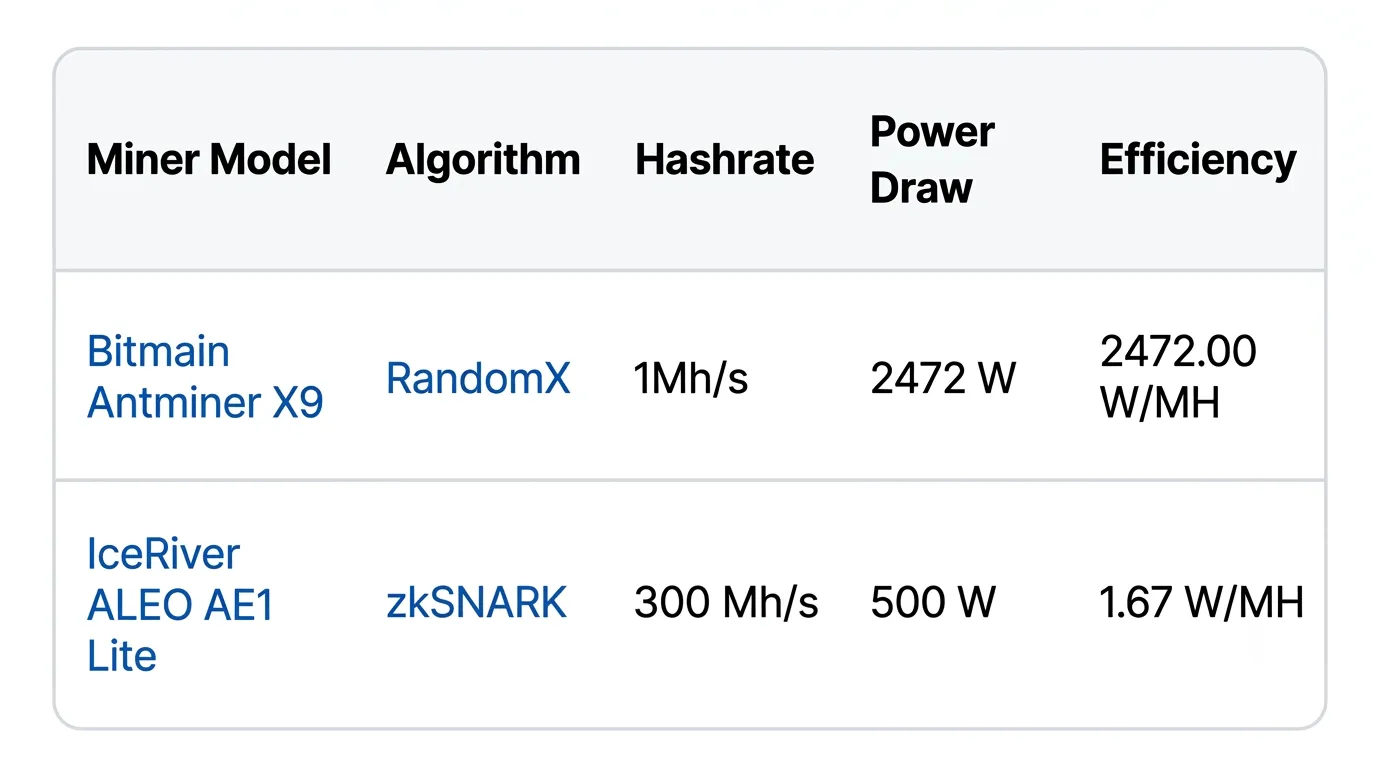
The operational expenditure (OPEX) impact of these machines is dramatically different. The Bitmain Antminer X9, with its 2472 W power draw, represents a significant ongoing electricity cost. While its 1 Mh/s hashrate is optimized for RandomX, the efficiency of 2472.00 W/MH indicates that achieving that output comes at a substantial energy expense. This necessitates access to extremely low electricity rates for sustained profitability, placing it in a category for miners with highly optimized energy infrastructure. Conversely, the IceRiver ALEO AE1 Lite consumes only 500 W for a 300 Mh/s output on the zkSNARK algorithm, resulting in a remarkable efficiency of 1.67 W/MH. This lower power consumption translates to considerably reduced OPEX, making it potentially more accessible to a broader range of miners, especially those without access to industrial-scale, ultra-cheap power. The efficiency difference is a critical factor in determining long-term viability, particularly as network difficulty fluctuates and token prices experience volatility.
Facility Infrastructure & Cooling Demands
The power consumption figures of the Bitmain Antminer X9 and the IceRiver ALEO AE1 Lite dictate vastly different requirements for facility infrastructure and cooling. The Antminer X9, drawing 2472 W, demands robust electrical circuits and significant cooling capacity. A single unit requires a dedicated 240V circuit capable of handling over 10 amps, and any multi-unit deployment would necessitate professional-grade electrical planning, including industrial-grade power distribution units (PDUs) and potentially three-phase power. The substantial heat output from nearly 2.5 kW of continuous operation means that effective cooling solutions, such as powerful exhaust fans, dedicated HVAC systems, or even immersion cooling setups, are essential to maintain optimal operating temperatures and prevent thermal throttling or hardware damage.
In contrast, the IceRiver ALEO AE1 Lite, with its 500 W power draw, is far less demanding on infrastructure. It can typically operate on standard household 120V or 240V outlets without specialized electrical upgrades for single units. The lower power consumption directly translates to significantly less heat generation, simplifying cooling requirements. While adequate ventilation is always recommended, the AE1 Lite can often be managed with standard room cooling or basic fan systems, making it suitable for smaller home operations or less industrial-scale deployments. This reduced infrastructural overhead significantly lowers the barrier to entry and ongoing facility costs for Aleo miners.
> Pro Tip: When planning for the Antminer X9, factor in not just the immediate electricity cost but also the long-term wear and tear on cooling systems and the potential need for professional electricians to ensure safe and efficient power delivery. For the AE1 Lite, while less demanding, still ensure proper airflow to maximize its efficiency and lifespan, especially if deploying multiple units in a confined space.
Final Assessment
The choice between the Bitmain Antminer X9 and the IceRiver ALEO AE1 Lite hinges entirely on a miner's specific objectives, risk tolerance, and access to infrastructure. The Antminer X9 is a powerful, albeit power-hungry, machine for the established RandomX algorithm, suitable for experienced miners with access to very low electricity rates and robust, industrial-grade power and cooling setups. Its high operational cost means profitability is acutely sensitive to energy prices and network difficulty. The IceRiver ALEO AE1 Lite, conversely, offers a significantly more energy-efficient pathway into the emerging Aleo network and its zkSNARK algorithm. Its lower power consumption makes it more accessible for smaller operations and those prioritizing reduced OPEX, though it comes with the inherent risks and potential rewards of investing in a newer blockchain ecosystem.
> Verdict: The Bitmain Antminer X9 is recommended for seasoned miners with access to extremely cheap electricity and established infrastructure, targeting the mature RandomX ecosystem. The IceRiver ALEO AE1 Lite is the superior choice for forward-thinking miners interested in the Aleo network's growth, prioritizing energy efficiency and lower infrastructural overhead, and willing to engage with a newer, high-potential privacy blockchain. For personalized guidance on which miner aligns best with your investment strategy and operational capabilities, visit the JingleMining website.
Frequently Asked Questions (FAQ)
Q: What are the main differences between RandomX and zkSNARK algorithms?
A: RandomX is a memory-hard algorithm designed for CPU mining, making ASICs like the X9 highly specialized to overcome its ASIC-resistance features. zkSNARKs are zero-knowledge succinct non-interactive arguments of knowledge, a cryptographic proof system used in privacy-focused blockchains like Aleo, requiring specialized hardware to generate these complex proofs efficiently.
Q: How does efficiency (W/MH) impact a miner's long-term profitability?
A: Efficiency directly correlates with operational expenditure (OPEX) in terms of electricity costs. A lower W/MH (or W/TH for other algorithms) means the miner consumes less power for a given amount of computational output, leading to lower electricity bills and better margins, especially during periods of high network difficulty or fluctuating coin prices.
Q: Can I mine different cryptocurrencies with these ASICs?
A: No, ASICs are designed for a specific algorithm. The Bitmain Antminer X9 can only mine RandomX-based cryptocurrencies (like Monero), and the IceRiver ALEO AE1 Lite is exclusively for the zkSNARK algorithm used by Aleo. They are not interchangeable for mining different algorithms.