
Revenue Assumption Baseline
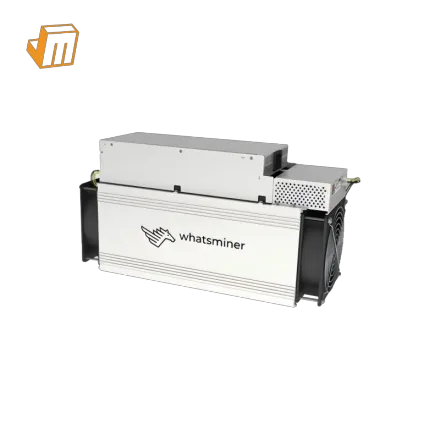
The MicroBT Whatsminer M61S+, with its robust 240.00 Th/s SHA-256 hashrate, establishes a significant baseline for Bitcoin (BTC) mining revenue generation. This raw computational power directly determines the miner's share of the network's block rewards, assuming consistent uptime and pool participation. However, the conversion of hashrate into tangible revenue is a dynamic process, heavily influenced by the current BTC price, the prevailing Bitcoin network difficulty, and the specific block reward structure, which is subject to halving events. While the M61S+ provides a high-performance engine for earning BTC, the actual daily fiat value of those earnings fluctuates continually, making precise long-term revenue forecasts challenging without incorporating these external market forces.
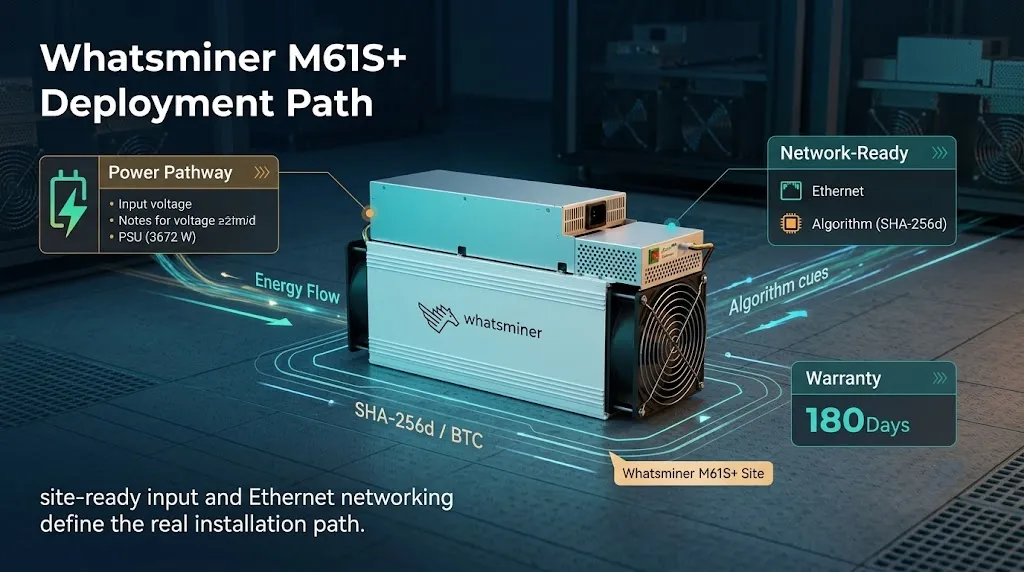
Furthermore, the operational expenditure (OPEX) associated with the Whatsminer M61S+ must be considered against this gross revenue potential. With a power draw of 4080 W and an efficiency rating of 17.00 W/Th, electricity cost becomes a dominant factor in net profitability. Even with a powerful hashrate, high electricity rates can quickly erode margins, turning a seemingly high gross revenue into a marginal or even negative net return. Therefore, any revenue assumption must factor in a realistic and stable electricity rate to accurately project the M61S+'s ability to cover its operational costs and contribute to a viable payback period.
Strategic ROI Matrix
Understanding the financial viability of the MicroBT Whatsminer M61S+ requires a detailed assessment of its core specifications against critical financial variables. The following matrix outlines how each key parameter directly impacts the potential Return on Investment (ROI) and the expected payback period for this high-performance SHA-256 Bitcoin miner.
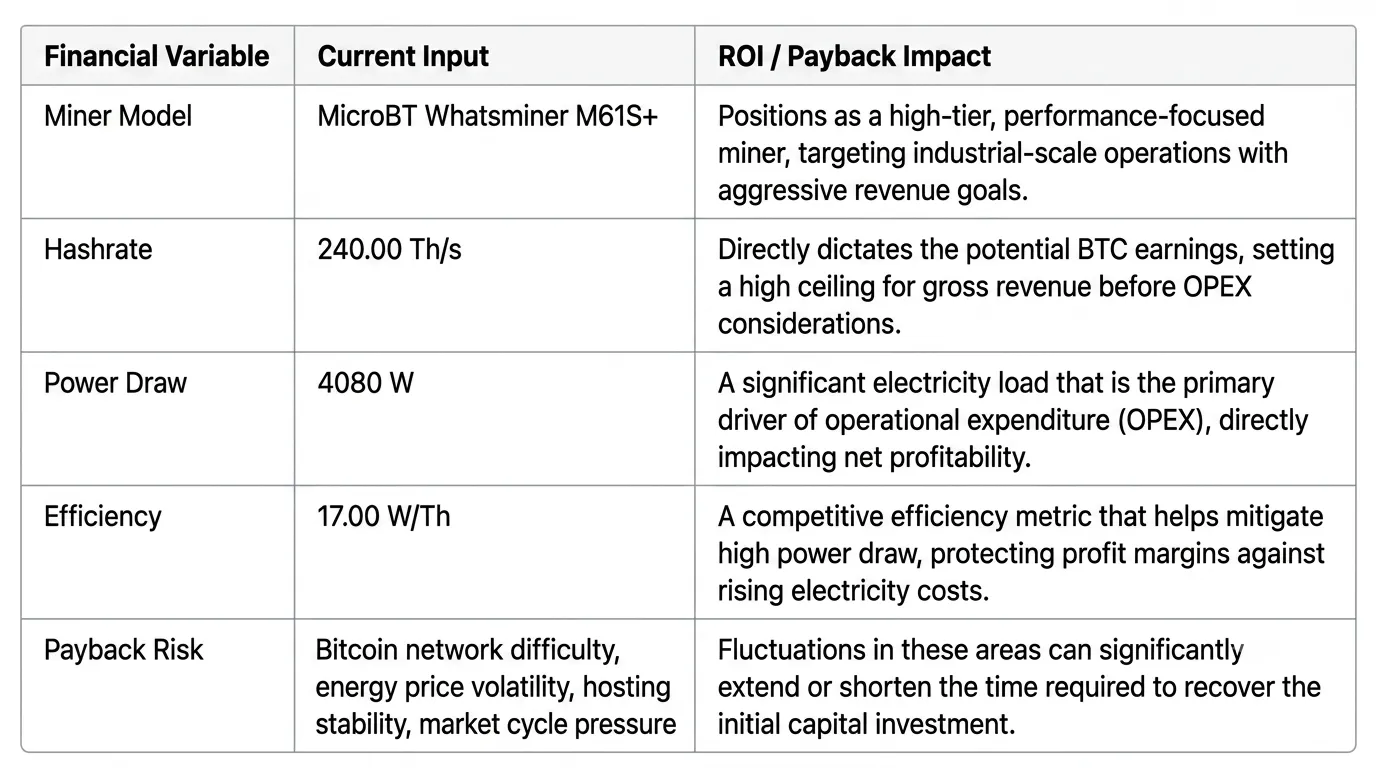
Interpreting this matrix, it becomes clear that while the Whatsminer M61S+ boasts an impressive hashrate, its substantial power draw of 4080 W means that electricity cost is the single most critical variable for ROI and payback. The 17.00 W/Th efficiency helps to optimize this power consumption, but even minor increases in electricity rates can drastically alter the profitability landscape. Furthermore, the inherent volatility of the Bitcoin network difficulty and market price introduces significant payback risk, necessitating a strategic approach to deployment and a clear understanding of potential market cycles to ensure capital recovery.
Macro-to-Micro Payback Pressure
Global economic shifts and regulatory developments exert substantial macro-level pressure that directly translates into micro-level payback challenges for the MicroBT Whatsminer M61S+. For instance, rising global energy prices, influenced by geopolitical events or increased demand, directly inflate the operational costs for a miner with a 4080 W power draw. This increased OPEX narrows profit margins, extending the payback period for the M61S+ as more of its generated BTC revenue is consumed by electricity bills. Similarly, regulatory uncertainty in specific jurisdictions can impact hosting options, potentially leading to higher hosting fees or forced relocation, both of which add unforeseen costs and risks to the payback timeline.
Beyond energy, the broader Bitcoin market dynamics, such as network difficulty adjustments and halving events, fundamentally reshape the revenue potential of the 240.00 Th/s M61S+. As more efficient hardware comes online or the network hashrate grows, difficulty increases, meaning the M61S+ earns fewer BTC per Th/s over time. Bitcoin halving events, which reduce block rewards by 50%, immediately cut the gross revenue potential in half, forcing miners to rely on higher BTC prices or lower OPEX to maintain profitability and achieve their payback goals. Without a robust strategy to mitigate these macro pressures through competitive electricity rates, efficient cooling, and strategic pool participation, the payback period for the M61S+ can become significantly prolonged or even unachievable.
Payback Verdict & Next Steps
The MicroBT Whatsminer M61S+ represents a powerful investment in SHA-256 Bitcoin mining, offering a high hashrate that positions it for substantial gross revenue. However, its significant power consumption of 4080 W makes its financial viability acutely sensitive to electricity rates and the volatile nature of the Bitcoin market. Prudent investors must model scenarios with varying electricity costs and Bitcoin price projections, acknowledging that payback periods are not static but are dynamic, influenced by both internal operational efficiency and external market forces. For a precise and personalized assessment of the Whatsminer M61S+'s ROI and payback potential, contact JingleMining for a custom ROI model, procurement validation, or deployment consulting tailored to your specific operational context.
Frequently Asked Questions (FAQ)
Q: What variables matter most in payback analysis?
A: The most critical variables are the miner's hashrate for revenue potential, its power draw and efficiency for operational costs, and the external factors of coin price and network difficulty, which constantly adjust profitability. Initial purchase price and anticipated hardware lifespan also play significant roles.
Q: How does electricity cost change the ROI outlook?
A: Electricity cost is typically the largest operational expense for ASIC miners. Even small fluctuations in per-kWh rates can dramatically impact net profit margins and extend the payback period, especially for high-power draw machines like the Whatsminer M61S+.
Q: What should buyers verify before trusting a payback estimate?
A: Buyers should verify the assumed electricity rates, the current and projected network difficulty, the historical and anticipated coin price trends, and any hosting fees or pool charges. A robust estimate requires current, real-world data and a clear understanding of all associated costs and risks.