
In the fast-paced world of cryptocurrency 🌐, speed and scalability often come at the expense of decentralization. This struggle, known as the "Blockchain Trilemma," has baffled developers for over a decade. However, a revolutionary player has emerged, claiming to solve this paradox without abandoning the proven security of Proof-of-Work (PoW).
Enter Kaspa (KAS).
If you are looking for the next generation of mineable crypto, or simply want to understand why this project is trending among technical enthusiasts, this guide will break down exactly how Kaspa works and why it’s different from anything else on the market.
Beyond the Chain: What is Kaspa?
Kaspa (KAS) is a decentralized, open-source, and scalable Layer-1 cryptocurrency that utilizes the BlockDAG architecture to achieve instant transaction confirmations.
Unlike Bitcoin or Litecoin, Kaspa isn't a traditional "blockchain." In a traditional blockchain, blocks are mined sequentially—one after another like links in a chain 🔗. If two miners solve a block at the same time, one is discarded (orphaned). This wastes energy and limits speed.
Kaspa’s BlockDAG allows multiple blocks to exist in parallel. Instead of a single chain, imagine a web of blocks expanding in all directions. The proprietary GHOSTDAG protocol orders these blocks so that the network remains secure and consistent, allowing for high block rates and near-instant confirmation times ⚡.
Key Features That Set Kaspa Apart
1. Unmatched Speed Currently, Kaspa operates at one block per second (1 BPS) on the mainnet. To put that in perspective, Bitcoin creates a block roughly every 10 minutes. Kaspa’s developers are currently rewriting the codebase in the Rust programming language, aiming to push this speed to 10 or even 100 blocks per second. This makes KAS suitable for everyday transactions.
2. Solved Scalability Because the BlockDAG structure accepts parallel blocks, the network creates high throughput without clogging up. This scalability is essential for mass adoption.
3. Pure Proof-of-Work (PoW) In an era where many projects are shifting to Proof-of-Stake (PoS), Kaspa remains a pure PoW coin. It adheres to the ethos of Satoshi Nakamoto: decentralized, permissionless, and secure 🛡️.
Kaspa Mining & Tokenomics
For enthusiasts and investors, Kaspa represents one of the most exciting opportunities in the crypto sector. Unlike tokens that were pre-mined by VC firms, Kaspa had a "fair launch"—no pre-mine, no ICO, and no coins allocated to founders.
· Algorithm: kHeavyHash (Core-heavy, efficient).
· Max Supply: Capped at 28.7 Billion KAS.
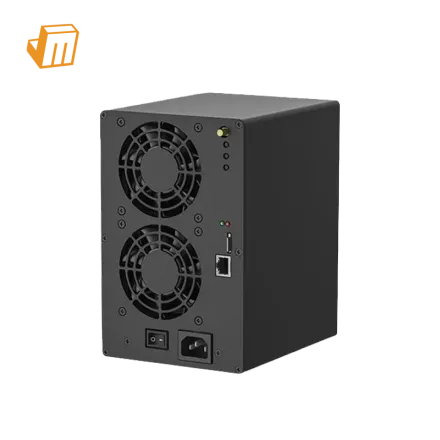
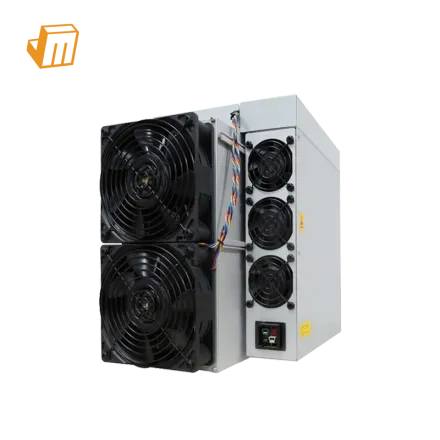
Mining KAS relies on the kHeavyHash algorithm. It is designed to be efficient, but as the network difficulty increases, having the right equipment becomes crucial.
Pro Tip: Before investing in hardware, it is critical to calculate your ROI based on current network difficulty and electricity costs. You can use our Kaspa Mining Profitability Calculator to see exactly how much KAS you could generate per day with your specific setup. ⛏️
Understanding the "Cycle" Kaspa’s monetary policy is unique. It features a geometrically decreasing emission schedule known as the "Chromatic Phase."
When investors ask, "what is a cycle in crypto," they usually refer to the 4-year Bitcoin halving cycle. Kaspa moves much faster. Its emission cuts in half once per year, but unlike Bitcoin's abrupt halving, Kaspa does this smoothly with monthly reductions based on the factor of (1/2)^(1/12). This rapid deflationary pressure means that the supply of new KAS entering the market shrinks quickly 📉.
Comparison: Kaspa vs. Bitcoin & Ethereum
To truly understand Kaspa's value proposition, we need to compare it with the market leaders:
· Bitcoin (BTC): The gold standard, but suffers from slow speeds (10-minute blocks). It is primarily a store of value. Kaspa aims to be "Digital Silver"—fast enough for daily peer-to-peer commerce with 1-second block times.
· Ethereum (ETH): The king of smart contracts, but has transitioned to Proof-of-Stake (PoS). Kaspa sticks to the security of Proof-of-Work (PoW) but solves the latency issues that usually plague PoW chains.
· The Verdict: While Bitcoin is secure but slow, and Ethereum is versatile but centralized through staking, Kaspa offers a unique hybrid: the security of PoW with the speed of a modern Layer-1 🚀.
Frequently Asked Questions (FAQ)
1. What is Kaspa (KAS)? - What's Blockchain?
Kaspa is a Proof-of-Work cryptocurrency that uses the GHOSTDAG protocol to achieve high speed and scalability. To understand Kaspa, you must understand the alternative: What is Blockchain? A blockchain is a digital ledger where data is stored in blocks linked chronologically. While secure, this linear nature creates bottlenecks. Kaspa solves this by using a DAG (Directed Acyclic Graph), allowing blocks to be processed simultaneously.
2. What do you mean by “kaspa”?
The word “Kaspa” comes from the Aramaic word for “Silver.” This is a nod to its design philosophy: if Bitcoin is viewed as “Digital Gold” (a store of value), Kaspa aims to be “Digital Silver”—a currency fast and scalable enough to be used for actual daily commerce 💸.
3. How to buy Kaspa cryptocurrency?
Since Kaspa is a decentralized asset, you can acquire it in two main ways:
· Exchanges: KAS is listed on various centralized exchanges (CEX) like MEXC, Gate.io, and KuCoin. You can purchase it using USDT or fiat currencies.
· Mining: You can earn KAS by securing the network. If you are interested in setting up a mining operation, check out our High-Performance Crypto Mining Hardware page to find the most efficient miners for the kHeavyHash algorithm.
4. What is the best cryptocoin for investment in 2026?
Disclaimer: This is not financial advice. However, looking toward 2026, the "best" investment will likely be projects that solve real-world utility issues. The market is maturing. Investors are looking for projects that combine Scalability, Fair Distribution, and Technological Innovation. Kaspa ticks all three boxes. With the development of KRC-20 tokens and Rust integration, it positions itself as a strong contender for a top-tier layer-1 portfolio asset in 2026 💎.
Conclusion
Kaspa is more than just another coin; it is an evolution of the technology that Bitcoin started. By solving the speed and scalability issues of traditional blockchains while keeping the security of Proof-of-Work, it offers a compelling case for both miners and developers.
For more news about Kaspa, check out their Medium account.
Whether you are here to trade or to mine, understanding the underlying BlockDAG technology is key to navigating the future of crypto.