
Introduction to the Decentralized Ledger 🌍
The financial and technological landscapes are undergoing a fundamental transformation. At the absolute center of this shift is a core question: what is blockchain, and how does it redefine trust, ownership, and value transfer?
To understand blockchain, think of a traditional database like a Microsoft Word document saved on a single corporate server. That central authority has total control over what gets added, edited, or deleted. A blockchain, on the other hand, is conceptually similar to a shared Google Document. Everyone on the network has a copy, and everyone can see new entries in real time. However, thanks to advanced cryptographic hashing, nobody can delete or alter the historical data.
Instead of relying on a single central authority, blockchain operates as a "peer-to-peer" network. The individual computers running this network, known as nodes, use strict algorithmic consensus rules to validate and record new information. For investors and participants looking to secure their position in this digital frontier, understanding the underlying hardware that powers these nodes—such as the infrastructure provided by platforms like Jingle Mining—is an essential first step.
The Mechanics Behind Blockchain Technology ⚙️
Delving deeper requires examining the specific mechanics that make this "shared document" unhackable, fundamentally solving the classic Byzantine Generals Problem in computer science—how distributed parties can agree on a single truth without a central coordinator.
At its most basic level, the system consists of a continuously growing list of records called blocks. Each block contains:
·A cryptographic hash (a unique digital fingerprint, typically SHA-256) of the previous block.
·A precise timestamp.
·The transaction data.
This structural design guarantees that once data is recorded in a given block, it cannot be altered retroactively without changing all subsequent blocks. Doing so would require an attacker to command more than 50% of the network's total computational power—a practically impossible feat on mature networks.
The Evolution of Smart Contracts: Beyond simple value transfer, modern blockchain architecture has evolved to include smart contracts. These are self-executing contracts where the terms of the agreement are written directly into lines of code. Distributed across the network, smart contracts automatically trigger actions when predetermined conditions are met, eliminating the need for intermediaries in complex legal or financial agreements and transforming the blockchain into a decentralized global computer.
Navigating the Network with a BTC Blockchain Explorer 🔍
Because decentralized ledgers are entirely public and transparent by design, participants require specialized tools to navigate the vast amounts of recorded data. A BTC blockchain explorer serves as the primary search engine for the network.
The utility of a blockchain explorer extends far beyond simply checking an account balance. Advanced users rely on these platforms to:
· Conduct Forensic Audits: Explore the complete transaction history of any given wallet address to track the precise flow of funds.
· Monitor the Mempool: View unconfirmed transactions that are currently waiting in the queue to be validated by miners and included in the next block.
· Analyze Network Health: Identify "orphaned blocks"—valid blocks that were successfully mined but ultimately not included in the longest chain due to simultaneous block discovery.
Understanding Digital Assets: What Is a Blockchain Wallet? 💼
Cryptocurrencies do not physically exist anywhere; they reside exclusively on the decentralized ledger. Therefore, a blockchain wallet does not store coins in a literal sense. Instead, it securely stores the cryptographic keys required to access, manage, and transfer your assets.
Think of your wallet like a highly secure digital mailbox:
· The Public Key: This acts as your mailbox address. Anyone can use it to deposit funds into your account.
· The Private Key: This is the physical key to open the mailbox. It is a highly sensitive alphanumeric code that mathematically proves your ownership and authorizes you to sign transactions.
Wallets generally fall into two categories: Hot wallets (software connected to the internet for quick, daily liquidity) and Cold wallets (offline hardware devices providing air-gapped security for long-term storage).
Network Deep Dive: The Litecoin Blockchain ⚡
While Bitcoin established the blueprint for decentralized finance, subsequent networks sought to optimize specific operational parameters. Created in 2011, the Litecoin blockchain represents one of the earliest successful adaptations, explicitly designed to function as a faster, lighter alternative for everyday micro-transactions.
The primary technical distinctions of the Litecoin network include:
· Accelerated Block Times: A targeted generation time of just 2.5 minutes, allowing the network to confirm transactions four times faster than Bitcoin's legacy architecture.
· Deflationary Economics: A strict maximum supply capped at 84 million tokens, preventing arbitrary inflation.
· Mining Algorithm: It utilizes the Scrypt hash function, a memory-hard algorithm that historically demanded different hardware architecture than Bitcoin’s SHA-256 protocol.
ASIC Hardware and Mining Profitability 📈
The decentralized nature of these digital ledgers is entirely dependent on the physical hardware deployed to secure them. As global network difficulty algorithms automatically adjust to increased participation, the industry has universally transitioned toward highly specialized Application-Specific Integrated Circuit (ASIC) devices.
Profitability in industrial crypto mining is dictated by the precise balance between a machine's computational hashrate, its electrical consumption, and its thermal management capabilities. Let's evaluate a modern hardware comparison:
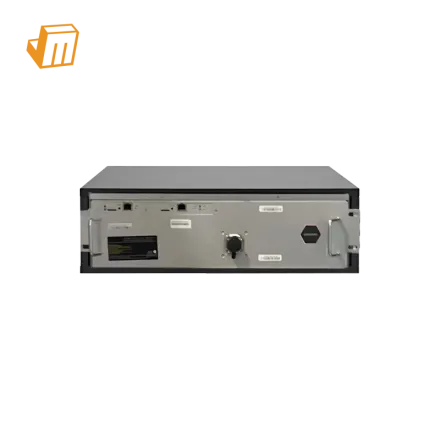
· Antminer S21e XP Hyd 3U: Delivers a massive 860.00 Th/s hashrate using 11180 W of power. Priced competitively at $11,400.00, it achieves an estimated daily net profit of $22.16, with a payback period of roughly 515 days.
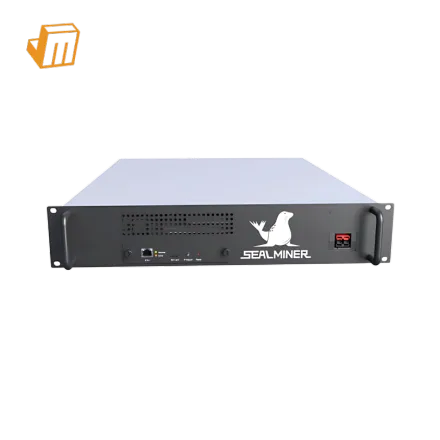
· SealMiner A3 Pro Hydro: Generates 660.00 Th/s using 8250 W of power, priced at $9,930.00. It yields a daily net profit of $17.09, with a slightly longer payback period of 582 days.
The Hydro-Cooling Advantage: Notice that both premium models utilize hydro-cooling technology. For professional operations, liquid cooling is revolutionary—it drastically improves thermal dissipation, prevents thermal throttling during peak operations, and extends the lifespan of the silicon chips.
Although the $9,930 SealMiner represents a relatively lower initial capital outlay compared to the premium Antminer, allocating slightly more capital toward the highly efficient, higher-hashrate Antminer model yields a faster return on investment (ROI) and superior long-term revenue generation. By utilizing advanced miner comparator tools, operators can dynamically adjust their local kilowatt-hour rates to forecast exact returns across different network difficulty epochs.
Frequently Asked Questions (FAQs) ❓
Q:What is blockchain technology, and who invented it?
A: At its core, a blockchain is a highly secure, digital public ledger that is shared across a network of computers. Once information is recorded on it, it is virtually impossible to hack or alter. While early theoretical concepts of cryptographically securing data blocks were introduced by researchers Stuart Haber and W. Scott Stornetta in 1991, blockchain as we know it today was practically invented in 2008 by a person (or collective) using the pseudonym Satoshi Nakamoto. Nakamoto designed the first decentralized blockchain to serve as the public ledger for Bitcoin, elegantly solving the "double-spending" problem for digital currency.
Q:What is the application of blockchain in artificial intelligence?
A: The convergence of these two technologies offers profound benefits, primarily concerning data integrity. The immutable ledger helps AI "explain" itself by leaving a clear, verifiable audit trail of its decision-making processes, drastically improving algorithmic transparency. Furthermore, secure data sharing across decentralized networks provides AI with higher-quality, tamper-proof datasets for training.
Q:How will AI use blockchain technology?
A: According to insights from the AI Daily space, artificial intelligence will leverage decentralized architecture to solve critical privacy, collaboration, and resource management issues. Algorithms can utilize the ledger to store sensitive information securely. Additionally, it enables AI to interact with Decentralized Autonomous Organizations (DAOs) to automate complex administrative decisions and utilize tokenized incentive systems to purchase decentralized computing power.
Q:Will artificial intelligence end blockchain technology?
A: Current market and technological analyses indicate a trajectory of powerful synergy, not obsolescence. AI utilizes distributed ledgers for enhanced data security, trust, and transparency. Conversely, decentralized networks leverage AI for intelligent automation, advanced network fraud detection, and rapid market data analysis. This symbiotic relationship combines the cognitive power of advanced algorithms with the immutable operations of cryptographic ledgers.
Q:What is a blockchain in supply chain management?
A: In supply chains, it functions as a distributed, transparent record of all business transactions and material movements across a global network. For example, in the food and pharmaceutical industries, the technology records strict quality control procedures across various stages. Companies can verify exactly where items were produced and trace their entire logistical journey on an unalterable ledger, optimizing compliance and consumer safety.
Conclusion: Stepping Into the Decentralized Economy
The transition from centralized databases to decentralized, cryptographic ledgers is more than just a technological upgrade; it is a fundamental shift in how the modern economy verifies trust and transfers value. Whether you are an individual exploring your first digital wallet or an institutional investor deploying liquid-cooled ASIC farms, understanding the underlying architecture of the blockchain is the key to participating safely and profitably.
For further insights into the operational hardware that secures these networks, explore our comprehensive crypto mining knowledge hub to elevate your understanding of the decentralized economy.