IceRiver ALPH AL3 vs. Bitmain S21 Series: Defining Bitcoin Miner Roles
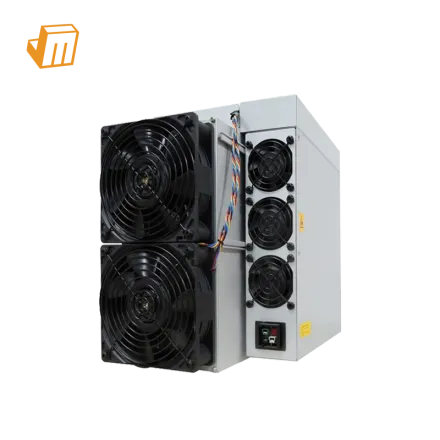
Choosing the right Bitcoin mining hardware involves more than just raw hashrate; it demands a precise understanding of operational costs, efficiency, and deployment scale. This comparison pits the IceRiver ALPH AL3 against two formidable Bitmain offerings, the Antminer S21e Hyd and the Antminer S21 Pro+, to delineate their respective niches. The IceRiver ALPH AL3, with its 15Th/s hashrate and 3500 W power draw, presents a unique profile that deviates sharply from the industrial-grade efficiency benchmarks set by Bitmain's latest S21 generation. Its target buyer would be an operator with access to exceptionally low or even negative-cost power, perhaps for waste heat utilization, or a highly specialized application where upfront capital expenditure is critically constrained, and efficiency is a secondary concern.
Conversely, the Bitmain Antminer S21e Hyd (310TH/s) and S21 Pro+ (245Th/s) are engineered for the high-density, high-performance demands of commercial mining farms. These machines cater to professional miners and institutional investors who prioritize maximizing terahash output per watt, aiming for the lowest possible operational expenditure per coin mined. Their design reflects an imperative to maintain profitability in a competitive landscape characterized by rising network difficulty and volatile market prices. The S21 series targets operators with robust electrical infrastructure, advanced cooling solutions, and a long-term strategy centered on industrial-scale production and cost leadership.
Maximizing ROI: Hashrate & Efficiency Breakdown
Understanding the core performance metrics of each miner is fundamental to projecting potential return on investment. The interplay between hashrate, power consumption, and efficiency directly dictates the operational viability and profitability ceiling of any mining deployment. While higher hashrate generally correlates with increased revenue, it is the energy efficiency, measured in Watts per Terahash (W/TH), that serves as the ultimate arbiter of sustained profitability, especially as network difficulty continues its upward trend.
| Miner Model | Algorithm | Hashrate | Power Draw | Efficiency |
|---|---|---|---|---|
| IceRiver ALPH AL3 | SHA-256 | 15Th/s | 3500 W | 233.33 W/TH |
| Bitmain Antminer S21e Hyd | SHA-256 | 310TH/s | 5270 W | 17.00 W/TH |
| Bitmain Antminer S21 Pro + | SHA-256 | 245Th/s | 3675 W | 15.00 W/TH |
The operational expenditure (OPEX) impact derived from these specifications is stark. The Bitmain Antminer S21 Pro+, with its 15.00 W/TH efficiency, stands out as a leader in power optimization, closely followed by the S21e Hyd at 17.00 W/TH. These machines are designed to minimize electricity costs per terahash, which directly translates to lower OPEX and higher profit margins, even during periods of lower Bitcoin prices or increased network difficulty. In sharp contrast, the IceRiver ALPH AL3's 233.33 W/TH efficiency represents a significantly higher energy cost per unit of hashpower. At typical commercial electricity rates, the ALPH AL3 would incur substantially greater OPEX, rendering it financially challenging for Bitcoin mining unless electricity is nearly free or the unit serves a specific, non-profit-maximizing purpose.
Facility Infrastructure & Cooling Demands for Modern SHA-256 ASICs
Deploying any of these miners necessitates a robust electrical and cooling infrastructure, but the specific requirements vary significantly across the models. The IceRiver ALPH AL3, drawing 3500 W, requires dedicated 200-240V circuits, similar to a high-end server or a small cluster of consumer-grade electronics. While its individual power draw is manageable for smaller operations, its extremely high W/TH ratio implies that achieving meaningful hashpower would require many units, multiplying the infrastructure demands.
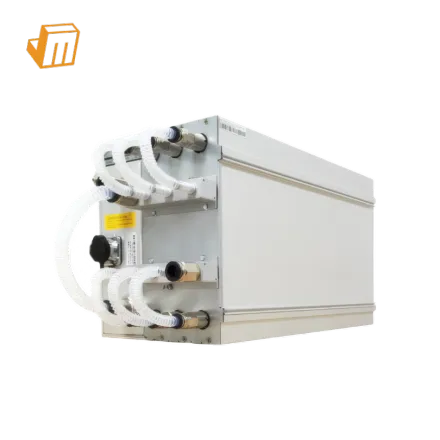
The Bitmain Antminer S21 Pro+, with its 3675 W draw, fits within similar air-cooled data center standards, but its higher hashrate density means that cooling and airflow management become critical at scale. The Bitmain Antminer S21e Hyd, however, is a liquid-cooled unit, demanding specialized infrastructure for its 5270 W power consumption. This includes a closed-loop coolant system, external cooling towers or chillers, and plumbing designed to handle the heat transfer fluid. Liquid cooling offers superior thermal management and noise reduction, but it significantly increases the complexity and capital expenditure of the facility build-out.
> Pro Tip: When planning for liquid-cooled miners like the S21e Hyd, factor in the total cost of ownership for the entire cooling loop, including pumps, heat exchangers, and fluid maintenance, not just the miner's purchase price. This specialized infrastructure often requires a dedicated engineering team for installation and ongoing support.
Final Assessment
The choice between the IceRiver ALPH AL3 and the Bitmain Antminer S21 series is a decision driven by fundamentally different operational philosophies and economic realities. The Bitmain S21e Hyd and S21 Pro+ are purpose-built for industrial-scale Bitcoin mining, offering market-leading efficiency and high hashrate density essential for profitability in today's competitive environment. Their advanced thermal designs, particularly the S21e Hyd's liquid cooling, underscore a commitment to performance and long-term operational resilience.
The IceRiver ALPH AL3, conversely, with its substantially higher W/TH efficiency, occupies a niche that is difficult to justify for pure Bitcoin mining profit maximization under conventional electricity pricing. Its specific application might be limited to scenarios with extremely unique energy profiles or for experimental deployments. For any serious Bitcoin mining venture aiming for sustainable returns, the Bitmain S21 series offers a superior blend of hashrate and energy efficiency, directly impacting the bottom line.
> Verdict: For professional Bitcoin mining operations prioritizing energy efficiency and long-term profitability, the Bitmain Antminer S21e Hyd and S21 Pro+ are the clear choices. The IceRiver ALPH AL3, given its efficiency profile, is best suited for highly specialized use cases where electricity cost is virtually zero or for non-SHA-256 algorithms where its design might be more optimized. To optimize your hardware procurement and deployment strategy, visit the JingleMining website.
Frequently Asked Questions (FAQ)
Q: Why is energy efficiency (W/TH) more important than raw hashrate for long-term mining profitability?
A: Energy efficiency directly determines your electricity cost per unit of hashpower. As network difficulty increases and Bitcoin price fluctuates, miners with lower W/TH can maintain positive profit margins for longer periods, ensuring operational resilience.
Q: What are the main infrastructure differences between air-cooled and liquid-cooled ASICs?
A: Air-cooled ASICs require robust HVAC systems and airflow management, while liquid-cooled ASICs like the S21e Hyd necessitate a closed-loop cooling system, external chillers or cooling towers, and specialized plumbing, significantly increasing setup complexity and initial capital expenditure.
Q: Can the IceRiver ALPH AL3 be profitable for Bitcoin mining?
A: Given its 233.33 W/TH efficiency for SHA-256, the IceRiver ALPH AL3 is unlikely to be profitable for Bitcoin mining under typical commercial electricity rates. It would require extremely low, near-zero, or even negative electricity costs to cover its operational expenses.