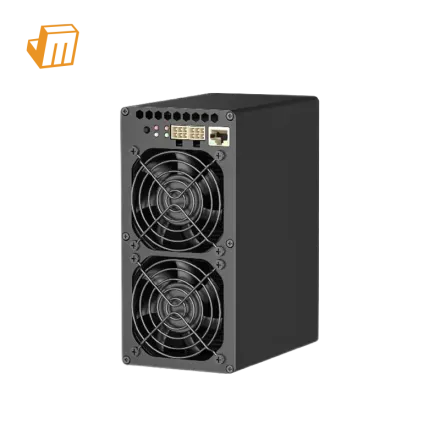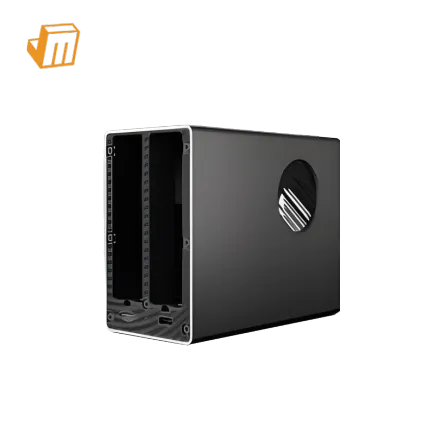

The deployment of the Goldshell XT-BOX marks a significant shift for residential and small-scale operators targeting the ALEO network. Utilizing the zkSNARK algorithm, this hardware focuses on the Proof-of-Succinct-Work (PoSW) mechanism, which demands a specific balance of computational throughput and power efficiency. With a 580Gh/s hashrate delivered at a 400 W power draw, the unit achieves an efficiency rating of 0.69 W/GH. This narrow efficiency window is designed to maintain profitability even during periods of network difficulty spikes, providing a more stable floor compared to general-purpose GPU mining rigs.
For operators comparing the standalone XT-BOX against the modular Goldshell BYTE system, the decision rests on infrastructure flexibility. The XT-BOX is an integrated, self-contained unit that serves the space-constrained buyer who requires a "plug-and-play" solution without the overhead of a separate chassis. Conversely, the BYTE system allows for the insertion of various cards, such as the XT CARD, which effectively mirrors the performance of the box units. While the BYTE system offers a path for multi-algorithm exposure, the XT-BOX remains the superior choice for dedicated ALEO mining where simplicity and rapid deployment are prioritized.
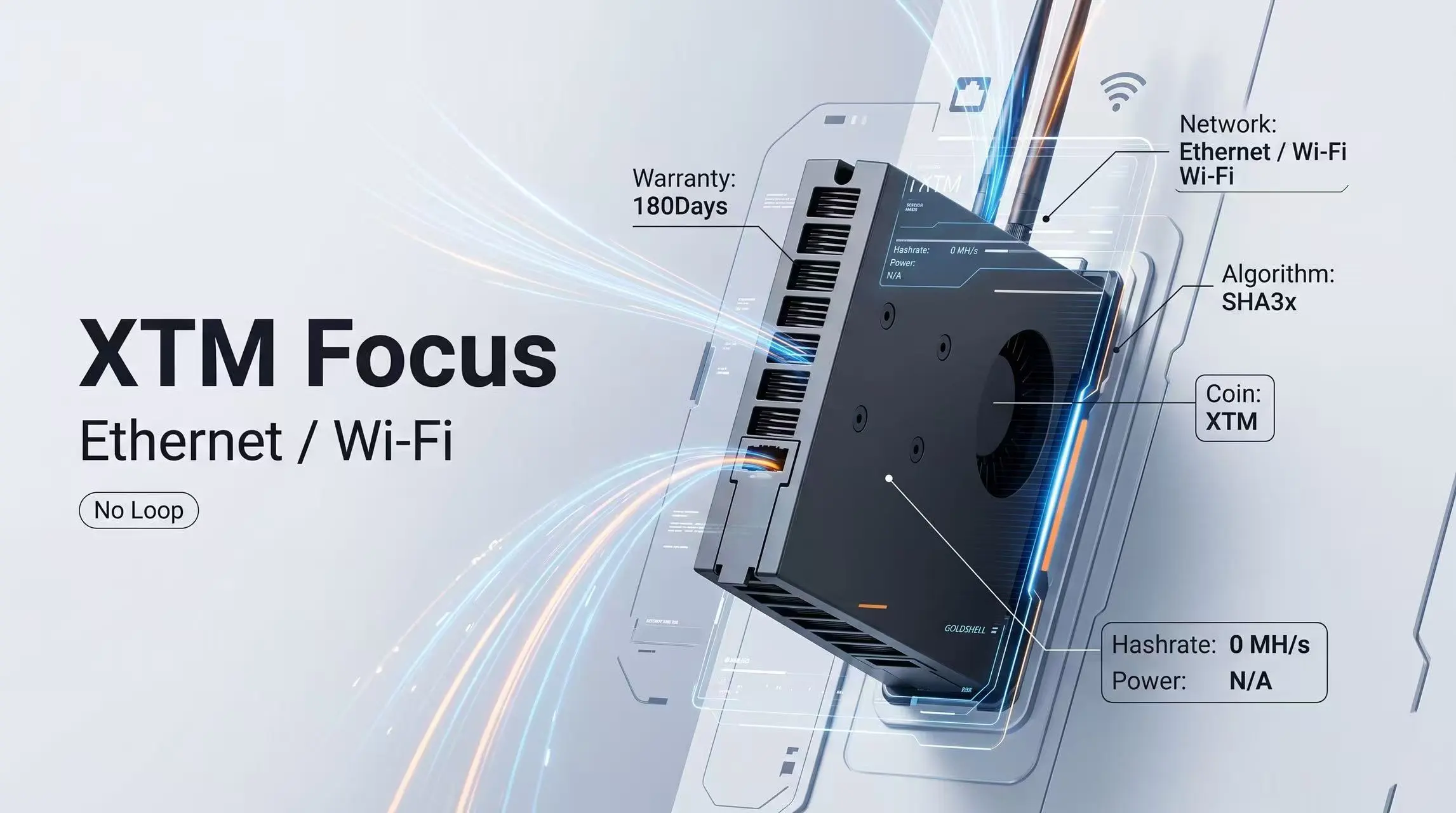
ALEO Mining Efficiency Benchmarks
The efficiency of 0.69 W/GH is the primary metric for calculating the long-term viability of this hardware. In the ALEO ecosystem, where zero-knowledge proofs are the standard, the hardware must sustain high-intensity workloads without significant thermal throttling. The 400 W power draw is remarkably low for an ASIC of this class, allowing it to operate on standard residential circuits without the need for 240V industrial PDU upgrades. This low barrier to entry makes it an ideal candidate for home-based hosting or small office environments.
When evaluated against broader market alternatives, the XT-BOX provides a unique middle ground. It avoids the massive capital expenditure of high-wattage industrial miners while outperforming the energy efficiency of consumer-grade graphics cards previously used for ALEO testing phases. The specialized nature of the zkSNARK acceleration ensures that the hash-to-watt ratio remains competitive even as the network hashprice fluctuates.
Operating Cost Sensitivity Analysis
Profitability in ALEO mining is highly sensitive to local electricity rates due to the constant nature of the PoSW workload. While the 400 W draw is modest, the monthly cumulative cost determines the shutdown price—the point at which it becomes cheaper to buy the coin than to mine it. Operators must monitor their $/kWh closely to ensure the opex does not exceed the daily rewards generated by the 580Gh/s hashrate.
| Electricity Rate ($/kWh) | Daily Cost ($) | Monthly Cost ($) |
| $0.05 | $0.48 | $14.40 |
| $0.07 | $0.67 | $20.10 |
| $0.09 | $0.86 | $25.80 |
Pro Tip: Always utilize a dedicated high-pressure air compressor for monthly intake cleaning, as the high-density cooling fins on these compact box models are prone to micro-dust accumulation that standard vacuuming cannot clear.
Infrastructure and Thermal Demands
Deploying the XT-BOX requires attention to environmental stability to protect the lifespan of the internal components. Although the unit only draws 400 W, the heat density of the XT chips necessitates a consistent flow of cool air to prevent the fans from ramping up to their maximum RPM, which significantly increases noise levels. The compact chassis design means that the internal thermal buffer is smaller than that of full-sized industrial miners.
· PDU Planning: Use high-quality power strips or basic PDUs that can handle a continuous 400 W load without overheating.
· Thermal Buffer: Maintain an ambient room temperature below 25°C to ensure the internal fans operate at a lower duty cycle.
· Network Stability: Connect via a shielded Ethernet cable to prevent packet loss, which can lead to rejected shares on the ALEO pool.
· Dust Mitigation: Place the unit at least 12 inches above floor level to avoid the intake of heavy carpet fibers or floor dust.
The contrast between the XT-BOX and the modular cards (AE/DG/XT/AL) highlights a divergence in buyer strategy. The XT-BOX is for the operator who wants a fixed asset for a specific coin, whereas the BYTE system appeals to those who anticipate shifting between algorithms. However, for those committed to the ALEO roadmap, the integrated cooling and power delivery of the XT-BOX offer a more reliable thermal profile over extended 24/7 runtimes.
Conclusion & Next Steps
The Goldshell XT-BOX 580Gh/s is a precision tool for the ALEO network, balancing low power consumption with the specific computational requirements of zkSNARK proofs. It is best suited for residential miners and small-scale farms that prioritize energy efficiency and ease of deployment. For those looking to secure hardware for the next phase of ALEO mining, the XT-BOX remains a primary recommendation. Check current availability and shipping times at JingleMining to integrate the XT-BOX into your facility today.
Frequently Asked Questions (FAQ)
Q: What is the primary use of this equipment?
A: The Goldshell XT-BOX is primarily designed for residential and small-scale mining on the ALEO network. It specifically accelerates zkSNARK zero-knowledge proofs using the Proof-of-Succinct-Work (PoSW) consensus mechanism.
Q: How does electricity cost impact ROI?
A: Since the PoSW workload runs continuously, your local electricity rate ($/kWh) dictates the daily operating expense and your ultimate shutdown price. Maintaining profitability requires ensuring these ongoing power costs stay well below the daily ALEO rewards generated by its 580Gh/s output.
Q: What should buyers verify before deployment?
A: Buyers must ensure their facility can provide a stable 400 W continuous electrical load and maintain an ambient temperature below 25°C to prevent thermal throttling. Additionally, a hardwired, shielded Ethernet connection is critical to avoid packet loss and rejected shares on the mining pool.