
Goldshell KA BOX Pro should be shortlisted only by operators who can support 600 W continuously and remove the resulting heat without sacrificing uptime. Its 1.60 Th/s profile is the commercial advantage, but buyers without verified electrical headroom, cooling capacity, and defensible operating economics should not buy it.
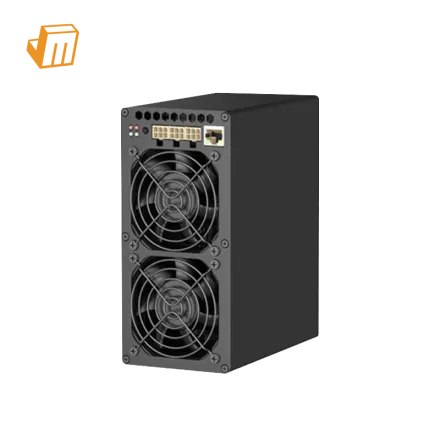
Goldshell KA BOX Pro positions itself as a high-density compact mining hardware solution engineered specifically for the kHeavyHash algorithm and Kaspa ecosystem, delivering 1.60 Th/s of hashrate at a power consumption of 600 W and an efficiency metric of 375.00 W/Th. Its strongest commercial advantage lies in its specialized compact form factor that bridges the performance gap between hobbyist hardware and entry-level commercial units, allowing operators to deploy localized hashing capacity without heavy the manufacturer-specified input voltage to the manufacturer-specified input voltage industrial infrastructure requirements. However, the constraint most likely to disqualify a potential buyer is its rigid 600 W continuous power draw combined with thermal output that requires dedicated ambient management, making it unsuitable for unventilated residential living spaces without deliberate acoustic and thermal planning. Operating within the 2026 market landscape demands a rigorous evaluation of electrical infrastructure, pool connectivity, and network difficulty exposure before committing capital to this hardware class.
Core Architecture and Performance Profile
The Goldshell KA BOX Pro operates strictly as a specialized kHeavyHash ASIC, avoiding the multi-algorithm versatility of older devices to focus computational power entirely on Kaspa mining. Delivering a fixed hashrate of 1.60 Th/s at a power consumption of 600 W translates directly to an efficiency rating of 375.00 W/Th. This efficiency level places the machine firmly in a competitive operating class for compact form factor hardware, where thermal constraints usually degrade silicon performance. From a cash flow perspective, an efficiency of 375.00 W/Th means the operator must calculate precise daily electricity expenditures against shifting block rewards.
If local electricity tariffs exceed the break-even threshold defined by this specific wattage requirement, the fixed hashrate cannot compensate for margin compression. The architecture relies on dedicated ASIC chips optimized solely for high-throughput proof-of-work calculations under the kHeavyHash parameters. Consequently, operators cannot reconfigure the unit for alternative coins if market conditions shift away from Kaspa. This lack of algorithm switching makes the machine a pure play on the Kaspa network. Buyers must accept direct exposure to coin price volatility and difficulty adjustments without fallback mining options.
The physical engineering reflects a balance between component density and power delivery, ensuring that the internal hashboards maintain stable frequencies without triggering premature thermal shutdown safeguards. Evaluating this hardware requires an understanding that every watt consumed directly impacts the operational margin, making the 375.00 W/Th efficiency figure the primary determinant of long-term economic viability.
Electrical Reality and Thermal Management
Drawing a continuous 600 W places specific demands on local electrical circuits and thermal management, requiring operators to calculate amperage draw and heat rejection accurately. At a standard household voltage of the manufacturer-specified input voltage, a 600 W continuous continuous load draws approximately the calculated current at the verified input voltage, which is well within the capacity of a standard 15-Amp residential circuit, provided no other high-draw appliances share the same breaker. For operators utilizing the manufacturer-specified input voltage infrastructure, the amperage drops further, easing strain on electrical wiring and reducing resistive heat losses in power distribution lines.
Despite the manageable amperage, the thermal reality of dissipating 600 W of thermal energy in a confined space cannot be ignored. The onboard cooling fans must push a high volume of air through the compact chassis, generating noticeable acoustic output that precludes placement in common living areas. Intake-to-exhaust airflow management is critical to prevent thermal recirculation, a phenomenon where exhausted heat loops back into the cold air intake and elevates chip temperatures. Elevated ambient temperatures reduce the thermal margin of the silicon, forcing internal sensors to throttle frequency or trigger protective shutdowns to prevent permanent hardware damage.
Operators must ensure adequate room ventilation or direct ducting to exhaust the thermal load outdoors. Ignoring these physical requirements leads to dropped hashboards, unstable hashrate output, and shortened component lifespans. Proper site preparation requires verifying that the chosen room can sustain a continuous thermal output equivalent to multiple running desktop computers operating at peak load without creating a heat trap.
Pool Connectivity, Firmware, and Operational Stability
Operational stability for the Goldshell KA BOX Pro relies on low-latency Stratum endpoint configuration, robust firmware management, and proactive monitoring of hashboard health. Connecting the unit to a mining pool requires selecting a Stratum server with minimal network latency to reduce stale share rates, which directly diminish daily revenue efficiency. High latency between the miner and the pool endpoint causes submitted shares to arrive after the network has already processed a block, rendering those calculations economically worthless. The proprietary Goldshell firmware interface provides real-time logging tools that track chip temperature, fan speed, and individual hashboard status.
Reviewing these kernel logs allows operators to identify early signs of hardware instability, such as intermittent hashboard dropout or abnormal frequency scaling. If a primary mining pool experiences downtime, the internal firmware failover mechanism automatically routes hashing power to a secondary pre-configured pool URL, protecting the operator from prolonged revenue interruptions during network disruptions. Operators must maintain up-to-date firmware versions released by the manufacturer to ensure optimal hash rate stability and security patch integration. However, firmware updates should be approached methodically, with verification of release notes to avoid introducing unexpected bugs into the control board software.
Monitoring stale and reject share percentages through the pool dashboard serves as the primary diagnostic indicator for network degradation or unstable local connections. Maintaining clean network hygiene, including stable Ethernet cabling and dedicated router QoS settings, ensures that the KA BOX Pro communicates efficiently with the chosen mining pool without packet loss.
Dynamic Economics and Revenue Sensitivity
Financial returns on the Goldshell KA BOX Pro are dictated by network difficulty trajectory, hashprice sensitivity, hardware depreciation, and the operational shutdown threshold rather than electricity cost alone. Network difficulty in the Kaspa ecosystem scales dynamically as more hashing power joins the blockchain, meaning that a fixed hashrate of 1.60 Th/s will yield fewer coins over time unless offset by proportional coin price appreciation. Hashprice, which measures the expected daily revenue per terahash of hashing power, fluctuates constantly based on transaction fees, block rewards, and overall network competition.
To model profitability accurately, operators must apply a sensitivity analysis that incorporates potential increases in difficulty alongside variable electricity tariffs. Hardware depreciation represents another critical cost component, as newer, more efficient ASIC generations eventually enter the market and reduce the residual resale value of older units. When gross daily revenue falls below the daily electricity cost calculated from the 600 W power draw, the machine hits its shutdown threshold. Operating past this threshold results in immediate net financial losses, requiring the miner to be powered down until market conditions recover or electricity rates decrease.
Uptime percentage directly dictates revenue capture; unexpected downtime due to thermal throttling, power interruptions, or pool disconnects permanently erases potential earnings that cannot be recovered retroactively. Evaluating the commercial viability of the KA BOX Pro requires balancing these macroeconomic variables against upfront acquisition costs and local power pricing agreements.
Definitive Buyer Verdict and Market Positioning
The Goldshell KA BOX Pro is ideally suited for decentralized home operators and boutique miners with low-cost electricity, while commercial scale buyers or high-tariff residential users should avoid deployment. A positive buyer fit applies to enthusiasts and small-scale operators who have access to affordable electricity tariffs, adequate ventilation to manage a 600 W continuous thermal load, and a tolerance for moderate fan acoustics in a dedicated utility space. These users can leverage the compact form factor of the device to participate in the Kaspa network without investing in heavy commercial electrical infrastructure or facility hosting contracts.
Conversely, the negative buyer boundary disqualifies individuals facing high residential electricity rates, those attempting to operate the unit in unventilated living areas, and industrial miners seeking massive rack density. For high-tariff users, the 375.00 W/Th efficiency cannot generate sufficient revenue to overcome power expenses, leading rapidly to unprofitable operation. Industrial operators requiring gigawatt-scale density will find the single-unit box form factor inefficient for large-scale facility deployment. Prospective buyers sourcing equipment through platforms like the JingleMining website must confirm their local electricity cost per kilowatt-hour against prevailing hashprice models before finalizing purchase decisions.
If live network difficulty spikes outpace coin price growth without a corresponding adjustment in hardware efficiency, the payback period extends significantly, making pre-purchase financial modeling an essential step in the acquisition process.
Frequently Asked Questions (FAQ)
What is the primary algorithm and coin supported by the Goldshell KA BOX Pro?
The Goldshell KA BOX Pro is built specifically to mine the kHeavyHash algorithm, which is utilized exclusively by the Kaspa network to generate KAS coins. It is a single-algorithm ASIC miner and cannot be reconfigured to mine alternative cryptocurrencies operating on different cryptographic protocols.
How does the power consumption and efficiency impact daily operating costs?
The unit consumes 600 W of continuous power while delivering 1.60 Th/s, resulting in an efficiency rating of 375.00 W/Th. Daily operating expenses are calculated directly by multiplying this 600 W continuous draw by local electricity tariffs, requiring operators to maintain power costs below the network shutdown threshold to remain profitable.
What electrical infrastructure is required to safely run this miner at home?
Running the 600 W continuous load safely requires a dedicated circuit with sufficient amperage headroom, avoiding shared circuits with heavy household appliances. While standard the manufacturer-specified input voltage residential outlets can support the load, utilizing the manufacturer-specified input voltage infrastructure improves electrical efficiency and reduces thermal stress on wiring.