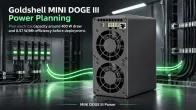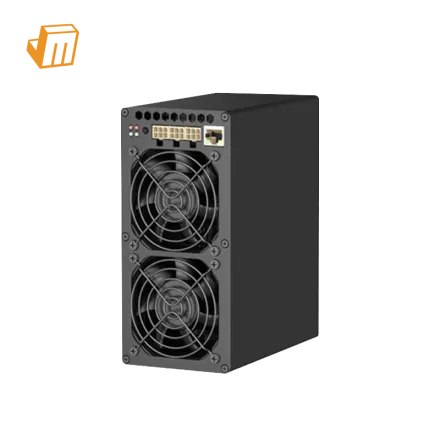

For individuals allocating capital in the decentralized hardware sector, marketing generalizations hold zero weight. Hardware operators are strictly focused on verifiable, localized metrics: sustained hashrate, thermal displacement, continuous electrical load, and long-term silicon reliability. When evaluating equipment engineered for the Kaspa network's kHeavyHash algorithm, the physical and operational realities of the machine dictate your total return on investment. This comprehensive technical breakdown bypasses surface-level overviews to meticulously analyze the internal architecture, dashboard management, and environmental requirements of the industry's premier compact ASIC device.
Silicon Architecture and Hashrate Stability ⚡
The internal engineering of any application-specific integrated circuit determines its operational lifecycle and daily yield consistency. This specific chassis houses highly binned silicon chips configured specifically to process cryptographic functions with maximum electrical efficiency. The primary metric for this specialized unit is its ability to consistently output 1.6 terahashes per second. However, experienced operators understand that a nominal hashrate is only part of the equation; the stability of that hashrate and the hardware rejection rate are what truly impact your final payouts.
The control board features advanced voltage regulation modules that ensure a completely flat, uninterrupted flow of direct current to the hashing chips. This extreme electrical stability means the computational output experiences minimal variance over a 24-hour testing cycle. For the operator, this translates directly to a lower stale share ratio and a higher volume of accepted cryptographic proofs on the blockchain. Securing authentic, factory-calibrated units directly through the Goldshell KA Box Pro product portal is the foundational step in guaranteeing this baseline hardware stability and protecting your initial capital deployment.
Analyzing Operational Economics and Market Value 📊
When allocating funds toward digital asset generation hardware, the expenditure must be rigorously modeled against projected operational costs. The defining characteristic that dictates the goldshell ka box pro profitability is not solely its raw terahash output, but its aggressive energy efficiency rating. The unit operates at a continuous baseline of exactly 400 watts. In the hardware sector, the ratio of watts consumed per terahash generated is the absolute determinant of longevity during macroeconomic market downturns.
Operators conducting granular research into the Goldshell KA Box Pro (1.6Th/s) Realtime Profit, Specs & Cost must factor this 400-watt baseline into their local utility rates. Because the electrical overhead is remarkably low, the threshold where operational costs exceed the value of generated assets is pushed significantly further out. When analyzing the total Goldshell ka box pro kaspa miner price, operators are effectively purchasing an extended operational runway. This low power draw ensures that the machine can operate continuously through multiple network difficulty adjustments without eroding net margins. To objectively validate these efficiency ratios against other hardware models currently on the market, operators should utilize a dedicated miner comparator utility to mathematically project their individual amortization schedules based on real-time network data.
Navigating the Firmware and Web Interface 🖥️
The control interface of a mining device is the operator's primary diagnostic tool. A convoluted operating system inevitably leads to misconfigurations, extended downtime, and lost revenue. The manufacturer has deployed a proprietary, lightweight Linux-based firmware that prioritizes direct access to critical operational metrics without unnecessary navigational layers.
The physical Goldshell KA Box Pro setup is intentionally minimalist. The unit requires a direct Cat5e or Cat6 Ethernet connection from the rear RJ45 port to your local network switch to eliminate the packet loss associated with wireless connections. Once the physical network link is established and the unit is powered on, operators must identify the device's local IP address using a standard network scanning utility. Entering this IP address into a web browser loads the localized control dashboard.
If operators encounter interface navigation issues, referencing the officially provided Goldshell ka box pro kaspa miner manual details the default factory login credentials and initial configuration steps. Inside the dashboard, the miner tab is where the critical routing occurs. Operators will input their designated pool stratum URL, a secure wallet address, and an individual worker name. The dashboard also provides real-time access to exact hashboard temperatures, live fan RPM metrics, and system kernel logs, which are indispensable for advanced troubleshooting.
Thermal Dynamics and Acoustic Engineering 🌡️
Heat displacement is the absolute limiting factor for any residential hardware deployment. Industrial data centers manage extreme heat through massive HVAC systems and high-velocity intake fans that produce decibel levels completely incompatible with human living spaces. This compact unit approaches thermal management through localized acoustic engineering and specialized heat sink geometries.
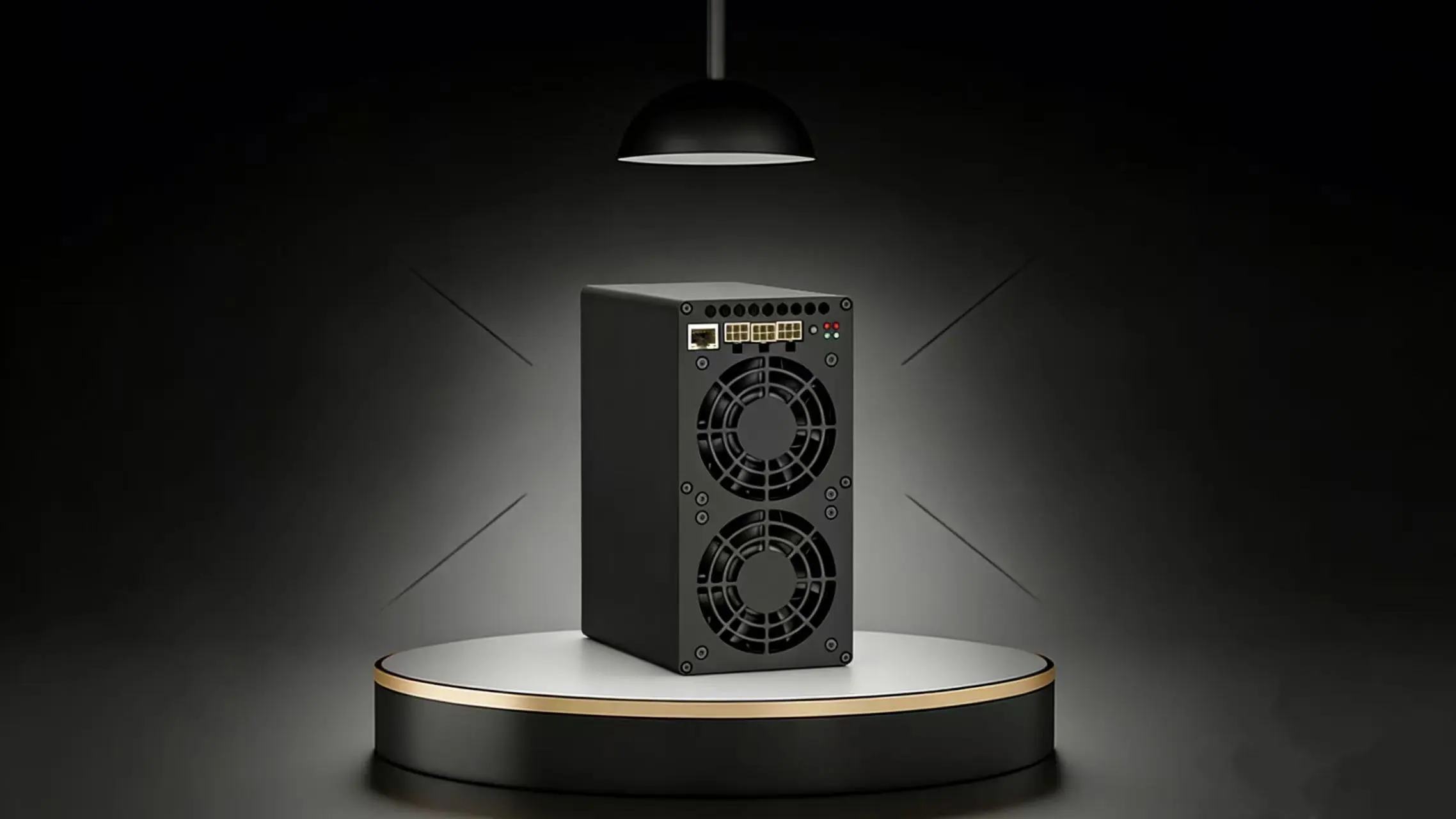
Drawing 400 watts of power translates to a very specific amount of thermal energy that must be continuously evacuated from the aluminum chassis to prevent silicon degradation. The unit utilizes a precisely calculated push-pull airflow configuration. A front-mounted intake fan pulls ambient room-temperature air directly across custom-milled aluminum heatsinks bonded to the internal hashboards. The displaced thermal energy is then aggressively exhausted through the rear panel. Because the power draw is low, the internal fans operate efficiently without reaching maximum rotational speeds. Consequently, the operational noise level remains strictly around 35 decibels under normal conditions. This engineering allows operators to deploy the hardware in standard home environments without requiring localized soundproofing enclosures.
Power Supply Integration and Electrical Infrastructure 🔌
A primary concern for residential operators is the physical limitation of standard domestic electrical infrastructure. Commercial operations require 220V, three-phase power grids. Integrating high-performance cryptographic hardware into a standard home requires an intimate understanding of electrical breaker capacities and continuous load limits.
This hardware utilizes an external power supply unit that accepts standard 110V to 240V inputs. This wide-voltage capability means the external power brick can plug directly into a standard wall outlet without requiring expensive step-up transformers or dedicated 220V lines. From an electrical engineering perspective, drawing 400 watts on a 110V circuit results in an electrical load of under four amps. Adhering to the standard continuous load safety rules means a standard 15-amp home circuit can safely sustain up to 12 amps of continuous draw. Therefore, an operator can safely deploy up to three of these specific units on a single, dedicated residential circuit breaker without risking electrical overload.
Network Latency and Ecosystem Integration 🔗
Generating a valid cryptographic share is only half the operational process; submitting that share to the blockchain network before a competing machine does is what secures the payout. Network latency is a critical operational metric that home miners must actively manage. High ping times to your chosen mining pool result in stale shares.
To minimize latency, operators must select a mining pool with strategically located ingress servers geographically close to their physical deployment site. When configuring the web dashboard, we consistently advise operators to route their hashing power toward highly established infrastructure platforms like f2pool. Premium pools provide localized stratum addresses, ensuring that your computational output experiences the lowest possible transit time. For operators aiming to fully optimize their hardware's interaction with the broader blockchain architecture and understand advanced wallet routing, exploring a detailed ecosystem framework is an essential operational requirement.
Goldshell KA Box Pro vs Traditional Industrial ASICs ⚖️
When operators evaluate hardware expansion, the decision often comes down to acquiring a single, massive industrial unit or multiple compact, highly efficient residential units. Comparing this compact device against traditional high-wattage hardware reveals distinct strategic advantages for the domestic operator.
Traditional machines often draw in excess of 3000 watts. Deploying a 3000-watt machine requires hiring a licensed electrician to install dedicated 220V circuits, adding significant upfront capital expenditure. Additionally, the extreme heat and noise generated by a 3000-watt unit necessitate dedicated hosting space. In a direct Goldshell KA Box Pro vs traditional ASIC deployment scenario, the compact unit eliminates all associated infrastructure costs. The operator trades the massive, single-unit hashrate for unparalleled deployment flexibility, silent operation, and immediate plug-and-play capability on standard 110V grids.
Essential Hardware Maintenance Protocols 🛡️
Protecting the physical integrity of your capital investment requires a strict, uncompromising maintenance schedule. The primary vector for hardware failure in residential deployments is airborne particulate matter. As the intake fan continuously cycles ambient air through the chassis, microscopic dust particles adhere to the leading edges of the aluminum internal heatsinks.
Over several months of continuous operation, this dust forms a dense insulating layer that prevents the heatsink from transferring thermal energy to the passing air. This forces the internal silicon to operate at elevated temperatures, leading to localized chip degradation. Operators must implement a strict maintenance protocol: the unit must be entirely powered down every sixty to ninety days. Operators should use moisture-free compressed air to thoroughly clear the front intake grill, aggressively blow out the internal heatsink fins, and clear the rear exhaust port. Additionally, the ambient environment must be climate-controlled to prevent the internal cooling mechanics from being overwhelmed.
Miner-Focused Frequently Asked Questions (FAQ) ❓
Q: What is the precise operating temperature range for optimal hashrate stability?
A: The hardware is engineered to operate efficiently in ambient room temperatures between 10 degrees and 35 degrees Celsius. Operators can monitor the exact real-time temperatures of both the intake air and the internal hashboards directly from the main page of the local web dashboard. If the internal hashboard temperatures consistently exceed 80 degrees Celsius, the ambient room cooling is inadequate and must be immediately addressed to prevent thermal throttling.
Q: Can I manually underclock or overclock the ASIC chips through the default firmware?
A: The factory-installed firmware deployed on this hardware is locked to ensure maximum stability and protect the unit from user-induced voltage damage. The control board automatically manages the power delivery and chip frequencies to maintain the nominal terahash output. Attempting to force custom, third-party overclocking firmware onto the control board will immediately void the manufacturer warranty.
Q: Why is my local dashboard showing 1.6Th/s, but my mining pool dashboard shows a lower average?
A: This is a standard occurrence caused by network latency and pool-side luck calculations. Your local dashboard reports the exact raw mathematical calculations happening on the silicon. The mining pool reports the actual accepted shares that arrive over the internet. If your internet connection has high latency, valid shares will arrive late and be rejected by the pool. Always utilize hardwired Ethernet connections to minimize this exact discrepancy.
Q: Is the external power supply unit user-replaceable if it fails due to a grid surge?
A: Yes, the external power supply unit is completely modular and separate from the primary aluminum chassis. If your local electrical grid experiences a catastrophic surge that destroys the power brick, the main mining unit is typically protected. Operators can simply unplug the damaged external power supply and acquire a certified replacement unit without needing to send the entire machine in for hardware servicing.
Q: How do I properly execute a hard factory reset if I lose access to the web dashboard?
A: If an operator misconfigures the static IP settings, the hardware features a physical override. While the unit is actively powered on, locate the small, recessed reset pinhole on the rear panel near the Ethernet port. Use a pin to depress and hold the internal button for exactly ten seconds until the front LED status indicators rapidly flash. This action wipes the internal memory, restoring the default DHCP network settings and resetting the dashboard login to the factory default credentials.
Strategic Deployment and Final Operational Verdict 🏆
Maximizing the return on decentralized hardware requires more than simply plugging a machine into a wall. It demands a rigorous understanding of exactly how that machine manages electrical load, dissipates thermal energy, and interacts with global stratum servers. By mastering the localized control dashboard and maintaining strict environmental protocols, operators can ensure this specific hardware delivers the absolute maximum possible yield. To secure authentic inventory, access deep-dive analytical metrics, and elevate your domestic operation, integrating the tools available at the Jingle Mining platform is the definitive operational strategy. Would you like me to assist you in running a customized projection using our live profitability tracking tools based on your specific regional power costs?