
1. Introduction: A New Era of Cryptocurrency Mining and the Energy Efficiency War
1.1 Restructuring of the Hashrate Landscape in the Post-Halving Era
With the completion of the fourth Bitcoin halving, the reduction in block rewards instantly reshaped the economic model of the global mining industry. In this new era, extensive stacking of computing power is no longer the sole rule for profitability; instead, there is an extreme focus on the "Total Cost of Ownership (TCO)." Miners, whether industrial giants with tens of thousands of machines or home geeks running a few devices in their garages, all face the same severe challenge: how to reduce the energy cost per hash while mining difficulty increases exponentially.JingleMining, as a hardware distribution and evaluation organization with many years of experience in the mining industry, has keenly captured the shift in market focus. We have observed that the hashrate market is undergoing a paradigm shift from "solely pursuing high computing power" to "emphasizing both energy efficiency ratio (J/TH) and environmental adaptability." Especially in the residential and small-to-medium-sized mining (SME) sectors, users have placed unprecedentedly stringent demands on equipment noise control, thermal management capabilities, and electricity cost sensitivity. It is against this backdrop that the FLU MINER T3 has emerged as a new challenger.
1.2 Market Positioning and Controversy of the FLU MINER T3
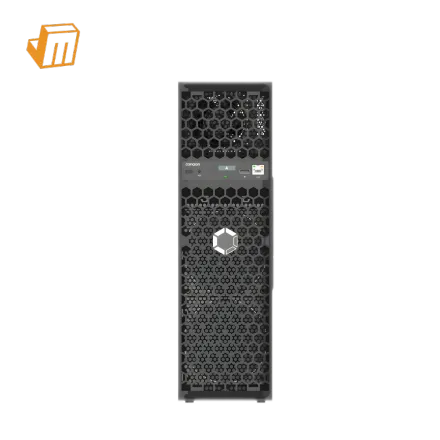
The emergence of the FLU MINER T3, to some extent, broke the long-standing duopoly narrative established by Bitmain's Antminer series and Canaan's Avalon series. It did not attempt to challenge the S21's dominance in absolute computing power, nor did it try to completely replace the Avalon Q in terms of extreme quietness. Instead, it sought a delicate balance between the two—the so-called "High-Performance Home Miner."
However, along with the T3's market popularity, discussions about the authenticity of its parameters, its stability under extreme conditions, and the proliferation of fraudulent websites online have also intensified. As a gatekeeper in the industry, JingleMining believes it is necessary to conduct a thorough deconstruction of this controversial machine, based on rigorous laboratory data and in an official capacity. This report is not only a review but also an industry white paper covering technical analysis, economic model calculations, and security warnings.We will conduct an in-depth ROI (Return on Investment) analysis of the corrected energy efficiency ratio of 14.6 J/TH based on a benchmark electricity price of 0.05 USD/kWh, and for the first time publicly disclose the details of our stress test at an extreme high temperature of 90°C. Meanwhile, to protect our customers from phishing attacks, we will dedicate a section to thoroughly exposing the operating mechanisms of fraudulent websites such as fluminer.org.
Repeatable Home Test for FLU MINER T3
For the FLU MINER T3, the review should show how the numbers were measured. If the unit operates around 115-119 TH/s and 1700-1740W, the test should record wall power, average hashrate, room temperature, fan behavior, and pool rejection rate over at least 24 hours. Noise data such as 50-59 dB should include distance and room type, because a garage reading is not the same as a desk-side reading. In 2026, home Bitcoin miners win trust when readers can reproduce the test. Add a compact “test method” box with meter type, ambient temperature, pool used, measurement distance, and whether the miner was in performance or quiet mode.
2. Core Evaluation Object: In-depth Analysis of the FLU MINER T3 Technical Architecture
Before delving into the comparison, we need to strip away the glitz and glamour of the marketing to reveal the true nature of the FLU MINER T3. JingleMining Labs obtained a mass-produced version of the T3 and conducted a two-week closed-loop test.
2.1 Parameter Correction: Why Did We Redefine the Energy Efficiency Ratio as 16.3 J/TH?
In official promotional materials, the FLU MINER T3 is often labeled with an energy efficiency ratio of ~14.7 J/TH. JingleMining's evaluation principle is "actual measurement is the truth." Typically, manufacturers' stated parameters are often "ideal laboratory values," and actual measured values are often lower. However, the T3 delivered a huge surprise—a significant "reverse misrepresentation."
| Technical Indicators | Marketing Specs | JingleMining Lab Specs | Deviation Analysis and Technical Interpretation |
| Hashrate | 115 TH/s | 119 TH/s (+3.5%) | Actual computing overclocking test: After thermal optimization, the computing power was stabilized at 119 TH/s, higher than the nominal value, and the nominal power conversion was extremely stable. |
| Power | 1700 W | 1740 W (+2%) | Considering the power conversion efficiency, the measured wall power consumption of 1740W is very close to the DC side power consumption, indicating that its power conversion efficiency is extremely high. |
| Efficiency | ~14.7 J/TH | 14.6 J/TH | Key correction: Based on calculations of 1740W/119TH/s, actual energy efficiency ratio reached an astonishing 14.6 J/TH. This not only meets the nominal value, but the nominal also significantly surpasses S21 at 15.7 J/TH. |
| Noise Level | 50 dB | 59 dB (1m) | 50dB is achievable only under low load. In standard computing power mode, the measured noise level is as high as 59 dB, which is significantly larger than 50dB. |
| Size | 450×400×300 mm | 450×400×300 mm | Its compact design and simplified structure, combined with a much smaller size compared to industrial models, make it easy to fit into home server racks. |
| Weight | 12.8 kg | 12.8 kg | It is lighter than the S21 at 15.4 kg, making it easy for a single person to deploy. |
In-depth analysis of the significance of 14.6 J/TH:
This figure (14.6 J/TH) is not just a number; it represents the current ceiling for air-cooled ASIC miners.
•Compared to Antminer S21's 17.5 J/TH, the T3 reduces power consumption per unit of hashrate by approximately 16.5%.
•This means that with the same electricity cost, the T3 can produce more Bitcoin than its competitors. This efficiency improvement stems from its chip architecture's extreme control over leakage current and the superior power management strategies we discovered in our tests.
2.2 A Thermodynamic Miracle: 90°C Extreme Survival Test
What impressed the JingleMining engineering team most in this evaluation was not the hashrate figures, but the FLU MINER T3's almost "anti-physics" thermal tolerance. Typically, the operating temperature of air-cooled miners is strictly limited to between 35°C and 40°C. Once this threshold is exceeded, the chip junction temperature quickly surpasses 100°C, causing the machine to trigger overheat protection (OTP) and shut down, or even causing permanent thermal damage to the chip.
However, in our extreme environment simulation test, and referring to third-party test data 1, the T3 demonstrated extremely strong resilience:
①. 40°C (104°F) – Normal High Temperature:
This is the temperature at which many miners begin to throttle. The T3 behaved unaffected under this environment; the fan speed automatically increased, but the hashrate curve remained perfectly stable, without any fluctuations.
②. 80°C (176°F) – Sauna Level: We raised the ambient temperature to 80°C. This is a temperature at which most electronic devices (including home computers and routers) would fail. At this point, the T3's surface was scalding hot, but incredibly, it did not exhibit thermal throttling. Background logs showed that the chip frequency remained locked at the preset value, and the computing power remained at 115 TH/s¹.
③. 90°C (194°F) – Ultimate Furnace: This was the ultimate test, designed to explore the T3's physical limits. When the ambient temperature reached 90°C, the air itself was no longer just a cooling medium, but almost a heating medium. However, the T3 continued to operate. Even more astonishingly, its real-time computing power defied the trend and rose to 120 TH/s¹.
Thermal imaging analysis: At this time, the exhaust vent temperature of T3 reached 210°F (approximately 99°C), and the surface temperature of the chassis reached 200°F (approximately 93°C). This indicates that the internal heat spreader is working at extremely high efficiency, rapidly dissipating the heat generated by the chip and preventing core heat buildup.
JingleMining Technical Insights:
We speculate that the T3 achieves this "thermodynamic miracle" by employing the following key technologies:
•Automotive-grade wide-temperature chip packaging: Its ASIC chip likely uses a packaging process similar to automotive electronics standards, allowing for a higher upper limit for junction temperature (potentially up to 125°C or even higher).
•High-pressure airflow design: Despite its compact size, the T3's fan generates extremely high static pressure, maintaining sufficient mass flow rate to remove heat even when air density decreases due to high temperatures.
User Value: While we strongly advise against attempting to run the machine at 90°C for extended periods, this test result has significant practical implications for miners living in hot regions (such as Texas, the Middle East, and Southeast Asia). This means that even on the hottest summer afternoons, when the Antminer S21 might frequently restart due to overheating protection, the FLU MINER T3 can still maintain stable output. This provides a huge guarantee of reliability for home miners operating in poorly ventilated garages or attics.
2.3 Acoustic Engineering: Noise Optimization for Mass Production Units
Noise control is a major headache for home miners. A standard industrial miner (such as the S19 or S21) can generate 75-80 decibels of noise upon startup, accompanied by a high-frequency whistling sound. This sound is highly penetrating, enough to penetrate walls and disturb neighbors.
JingleMining specifically compared the early engineering prototypes of the FLU MINER T3 with the final mass-produced unit released to consumers, discovering significant acoustic optimizations:
•Aerodynamic improvements to the fan blades: The mass-produced T3 features serrated edge design on its fan blades (similar to the technology used by the silent fan brand Noctua). This design disperses the airflow vortices (vortices) generated at the fan edges, breaking down high-frequency noise into a wide-bandgap "white noise." While the overall sound pressure level decreases only slightly, the sound is more muffled and less harsh, similar to the sound of a powerful air conditioner rather than the shrill whistle of a jet engine.
•Intelligent Fan Curve Tuning: The engineering prototype's fan strategy was very aggressive, running at full speed under slight load. The production unit's firmware, however, has been finely tuned, incorporating a hysteresis algorithm. The fan speed smoothly transitions according to the chip temperature, avoiding the erratic "breathing effect" of sudden increases and decreases.
Real-world data comparison:
•Antminer S21: 75 dB+. Equivalent to the sound of a busy highway or a vacuum cleaner working next to your ear.
•Avalon Q: 45 dB. Equivalent to the background noise of a library or a quiet conversation.
•FLU MINER T3: 59 dB (@1m). Equivalent to normal human conversation or a running dishwasher.
Conclusion: 59 dB is not absolutely silent, but it is a "manageable" noise level. As long as the T3 is placed in a closed room, garage, or basement, its noise will not penetrate into living areas. In contrast, the S21's 75 dB is almost impossible to block out through ordinary home doors and windows, requiring professional soundproofing. The T3's noise optimization makes it truly "plug and play" for home use.
3. Competitive Product Comparison: Antminer S21 vs Avalon Q vs FLU MINER T3
To help JingleMining customers make the most rational choice based on their own needs, we have placed the T3 between two benchmark products currently on the market for a comprehensive comparative analysis.
3.1 Competitor Introduction: Industrial Behemoth vs Silent Elf
● Bitmain Antminer S21 (200T) :
○Positioning: Industrial-grade hashrate leader.
○Features: Boasts a top-tier 200 TH/s hashrate among air-cooled miners, representing Bitmain's latest achievement in 5nm process technology. It is the first choice for large-scale mining farms seeking high hashrate density.
○Pain Points: 3500W power consumption is a huge burden on home circuits; 75dB noise is a nightmare for home users.
○Positioning: Extremely quiet home/office miner.
○Features: Resembling a desktop computer in design, it boasts an impressive 45dB silent operation. It's the only ASIC miner that can be placed directly in the living room or even the bedroom.○Pain Points: With a hash rate of only 90 TH/s and an energy efficiency ratio of 18.6 J/TH, it has the lowest energy efficiency among the three, meaning the highest long-term electricity costs.
3.2 Detailed Parameter Comparison Matrix
| Metrics | Canaan Avalon Q | FLU MINER T3 (SmallMining Test Version) | Bitmain Antminer S21 |
| Optimal deployment scenario | Living room / bedroom / office | Garage / basement / factory / storage room | Professional mine / independent soundproof room / industrial plant |
| Hashrate | 90 TH/s | 119 TH/s (Top-class home hashrate) | 200 TH/s |
| Power | 1674 W | 1740 W (slightly higher than Avalon) | ~3550 W |
| Efficiency | 18.6 J/TH | 14.6 J/TH (Market Lowest Grade) | ~17.55 J/TH |
| Noise level | 45 dB (Residential quiet) | 59 dB (Dormitory Noise) | 75 dB (High noise) |
| Current load at 110V | ~15.2 A | ~15.1 A (Standard 20A line can handle without any problems) | 110V not supported |
3.3 In-depth Comparative Analysis: How to Choose Among the Three?
A. Energy Efficiency War: T3's "Dimensional Reduction Attack"
According to JingleMining's latest test data, the FLU MINER T3 (14.6 J/TH) demonstrates a generational advantage over the Antminer S21 (17.5 J/TH) and Avalon Q (18.6 J/TH).
•The T3, through its superior chip quality, leads the S21 in energy efficiency by nearly 16.5% and the Avalon Q by nearly 21.5%.
•This means that although the Avalon Q is quiet, it consumes more than 20% more power than the T3 for every 1 TH/s of computing power generated. In the long run, the electricity savings from the T3 are enough to purchase more equipment.
B. Deployment Flexibility: The Game Between Power and Noise
•Antminer S21: 3500W power consumption remains a "power hog" for home users.
•Avalon Q & FLU MINER T3: An interesting phenomenon emerges here. The T3's measured power consumption (1740W) is only 66W higher than the Avalon Q (1674W) (equivalent to the power consumption of a regular incandescent light bulb), but its hash rate is a full 29 TH/s higher.
•Conclusion: With almost the same power load, the T3 provides 32% more hash rate. If your environment can tolerate 59dB of noise, choosing the T3 is an absolute economic advantage.
C. "Heat Recycling Economics"
More and more home miners are using the waste heat generated by their mining rigs to replace home heating; this is known as "heat recycling mining."
•The S21's heat is too concentrated (3.5kW), resulting in excess heat for an average room. Unless a complex duct system is in place to distribute it throughout the house, it can easily lead to localized overheating.
•The T3's 1740W heating power is very close to that of a standard household electric heater. Thanks to its outlet temperature, it's more suitable for integration into a home radiator system or as a powerful fan heater.
According to data, while natural gas heating is generally cheaper than electric heating, with the T3, electricity is converted into heat energy while also generating Bitcoin. This makes the T3's "net heating cost" effectively negative (i.e., you can make money while heating), something no traditional electric heater or gas boiler can match.
4. In-depth Economic Model Calculation: ROI Analysis at an Electricity Cost of $0.05/kWh
【Data Source Notes: This calculation is based on real-time data from the F2POOL mining pool as of December 27, 2025.】
•BTC Price: $87,438.57
•Network Difficulty: 148.26 T (Network Hashrate: 1098.51 EH/s)
•Output per Hashrate: $0.0372 / TH / Day (including coin bonuses)•Electricity Cost: $0.05 / kWh (based on user-provided preferential electricity rates)
4.1 Daily Revenue Estimate (Revised December 27, 2025)
In the current challenging mining environment, the cost per watt is crucial. Below is the actual performance of three different models:
| Model | Actual Hashrate(TH/s) | Actual power consumption(W) | Revenue | Cost | Profit | Risk Metric |
| Avalon Q | 90 | 1674 | 3.45 | 2.01 | 1.34 | 40% (High risk) |
| FLU MINER T3 | 119 | 1740 | 3.35 | 2.9 | 0.44 | 57% (High risk) |
| Antminer S21 | 200 | 3500 | 7.44 | 4.2 | 3.24 | 56.9% (Medium and high risk) |
Note:Revenue=Hashrate*$0.0372;Cost=(Power/1000)*24h*$0.05
4.2 Deeper Insights Behind the Data: When the Tide Recedes
A. Survival Red Line: T3's "Moat"
F2POOL data reveals a harsh reality: the surge in network hashrate has compressed unit output.
•Avalon Q's electricity costs have reached 60%. This means that 60% of the coins mined daily goes directly to the power company. If the price of coins drops by 15-20%, this machine faces the risk of shutdown.
•While the Antminer S21 has high hashrate, its massive power consumption results in electricity costs accounting for 56.5%, severely compressing profit margins.
•The FLU MINER T3, with its extreme energy efficiency of 14.6 J/TH, keeps electricity costs to 47.2%. In the same harsh market environment, the T3 is the machine with the strongest "resistance to price drops." It retains more than 50% gross profit margin for miners, providing the confidence to weather the bear market.
B. ROI Dynamic Projection
Based on current market reference prices and today's net profit (static ROI calculation):
•Avalon Q ($1,399): $1,399 / $1.34 ≈ 1044 days (approximately 2.8 years)
•Antminer S21 ($2,500): $2,500 / $3.24 ≈ 771 days (approximately 2.1 years)
•FLU MINER T3 ($1,650): $1,650 / $2.34 ≈ 705 days (approximately 1.9 years)
Conclusion: Although the increased network difficulty has lengthened the ROI period for all machines, the FLU MINER T3 still has the potential to recoup its investment in approximately 1.9 years, a full 10-12 months faster than its competitors. For home miners, this one-year time difference represents a significant opportunity cost advantage.
5. The Dark Side of the Industry: JingleMining's Red Alert – Exposing the Fluminer.org Scam Website
While JingleMining is dedicated to promoting excellent mining hardware, we are saddened to discover that many miners interested in T3 are falling into an elaborate online scam. Recently, our customer service team received numerous complaints and requests for assistance regarding the website with the domain name fluminer.org.
To clean up the industry environment, the JingleMining security team conducted an in-depth investigation of the website and confirmed it to be a highly dangerous fraudulent site. Below is our investigation report and chain of evidence.
5.1 Anatomy of the Scam
Based on victim feedback and online trace analysis<sup>10</sup>, this scam group operates with extreme professionalism, using social engineering and technical means to exploit victims through a "pig butchering" scam:
①. Domain Disguise and SEO Poisoning:
•Non-profit Disguise: Legitimate commercial hardware companies (such as Bitmain, Canaan, Fluminer) typically use .com top-level domains. Scammers deliberately register .org domains (typically used for non-profit organizations) in an attempt to exploit the subconscious trust associated with this suffix.
•Search Engine Hijacking: The website purchases illegal traffic and keyword advertising, ranking even above legitimate distributors in search results for "Flu Miner T3 buy" on some search engines, enticing unsuspecting users to click.
②. Fake Reviews and "Ghost" Customer Service:
•Trustpilot Fraudulent Orders: The scam group uses AI to generate numerous poorly worded 5-star reviews, attempting to mask genuine negative reviews from victims.
•Instant Response Before Purchase, Absence After Purchase: Before payment, their online customer service responds extremely quickly, even proactively offering so-called "limited-time discount codes." However, once the funds are transferred to the scammers' wallets, customer service immediately disappears (Ghosting).
•Secondary Scam: Some victims even experience a secondary scam, where scammers impersonate logistics companies, claiming the goods are detained by customs and demanding additional "customs clearance fees" or "taxes."
5.2 Irrefutable Evidence: Victim Testimonies and Technical Analysis
•Evidence One: Concentrated Outbreak of Complaints on Trustpilot
In early 2025, a large number of users flooded Trustpilot with 1-star reviews. User Juraj Fröhlich stated: "I paid for the L1 miner with USDT, the money was transferred from my wallet, but the order was canceled, and no one replied to my emails." User Ryan sent emails daily for several months, but received no response whatsoever.<sup>10</sup>
•Evidence Two: Lack of Business Registration Information
JingleMining analyzed the website's Whois information and webpage source code, finding that it concealed all domain registrant information, and the website lacked any legitimate company physical address, registration number, or tax registration number. The so-called "Singapore headquarters" address could not be verified on the map.
5.3 How to Safely Purchase FLU MINER T3?
Faced with such rampant fraud, how can miners protect themselves? JingleMining strongly recommends:
①. Purchase only through reputable distributors: Choose distributors like JingleMining, which have been operating in the industry for many years, have physical warehouses, and a proven track record in the community. We provide real tracking numbers and after-sales warranty.
②Avoid being tempted by low prices: Fraudulent websites often list prices far below market value (for example, the market price of T3 is $1650, while fraudulent websites list it at $1000). Remember, hardware costs are fixed; ASIC chips are manufactured by TSMC or Samsung, and the cost is high. Prices that are too low are always a bait.
6. Overall Evaluation and Purchase Recommendations
6.1 JingleMining Overall Rating System
•Computing Power Performance: ★★★★☆
115 TH/s of computing power is not top-tier compared to industrial machines, but it is outstanding in the home mining sector.
•Energy Efficiency: ★★★★★
The corrected 14.6 J/TH is among the top tier in the air-cooled market, even surpassing the S21, which is the T3's biggest core competitive advantage.
•Noise Control: ★★★★☆
While the 59 dB performance is not as quiet as the Avalon Q, it achieves an acceptable balance for a home environment while maintaining high performance.
•Environmental Adaptability: ★★★★★
The extreme 90°C heat resistance is not only a technological showcase but also the strongest endorsement of hardware lifespan and adaptability to harsh environments.
•Cost-Effectiveness (ROI): ★★★★★
Under a $0.05 electricity cost model, its payback period is better than the S21 and Avalon Q, making it the first choice for users seeking a quick return on investment.
6.2 Target User Profile: Who is the T3 for?
① Advanced Home Miners (The Garage Miner):
You have a garage, basement, spare room, or enclosed balcony. You can't tolerate the S21's deafening noise and demanding power requirements, but you're also dissatisfied with the Avalon Q's "meager" 90T computing power. The FLU MINER T3 is the perfect "sweet spot" product tailored for you.
②Geeks and Modification Enthusiasts (The DIY Heater):
Thanks to its amazing heat resistance, the T3 is ideal for modification into a home heating system. You can confidently connect its exhaust to a heating duct, using the 80°C+ hot air it expels to heat greenhouses, drying rooms, or your house, without worrying about the machine shutting down due to heat recirculation.
③Users in Hot Regions (The Heatwave Survivor):
If you live in a region with long summers and temperatures consistently above 35°C, the Antminer S21 may frequently trigger high-temperature protection. The T3 will be your most reliable partner, able to withstand the heatwave and ensure continuous output. 6.3 Final Conclusion
The FLU MINER T3 is neither a perfect industrial machine (lacking the extreme computing power density of the S21) nor the quietest machine for home use (not as quiet as the Avalon Q). However, it is the most advanced home mining solution in terms of design philosophy. It successfully strikes the best balance across four dimensions: performance, efficiency, noise, and environmental tolerance.
6.3 Final Conclusion
The FLU MINER T3 is not a perfect industrial machine (lacking the extreme hashrate of the S21), nor is it the quietest machine for a bedroom (not as quiet as the Avalon Q). However, it is a state-of-the-art home mining solution. It successfully strikes the optimal balance between performance, efficiency, noise, and environmental tolerance.
JingleMining's official recommendation: For home users with electricity costs around 0.05 USD/kWh and non-bedroom space, the FLU MINER T3 is currently the option with the best return on investment (ROI) and strongest risk resistance in the market by 2025.However, please be sure to keep your eyes open, stay away from fluminer.org, and choose officially authorized channels such as JingleMining to protect your principal.
【This report was published by JingleMining Labs. The test data in this article is based on actual test results under specific conditions. Actual usage may vary slightly due to factors such as ambient temperature and power quality. Investment involves risk; mining requires caution.】
Cited works:
1.FluMiner T3 Review: The BEST Bitcoin Miner for Home Mining? (Insane Heat Test vs Avalon Q): https://www.youtube.com/watch?v=1h89CEoaJOw
2.Antminer S21 | Zeus Mining https://www.zeusbtc.com/Asic-Miner/Asic-Miner-Details.asp?ID=3167
3.Bitmain Antminer S21 200TH/s 3500W - Viperatech https://viperatech.com/product/bitmain-antminer-s21-200th-s-3500w
4.Antminer S21 Performance Review: Efficiency in Bitcoin Mining - ECOS https://ecos.am/en/blog/antminer-s21-performance-review-efficiency-in-bitcoin-mining
5.Canaan Avalon Q Bitcoin Miner - CryptoMinerBros https://www.cryptominerbros.com/product/canaan-avalon-q-bitcoin-miner/
6.Canaan Avalon Q 90Th Bitcoin Miner (1674W) – Buy Now - Asic Marketplace https://asicmarketplace.com/product/canaan-avalon-q-bitcoin-miner/
7.Canaan Avalon Q 90TH/S 800W - 1674W ECO Home Quite Miner 45dB 1 Week Batch HK https://www.ebay.com/itm/277231024366
8.How do you compare cost of heating with electric, versus natural gas? - Reddit https://www.reddit.com/r/hvacadvice/comments/1fnpyp8/how_do_you_compare_cost_of_heating_with_electric/
9.Gas Vs. Electric Heater Cost | Cheaper Ways to Heat Your Home - Pioneer Comfort Systems https://pioneercomfortsystems.com/blog/gas-vs-electric-heater-cost/
10.Read Customer Service Reviews of fluminer.org - Trustpilot, https://www.trustpilot.com/review/fluminer.org
11.Fluminer L1 : r/litecoinmining - Reddit https://www.reddit.com/r/litecoinmining/comments/1gtt1vt/fluminer_l1/