
Unboxing & Physical Architecture: Built for the Industrial Grid
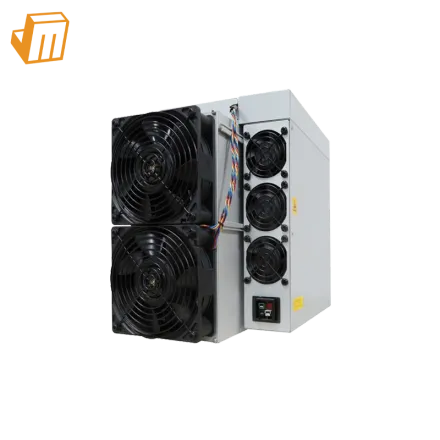
Unboxing the Bitmain Antminer E11 immediately confirms its positioning as a heavy-duty, industrial-grade computing asset rather than a consumer-grade desktop device. Encased in a rigid, high-grade aluminum chassis utilizing Bitmain’s classic dual-fan tube design, the unit is engineered for optimal airflow velocity.
Weighing approximately 13.2 kg (29.1 lbs) with dimensions of 400mm x 195mm x 290mm, it requires a dedicated server rack or a highly structured mining shelf deployment. The front interface features a standard control board protected by an anti-static shield, equipped with an Ethernet port, IP report button, and status LEDs. Cooling is managed by four high-RPM industrial fans capable of moving massive volumes of air to dissipate heat from the high-density hashboards. Operators must note that the acoustic profile matches its industrial intent: at full operational load, the device generates a sustained noise level of approximately 75 dB, making residential or noise-sensitive deployment entirely unfeasible without specialized sound attenuation.
Hardware Baseline: Strategic Technical Specifications
To establish an objective risk model, the physical capabilities of the Antminer E11 must be quantified. The following matrix outlines the absolute performance parameters required for subsequent financial underwriting:
Navigating Network Difficulty
The operational landscape for Ethereum Classic (ETC) mining is perpetually shaped by fluctuations in network difficulty. For miners deploying specialized hardware like the Bitmain Antminer E11, understanding these dynamics is paramount.
The E11 enters a competitive environment where increasing network difficulty directly translates into a reduced share of block rewards. This necessitates a strategic approach, focusing not just on absolute hashing power but also on the efficiency and stability of the mining operation. Periods of high difficulty can compress profit margins, particularly for older or less efficient machines, highlighting the importance of the E11's relatively modern architecture in maintaining a competitive edge.
W/GH Efficiency vs. OPEX
The Bitmain Antminer E11's performance matrix, specifically its 2470 W power draw and 260.00 J/GH efficiency rating, are central to its operational expenditure (OPEX) profile. In the highly competitive world of ASIC mining, every watt consumed directly impacts the bottom line.
A power draw of 2470 W places the E11 firmly in the industrial-grade miner category. Operators must meticulously calculate their electricity rates—including transmission fees, taxes, and demand charges—to ascertain the true cost per kilowatt-hour, as this figure will directly dictate the profitability threshold for the E11. Key considerations for managing OPEX include:
· Electricity Rate Negotiation: Actively seeking lower power rates, especially for bulk consumption plans.
· Infrastructure Optimization: Ensuring electrical infrastructure is perfectly matched to the miner's demands to avoid voltage drops or power losses.
· Environmental Control: Maintaining optimal operating temperatures to prevent performance throttling, which can indirectly impact OPEX by reducing effective hashrate per watt.
Strategic Site Integration
Deploying the Antminer E11 requires careful planning for site integration. With a power draw of 2470 W per unit, a farm of multiple units accumulates substantial electrical load, requiring dedicated circuits and industrial-grade power distribution units (PDUs).
Thermal management is equally critical. The heat output must be efficiently dissipated to maintain optimal operating temperatures. Effective cooling solutions range from simple open-air setups in cooler climates to sophisticated HVAC or liquid cooling deployments in warmer regions.
Pro Tip: When planning for a multi-utility Antminer E11 facility, always over-spec your electrical and cooling infrastructure by at least 20-30% to account for future expansion and unexpected load spikes.
The Actuarial Verdict
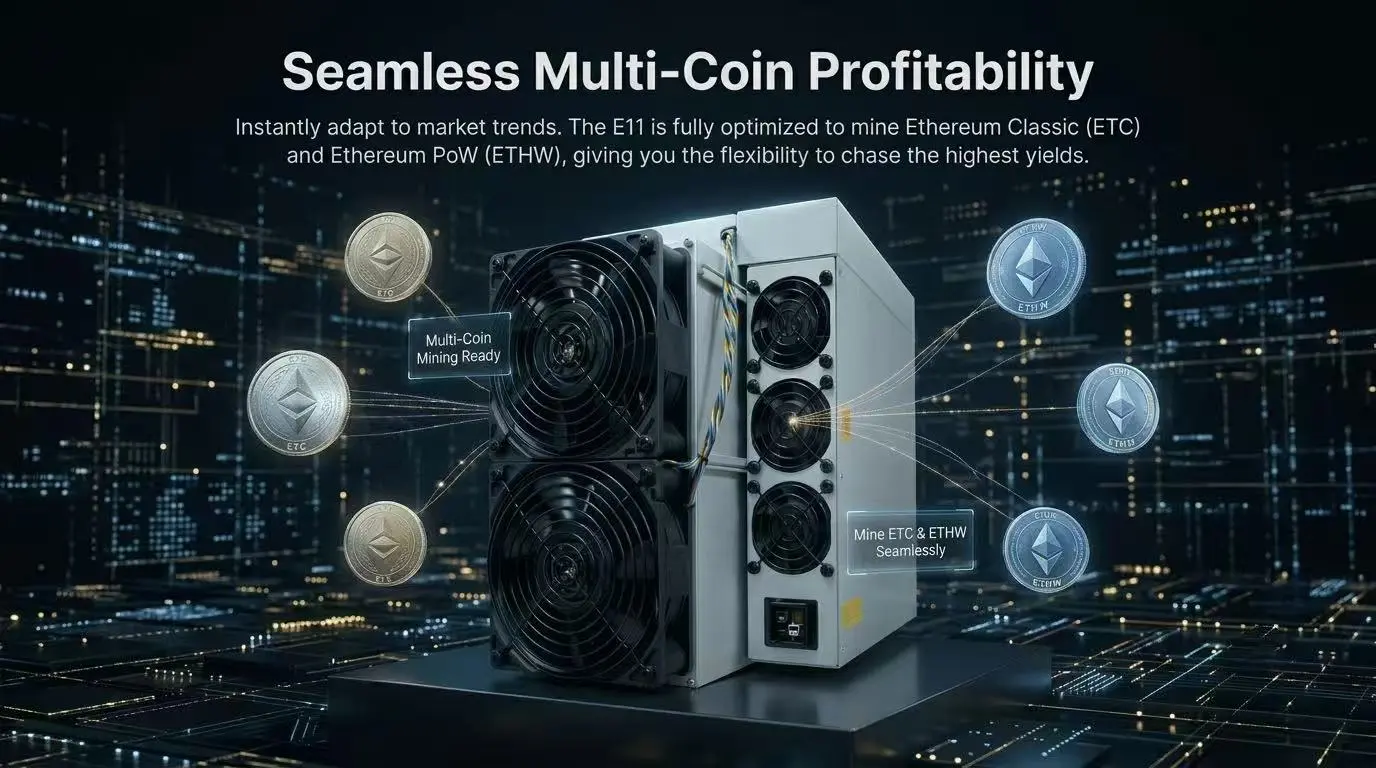
The Bitmain Antminer E11 represents a significant piece of hardware for EtHash mining, offering a substantial 9.5 GH/s hashrate with a defined power footprint of 2470 W. Its performance characteristics position it as a serious contender for dedicated ETC miners, provided the operational environment is optimized for its electrical demands and thermal output.
Success with the E11 hinges on meticulous planning regarding electricity costs, robust infrastructure, and proactive management of network difficulty. For those seeking to deploy powerful EtHash ASICs and capitalize on the Ethereum Classic ecosystem, the E11 offers a compelling option, but its profitability is inextricably linked to disciplined operational execution. Visit the JingleMining website for tailored deployment advice.
Frequently Asked Questions (FAQ)
Q: What is the typical lifespan of an Antminer E11 under optimal conditions?
A: Under optimal operating conditions, an Antminer E11 can typically operate effectively for 3 to 5 years, though component degradation and market shifts can influence its practical, profitable lifespan.
Q: How does the Antminer E11's efficiency compare to other EtHash miners?
A: The Antminer E11's efficiency was competitive for its generation, but newer models may offer improvements. Performance must be balanced against current market offerings and your local electricity rates.
Q: What are the essential power requirements?
A: A single Bitmain Antminer E11 requires a 220V-240V power supply with a dedicated circuit capable of handling a 2470 W power draw, typically necessitating a 15-20 amp circuit breaker.
Q: Can the Antminer E11 be operated in a residential home setup?
A: Due to its heavy power draw and industrial cooling fans generating approximately 75 dB of continuous noise, the E11 is strictly designed for industrial data centers, not standard residential living spaces.