
Bitdeer SealMiner A2 vs. Bitmain Antminer S19 Series: The SHA-256 Efficiency Showdown
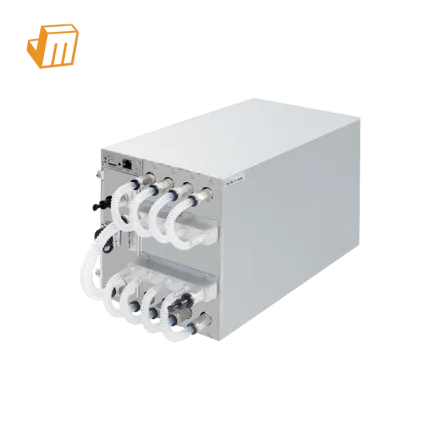
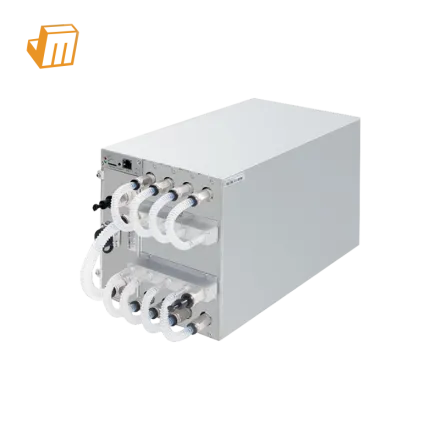
The competitive landscape of SHA-256 cryptocurrency mining is constantly evolving, driven by advancements in hardware efficiency and raw processing power. This detailed comparison examines three prominent hydro-cooled ASIC miners: the Bitdeer SealMiner A2, the Bitmain Antminer S19 Pro+ Hyd, and the Bitmain Antminer S19e XP Hydro. For investors prioritizing cutting-edge efficiency and a balanced hashrate in a compact form factor, the Bitdeer SealMiner A2 presents a compelling case. Conversely, operations seeking the absolute highest hashrate output, even at a slightly higher power draw, might lean towards the Bitmain Antminer S19e XP Hydro. The Bitmain Antminer S19 Pro+ Hyd positions itself as a robust, proven workhorse, offering a reliable performance metric for large-scale deployments where established technology and stability are paramount. Understanding these nuances is crucial for strategic hardware procurement in an environment where every watt and terahash impacts the bottom line.
Maximizing ROI: Hashrate, Power, and Efficiency Breakdown
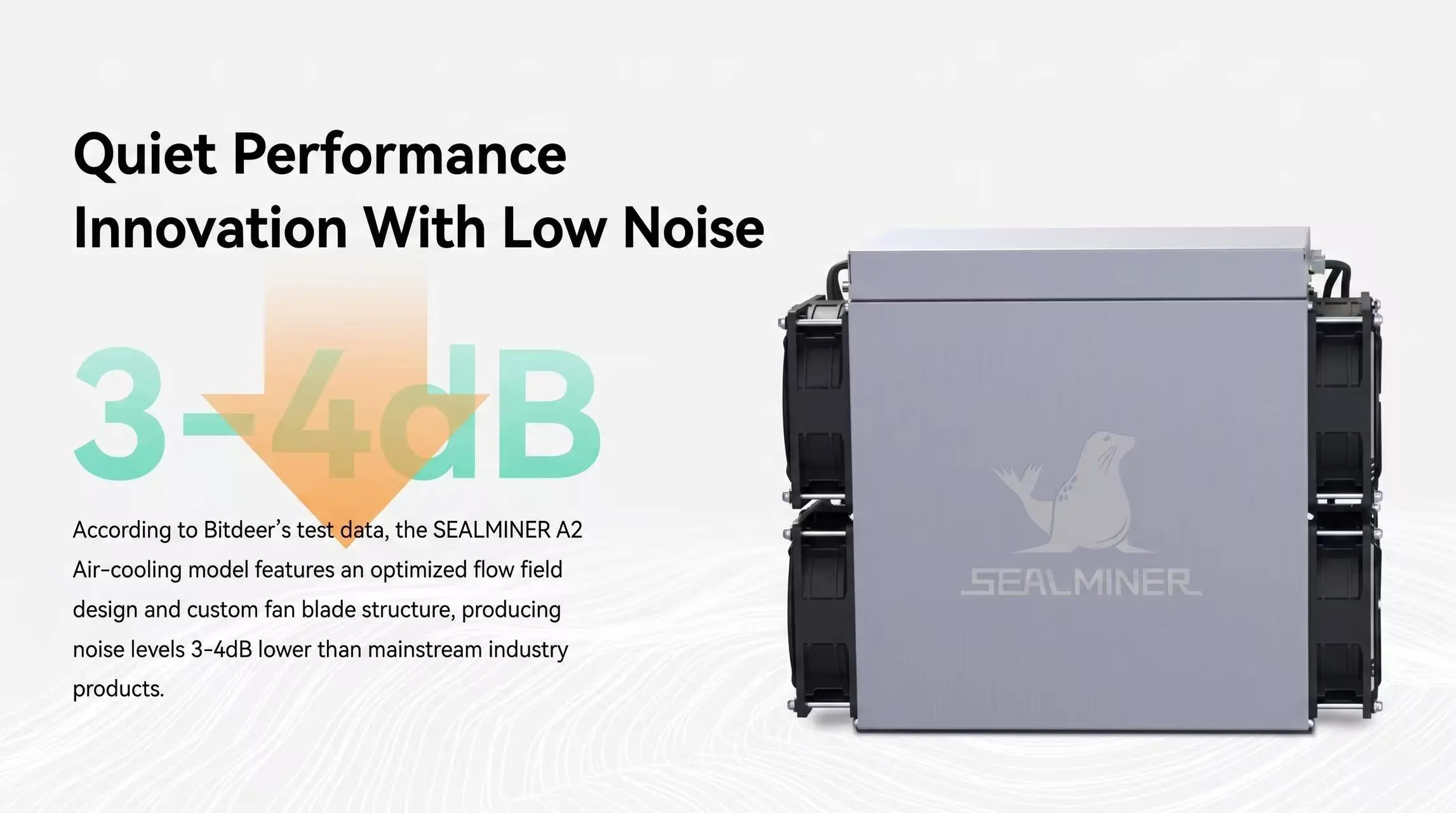
Evaluating the return on investment for ASIC miners hinges critically on their hashrate, power consumption, and overall efficiency. The interplay of these factors directly dictates operational expenditure and the capacity for profitability in fluctuating market conditions. While hashrate determines how many attempts per second a miner makes to solve a block, efficiency (W/TH) reveals the energy cost per unit of computational power, a metric that has become increasingly vital for sustainable mining operations.
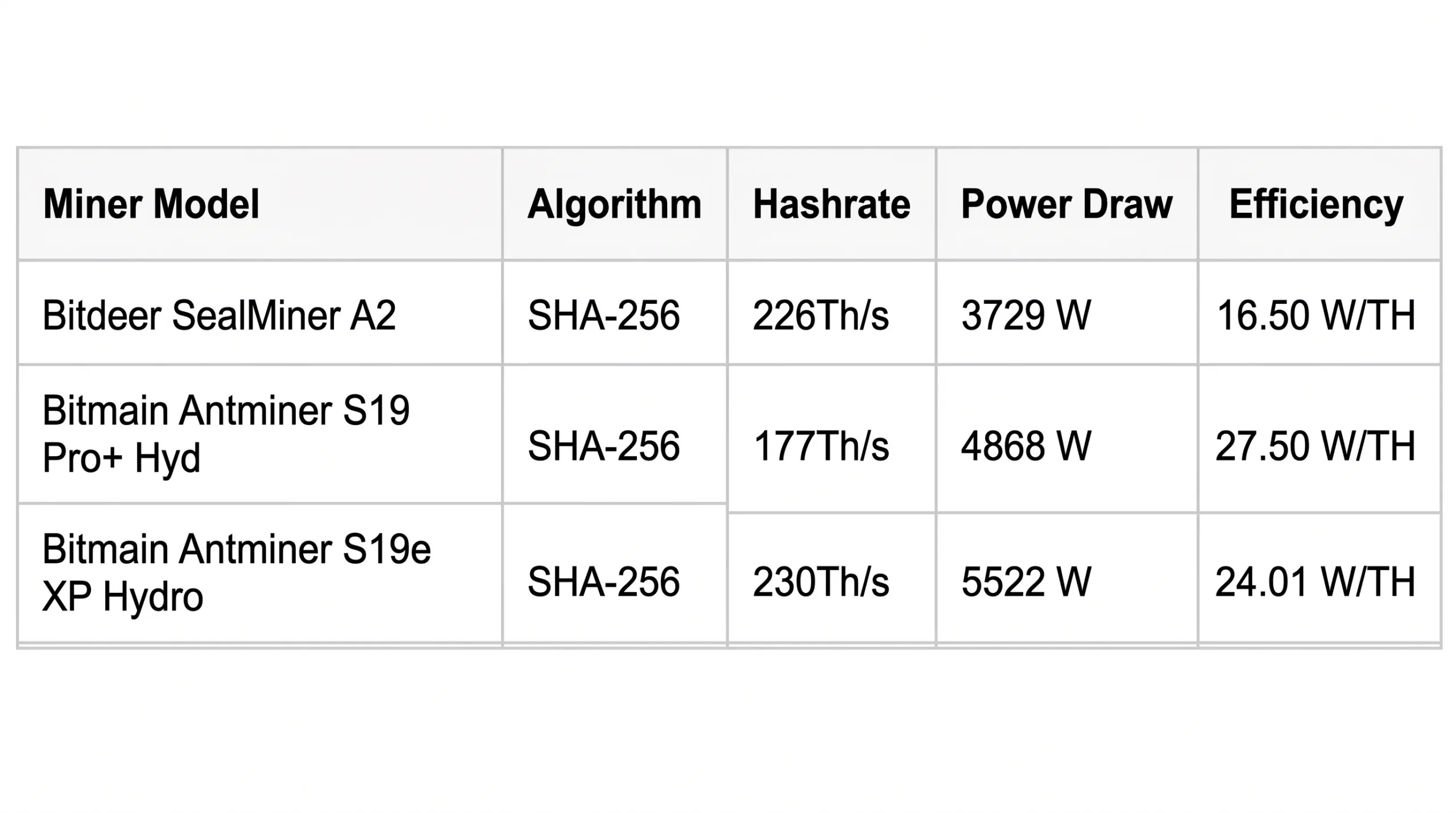
The operational expenditure (OPEX) impact of these machines is starkly visible when comparing their power draw and efficiency ratings. The Bitdeer SealMiner A2, with its 16.50 W/TH efficiency and 3729 W power draw, demonstrates a superior energy-to-hashrate conversion compared to both Bitmain models listed. This means that for every terahash produced, the SealMiner A2 consumes significantly less electricity, leading to lower running costs over time. The Antminer S19 Pro+ Hyd, while offering a respectable 177Th/s, comes with a higher power draw of 4868 W and an efficiency of 27.50 W/TH, making it less appealing for power-cost-sensitive environments. The Antminer S19e XP Hydro, despite its impressive 230Th/s hashrate, demands 5522 W, resulting in an efficiency of 24.01 W/TH. While it boasts the highest raw hashrate among the three, its higher power consumption translates directly into elevated electricity bills, potentially narrowing profit margins unless electricity costs are exceptionally low. Precise profitability requires exact power specifications which vary by specific deployment.
Facility Infrastructure & Advanced Cooling Demands
Deploying hydro-cooled ASIC miners like the Bitdeer SealMiner A2 and the Bitmain Antminer S19 series necessitates specialized facility infrastructure, far beyond what air-cooled units require. These machines, with power draws ranging from 3729 W to 5522 W per unit, generate substantial heat that must be efficiently dissipated. A robust electrical system capable of delivering consistent, high-amperage three-phase power is non-negotiable, often requiring dedicated circuits and industrial-grade wiring. Furthermore, the very nature of hydro-cooling implies a closed-loop liquid circulation system, complete with pumps, heat exchangers (often dry coolers or cooling towers), and a significant volume of cooling fluid. This infrastructure demands precise plumbing, regular maintenance of the coolant, and a system for monitoring liquid temperatures and flow rates to prevent overheating and ensure optimal performance. The initial capital expenditure for such a setup can be substantial, but it unlocks higher operational densities and potentially longer hardware lifespans compared to air-cooled alternatives.
Effective thermal management for these hydro-cooled units goes beyond merely supplying cool water. It involves designing a holistic system that can handle the aggregate heat load of an entire farm. This includes considerations for ambient air temperature, humidity control, and redundancy in cooling components to prevent downtime. The high wattage of these miners means that even a small farm can quickly accumulate megawatts of power consumption, placing immense stress on both the electrical grid connection and the cooling plant. Proper planning involves assessing the total heat rejection capacity required, sizing the cooling infrastructure accordingly, and implementing intelligent control systems to optimize energy use for cooling. Without a meticulously designed and maintained hydro-cooling system, the benefits of these advanced miners—their higher efficiency and density—cannot be fully realized, risking premature hardware failure or significant operational inefficiencies.
> Pro Tip: When planning for hydro-cooled deployments, always over-spec your cooling system's capacity by at least 20-30% beyond your initial calculations to account for unforeseen environmental factors, future expansion, and to provide a critical buffer against peak heat loads.
Final Assessment
The choice between the Bitdeer SealMiner A2, the Bitmain Antminer S19 Pro+ Hyd, and the Bitmain Antminer S19e XP Hydro hinges on a nuanced understanding of operational priorities, specific site capabilities, and long-term strategic goals. The SealMiner A2 stands out with its exceptional efficiency, offering a path to lower electricity costs per terahash, making it ideal for operations where power cost is a primary concern. The Antminer S19e XP Hydro provides the highest raw hashrate, suitable for those who prioritize maximum computational power and have access to extremely competitive electricity rates. The Antminer S19 Pro+ Hyd, while less efficient than the SealMiner A2, remains a reliable option for large-scale deployments looking for a balance of proven performance and moderate investment. Each machine represents a distinct value proposition in the hydro-cooled SHA-256 mining sector, demanding careful consideration of its strengths relative to a miner's specific operational context.
> Verdict: The Bitdeer SealMiner A2 is best suited for miners prioritizing energy efficiency and optimizing OPEX in cost-sensitive environments. The Bitmain Antminer S19e XP Hydro is ideal for large-scale operators focused on raw hashrate output, provided they have access to very low-cost electricity. The Bitmain Antminer S19 Pro+ Hyd serves as a robust, mid-tier option for established operations seeking dependable performance. To explore these advanced mining solutions further and align them with your specific needs, visit the JingleMining website.
Frequently Asked Questions (FAQ)
Q: What are the primary benefits of hydro-cooled ASIC miners?
A: Hydro-cooled ASIC miners offer superior thermal management, allowing for higher operational densities and potentially greater energy efficiency compared to air-cooled counterparts. They typically experience less wear and tear from heat, leading to longer lifespans and more stable performance.
Q: How does W/TH efficiency impact profitability in crypto mining?
A: W/TH (Watts per Terahash) efficiency directly measures the electrical power consumed for each unit of hashing power produced. A lower W/TH value indicates better efficiency, meaning less electricity is used to generate the same hashrate, which significantly reduces operational costs and increases profitability.
Q: What infrastructure upgrades are necessary for hydro-cooled miners?
A: Deploying hydro-cooled miners requires significant infrastructure upgrades including robust electrical systems for high power draw, a dedicated closed-loop liquid cooling system with pumps and heat exchangers, and specialized plumbing. Proper environmental control and redundancy planning are also crucial.