
The Next Generation of SHA-256 Mining Hardware
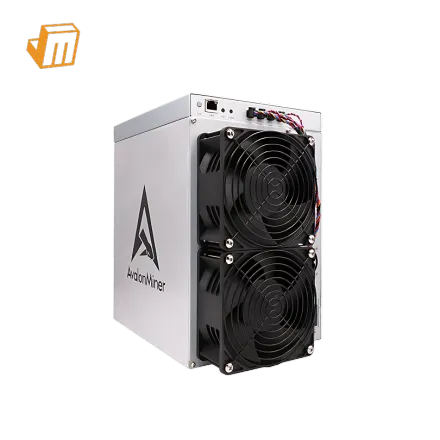
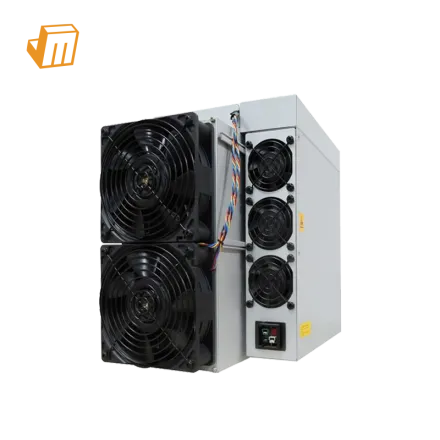
The relentless pursuit of efficiency and hashrate in Bitcoin mining hardware has led to a sophisticated arms race among manufacturers. The Bitmain Antminer S23 and the Canaan Avalon A15 Pro represent the cutting edge of this competition for SHA-256 algorithm mining. For serious mining operations, the selection between these two machines is a critical decision that directly impacts profitability and operational longevity. The Antminer S23 is engineered for peak performance, boasting a higher hashrate and a more favorable efficiency rating, making it an attractive option for large-scale deployments where every watt counts. The Avalon A15 Pro, while offering a competitive hashrate, presents a different balance of power and efficiency, appealing to miners who may prioritize established brand reliability or specific procurement advantages.
Maximizing ROI: Hashrate and Efficiency Breakdown
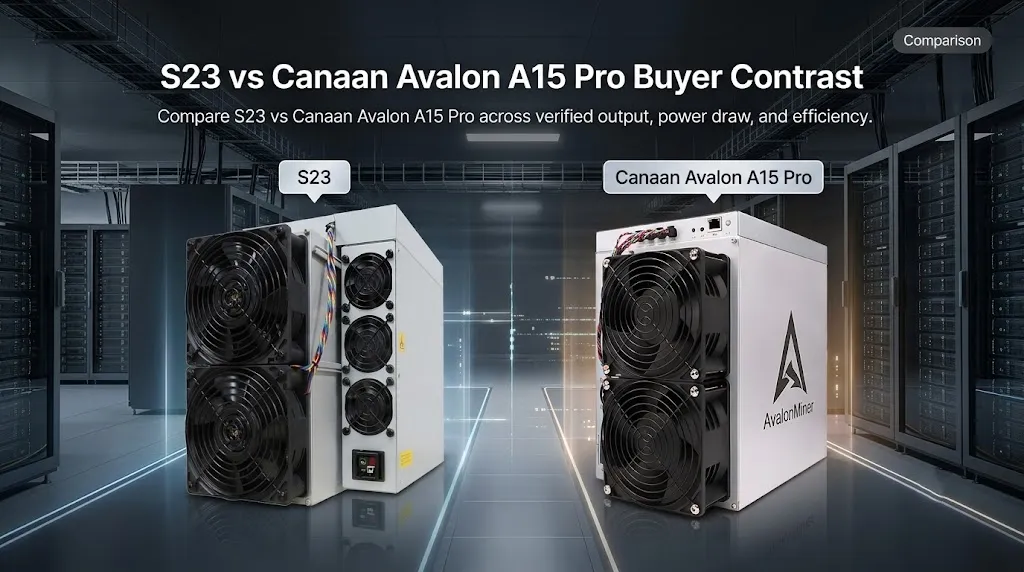
The economic viability of any Bitcoin mining operation is intrinsically tied to the hashrate and energy efficiency of its deployed hardware. A higher hashrate translates to a greater probability of successfully mining blocks and earning Bitcoin rewards. Simultaneously, superior energy efficiency, measured in Watts per Terahash (W/TH), directly reduces operational expenditures (OPEX) by minimizing electricity consumption for each unit of computational power. This optimization is crucial for maintaining profitability, especially in fluctuating market conditions characterized by volatile Bitcoin prices and variable energy costs. The following comparison highlights the core specifications of the Bitmain Antminer S23 and the Canaan Avalon A15 Pro.
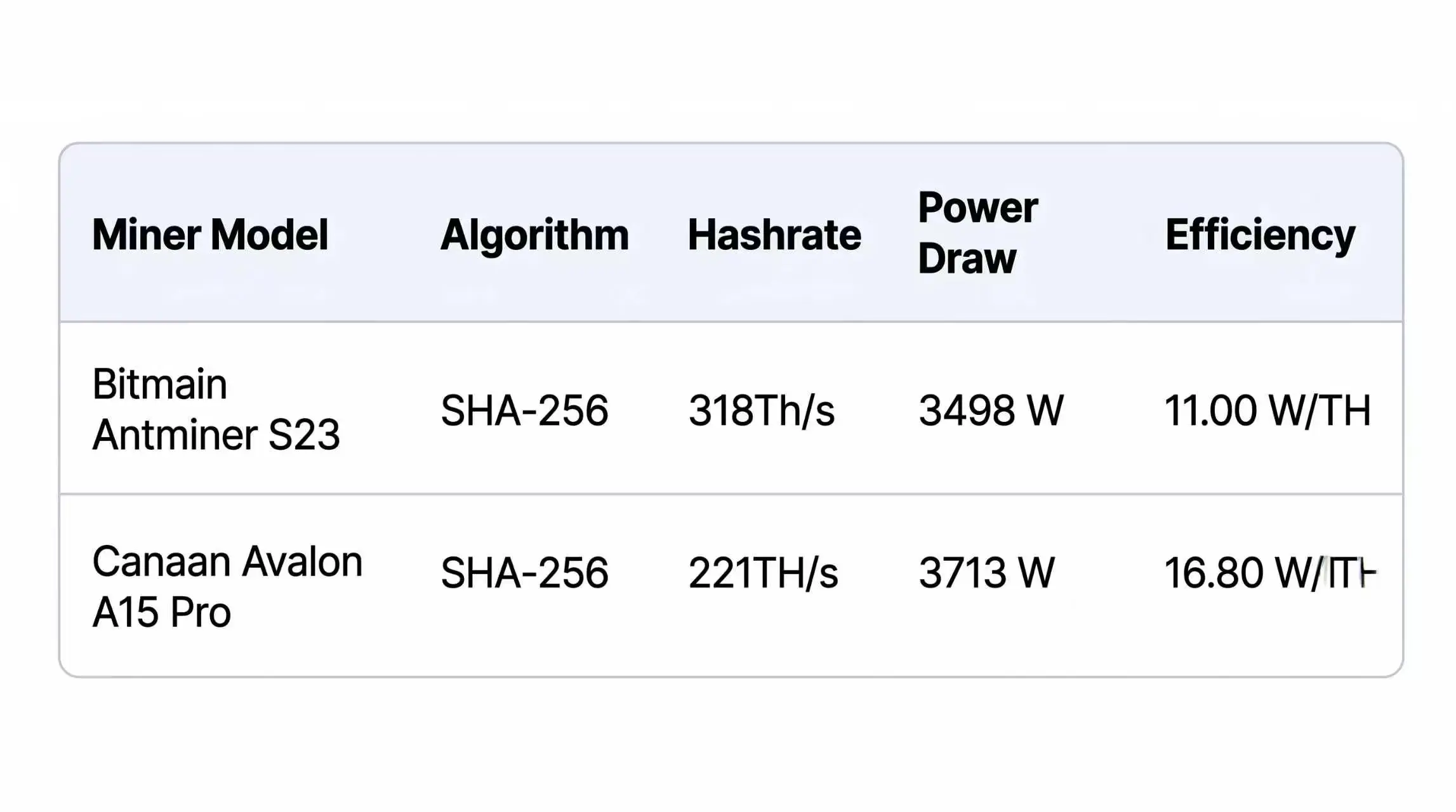
A deep dive into the operational metrics reveals a significant divergence in performance and cost-efficiency. The Bitmain Antminer S23 leads the pack with an impressive 318 Th/s hashrate, coupled with an industry-leading efficiency of 11.00 W/TH. This superior efficiency means that for every terahash of mining power generated, the S23 consumes considerably less electricity than its competitor. The Canaan Avalon A15 Pro, while a capable machine with a 221 Th/s hashrate, operates at a less efficient 16.80 W/TH. Furthermore, the A15 Pro has a higher overall power draw of 3713 W compared to the S23's 3498 W. This difference in efficiency directly translates to higher operating costs for the Avalon A15 Pro over the lifespan of the miner, impacting its overall return on investment and making the Antminer S23 a more compelling choice for miners focused on maximizing profit margins and minimizing electricity expenditure.
Facility Infrastructure and Cooling Demands
Deploying high-performance ASIC miners like the Bitmain Antminer S23 and Canaan Avalon A15 Pro requires a robust and well-engineered infrastructure capable of supporting their substantial power requirements and managing the heat they generate. The Antminer S23 has a rated power consumption of 3498 W, while the Avalon A15 Pro demands 3713 W. Both machines necessitate dedicated, high-amperage circuits, typically requiring 220-240V power supplies. Facility managers must ensure that their electrical distribution systems—including transformers, switchgear, and wiring—are adequately sized and properly maintained to handle these continuous, high-load demands without risk of failure or performance degradation. Ensuring stable power delivery is paramount for the longevity and consistent operation of these sophisticated mining units.
Thermal management is an equally critical, if not more so, component of successful mining operations. The power consumed by these ASICs is largely converted into heat, which must be efficiently dissipated to maintain optimal operating temperatures. Both the S23 and A15 Pro generate a significant thermal load, necessitating advanced cooling solutions. For air-cooled environments, this means implementing powerful industrial ventilation systems, including high-volume exhaust fans and strategic airflow management to prevent hot spots and ensure cool air intake. More advanced solutions, such as immersion cooling, are increasingly being adopted for their superior heat transfer capabilities, which can lead to improved miner performance and extended hardware lifespan. Inadequate cooling can result in thermal throttling, reduced hashrate, increased fan speeds (and thus noise and energy consumption), and ultimately, permanent damage to sensitive electronic components.
> Pro Tip: When designing your mining facility's electrical and cooling systems, always incorporate a significant buffer (at least 20%) beyond the calculated peak load. This foresight accounts for potential future hardware upgrades, environmental variations, and ensures system stability under peak operational stress, preventing costly downtime and emergency retrofits.
Final Assessment
The decision between the Bitmain Antminer S23 and the Canaan Avalon A15 Pro hinges on a miner's specific operational goals and economic priorities. The Antminer S23 emerges as the superior performer, distinguished by its higher 318 Th/s hashrate and a markedly more efficient 11.00 W/TH energy consumption. This efficiency advantage is a decisive factor for miners aiming to maximize profitability, particularly in markets with elevated electricity costs or when seeking to achieve a lower cost per Bitcoin mined. While the Canaan Avalon A15 Pro offers a respectable 221 Th/s hashrate, its less efficient 16.80 W/TH rating and higher overall power draw present a less compelling economic proposition for cost-conscious operations. For those looking to deploy the most advanced and energy-efficient SHA-256 mining hardware available, the Bitmain Antminer S23 presents a clear technological and financial advantage.
> Verdict: For miners prioritizing maximum SHA-256 hashrate output and superior energy efficiency to optimize operational costs and enhance profitability, the Bitmain Antminer S23 is the recommended choice. The Canaan Avalon A15 Pro is a viable option, but the S23's efficiency metrics offer a more potent long-term competitive edge. To procure these advanced mining solutions and receive expert deployment guidance, visit the JingleMining website.
Frequently Asked Questions (FAQ)
Q: How does miner efficiency (W/TH) directly impact profitability?
A: Miner efficiency, measured in Watts per Terahash (W/TH), is a critical determinant of profitability because it quantifies the energy cost associated with generating mining power. A lower W/TH means less electricity is consumed per unit of hashrate, directly reducing operational expenses and increasing net revenue, especially in high-cost electricity environments.
Q: What are the essential infrastructure requirements for deploying high-wattage ASICs like the S23 or A15 Pro?
A: Essential infrastructure includes a stable, high-capacity electrical supply (typically 220-240V), robust cooling systems capable of managing significant heat output, and reliable network connectivity. Proper ventilation or immersion cooling is crucial to prevent overheating and maintain optimal miner performance and longevity.
Q: When comparing the S23 and A15 Pro, which is better for a new mining operation?
A: For a new mining operation focused on long-term profitability and minimizing operational expenditure, the Bitmain Antminer S23 is generally the better choice due to its superior energy efficiency (11.00 W/TH vs. 16.80 W/TH). This efficiency translates to lower electricity costs per Bitcoin mined, offering a stronger foundation for sustainable operations.